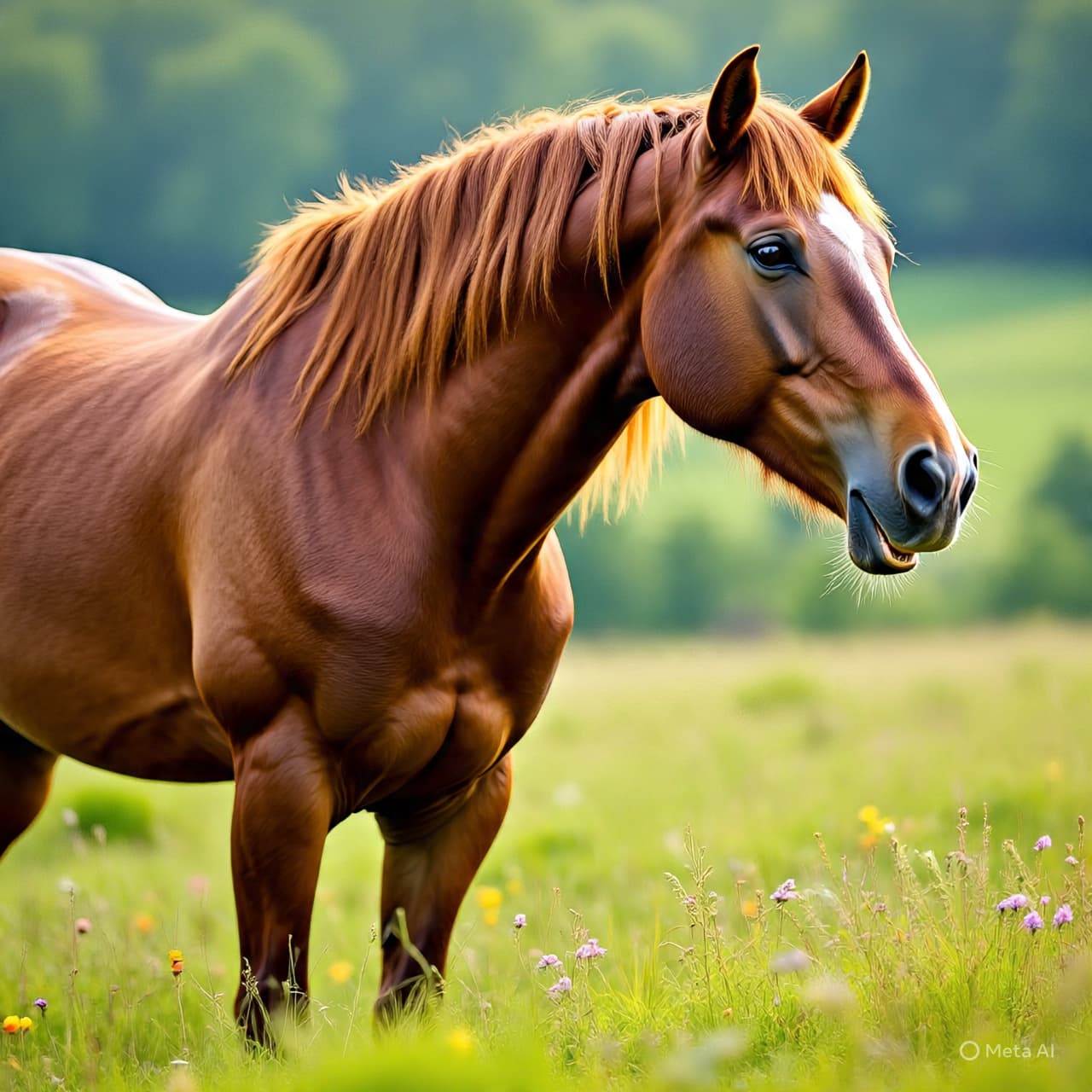
There are sounds that settle into the landscape so naturally that we stop questioning them. The steady hum of insects at dusk. The distant roll of thunder. The bright, arching whinny of a horse across an open field. It feels familiar, almost simple. Yet as with many things in nature, familiarity can conceal complexity.
A recent study suggests that when a horse whinnies, it does more than neigh. Beneath the sweeping rise and fall of that call lies something finer — a whistle-like tone, woven quietly into the sound. What once seemed like a single expressive burst may, in fact, be layered like a small composition: part whistle, part song.
Scientists studying equine vocalizations used acoustic analysis to examine recordings of horses calling to one another. Their findings revealed that whinnies contain high-frequency components resembling a whistle, alongside lower, more textured tonal elements. The result is a two-part sound — one that carries both clarity and richness.
For horses, communication is not ornamental; it is essential. Herd animals rely on vocal signals to maintain contact, express emotional states, and navigate social hierarchies. The whistle-like element appears to function as an acoustic marker, helping individuals identify one another across distance. In open pastures where sightlines stretch but obstacles remain, a recognizable voice becomes a thread of connection.
What makes the discovery particularly compelling is that horses have lived alongside humans for millennia. They have shaped agriculture, transport, sport, and companionship. And yet, even in such long familiarity, their voices still hold surprises.
Researchers note that the whistle component does not imply intentional musicality. Rather, it arises from the unique anatomy of the horse’s vocal tract. Air passing through the larynx and resonating in the nasal passages produces layered frequencies. The interplay between these frequencies gives the whinny its distinct structure — a combination of breath, vibration, and resonance.
The “song” aspect, meanwhile, refers to the harmonic layering within the call. Much like certain bird vocalizations, the whinny contains tonal shifts that carry emotional nuance. A horse calling in separation may sound different from one greeting a companion. The whistle and song together create a signature — individual and expressive.
The findings contribute to a broader scientific effort to understand animal communication as more than instinctive noise. Across species, researchers are uncovering evidence that vocalizations often carry complex information: identity, intention, and even mood. Horses, long admired for their sensitivity to human cues, appear to possess vocal intricacies of their own.
For those who work closely with horses — trainers, veterinarians, caretakers — such research may eventually inform better welfare practices. Recognizing subtle vocal patterns could offer deeper insight into stress, contentment, or social tension within herds.
In practical terms, the study documenting these acoustic features has been published in a peer-reviewed journal, with researchers continuing to explore how horses perceive and respond to the layered elements within whinnies. The discovery does not rewrite what we know about horses, but it refines it.
And so, the next time a whinny carries across a field, it may be worth pausing a moment longer. What sounds like a single call may, in truth, be a small duet — a whistle and a song, braided into the air.
AI Image Disclaimer Illustrations were produced with AI and serve as conceptual depictions.
Sources Reuters BBC News The Guardian National Geographic Science Magazine
Published by Banx Network. This article is part of the Banx decentralized media programme, powered by the BXE token on the XRP Ledger.