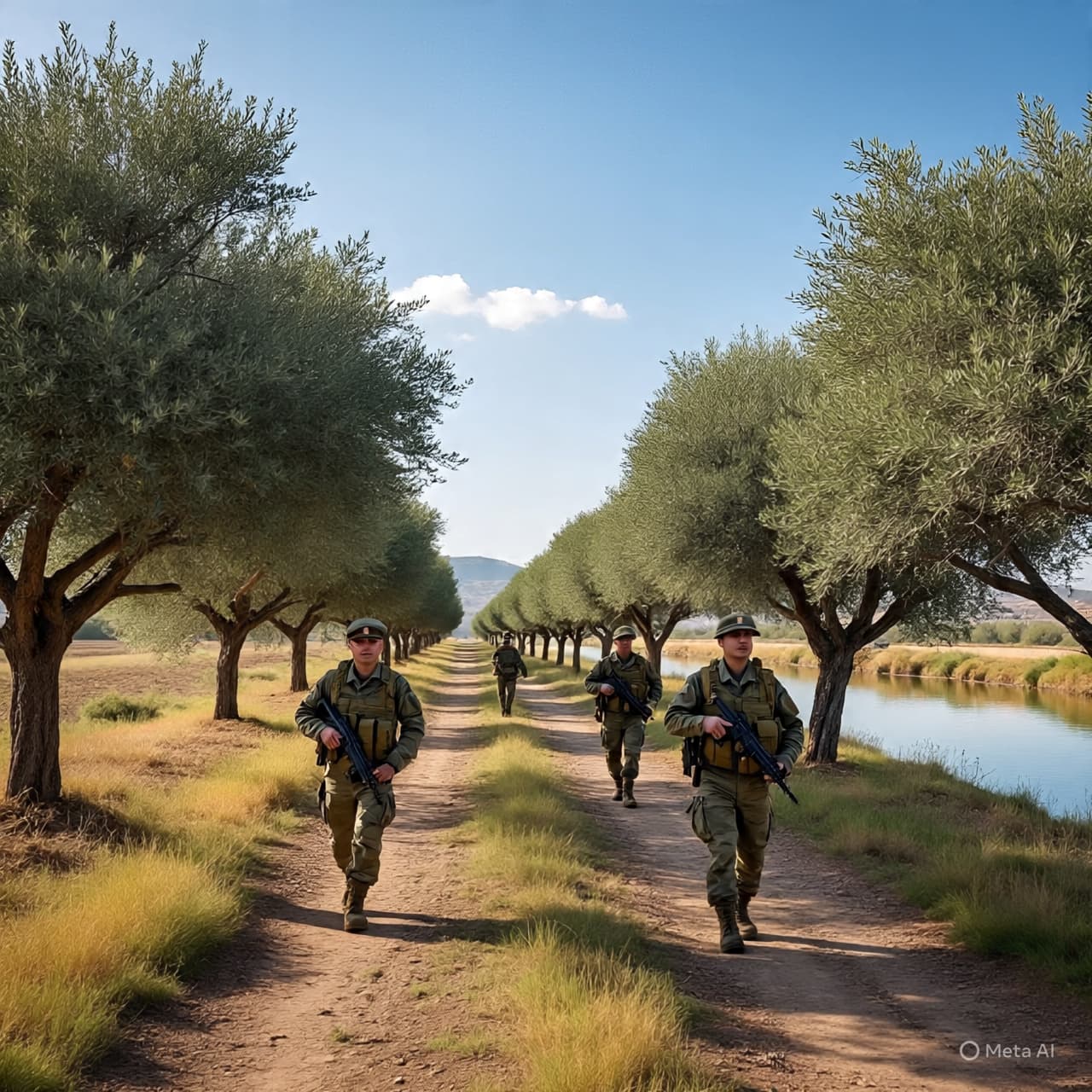
In the quiet hours before dawn in southern Lebanon, where olive groves meet dusty roads near the Litani River, a new chapter seems to unfold. The breeze seems to carry both the weight of history and the promise of change, as if the land itself is pausing to watch the Lebanese army’s flags flutter where once only other banners stood. In this moment, the rhythm of daily life is intertwined with a profound shift a nation delicate yet persistent in its pursuit of unity and self-determination.
For decades, southern Lebanon has been more than a borderland: it has been a tapestry of hopes and tensions, stitched with memories of conflict and dreams of peace. The Lebanese army’s recent declaration that it has extended operational control and established a state monopoly on arms in the south is not just a report from a military headquarters; it is a reflection of a country’s aspiration to reclaim its sovereignty in its own tone and measure. In a region where the shadow of non-state armed groups once loomed large, this step symbolizes a yearning for a shared future that belongs to all Lebanese, not to factions alone.
The announcement, echoing from the corridors of Beirut to the villages near the border, carries both tangible and symbolic meaning. It marks the completion of the first phase of a broader plan to assert state authority across the nation’s territory and diminish the role of non-state systems of force. This plan, rooted in the “Homeland Shield” roadmap, seeks to weave a single thread of legal and peaceful authority throughout Lebanon. Yet even as the army says it has effectively extended control south of the Litani River save for territory still under Israeli presence the land remains layered with unanswered questions and unfinished work.
Clearing unexploded ordnance, dismantling tunnels, and removing remnants of conflict are tasks that defy neat closure. They are reminders that history does not yield easily to new maps or new orders. And beyond the technical tasks on the ground, there remains the human heartbeat of this land: farmers returning to their fields, children walking to school under watchful skies, and families whose stories are shaped by both resilience and longing. Each of these is part of the subtle texture of Lebanon’s present, as the army’s presence takes on a deeper social meaning beyond uniforms and command posts.
Across geopolitical capitals watching closely from Washington to Jerusalem reactions are measured with both hope and skepticism. Israeli officials have described the extension of state authority as “an encouraging beginning,” while urging broader disarmament and cautioning that the work ahead is far from complete. Within Lebanon itself, Prime Minister Nawaf Salam and his ministers emphasize that security reforms must go hand-in-hand with political and economic reforms to attract confidence and stability. In the gentle cadence of political discourse in Beirut, every phrase carries the weight of years of struggle and the fragile promise of renewal.
Still, in moments of quiet under open skies, the countryside seems to hold its breath. What does it mean when an army asserts control over a territory long shaped by a powerful militia? For some, it hints at a future where the rule of law is woven into daily life; for others, it is a cautious first step in a long journey toward national cohesion. In either case, the earth itself split between vineyards and the roads worn by generations seems to whisper that no shift of power, no matter how welcome, is ever without complexity.
In the soft light of morning, as the first rays touch the ancient hills and valleys of southern Lebanon, people go about their daily routines a quiet testament to resilience and hope. In these ordinary acts of living, there resides a deeper story: a nation seeking peace not through dominance, but through presence, through the gentle assertion of shared identity and responsibility. The Lebanese army’s declaration may be a milestone on this path, but the true measure of its success will be seen in the quiet return of laughter, the safety of fields once left fallow, and a future written by the many voices of Lebanon itself.
AI Image Disclaimer (Rotated Wording) “Visuals are created with AI tools and are not real photographs.”
Sources (media names only):
Reuters Financial Times Associated Press The National Al Jazeera
Published by Banx Network. This article is part of the Banx decentralized media programme, powered by the BXE token on the XRP Ledger.