The Atacama Desert has long held a reputation for its arid stillness, a place where rain is a myth and life clings to the edges of existence. For decades, it has been celebrated as the oldest continuously dry region on Earth, a landscape frozen in time by its lack of water. Yet, nature often keeps secrets buried deep within its layers, waiting for the right moment to reveal them. A recent discovery of an ancient capybara tooth in this barren expanse has stirred the scientific community, suggesting that the desert’s history may be far more complex—and wetter—than previously imagined.
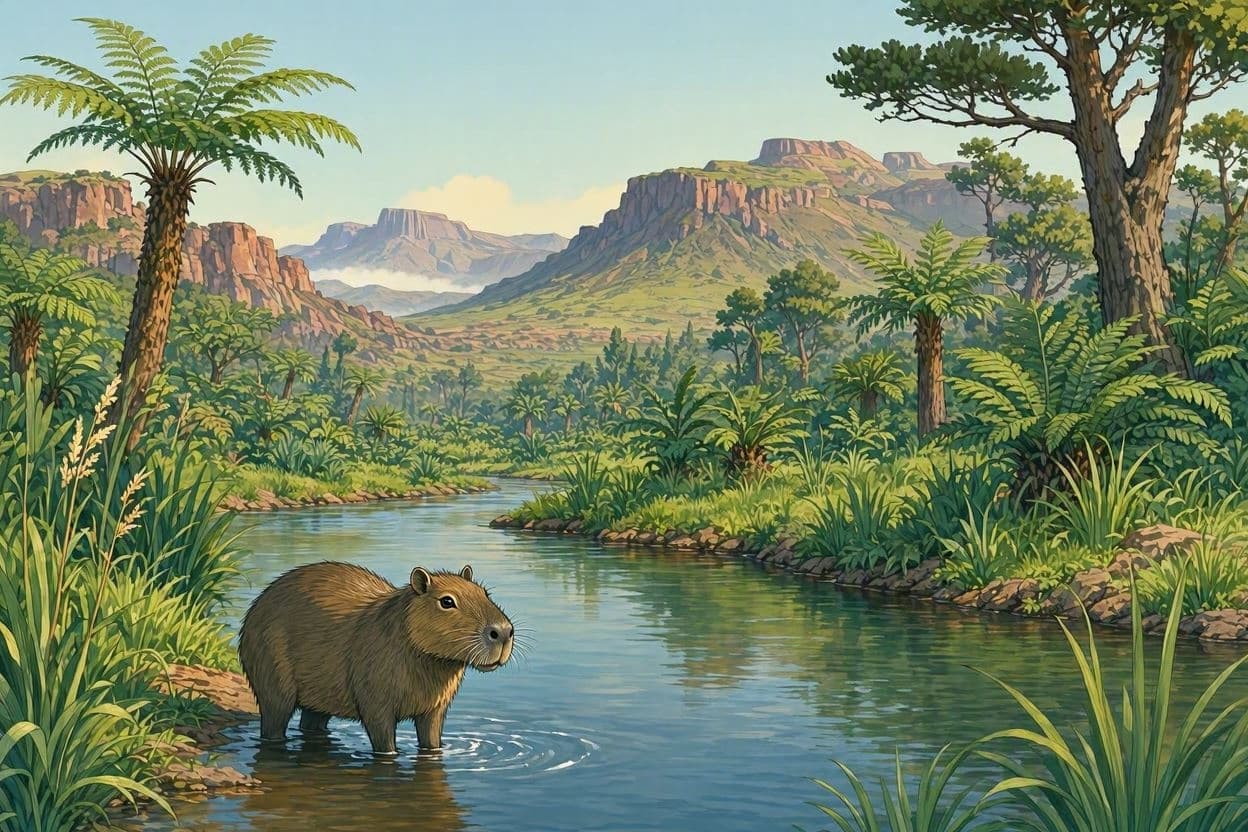
The fossil, dated to approximately 8.8 million years ago, was found in the coastal regions of northern Chile. Capybaras, the world’s largest rodents, are semi-aquatic animals that thrive in lush, water-rich environments. Their presence in what is now one of the driest places on the planet seems contradictory, like finding a penguin in the Sahara. However, this single tooth tells a story of a different climate, one where rivers flowed and vegetation flourished, supporting a diverse ecosystem that included these gentle giants.
Researchers from the University of Arizona and their colleagues in Chile analyzed the tooth alongside other paleontological evidence, including plant fossils and sediment samples. The data suggests that during the Late Miocene epoch, the region experienced a much wetter climate, likely influenced by different atmospheric patterns and ocean currents. This period of humidity would have created a corridor for species to migrate across the continent, challenging the notion that the Atacama has always been an impenetrable barrier of dryness.
The discovery does not entirely dismiss the Atacama’s status as an extreme desert today, but it does reshape our understanding of its timeline. Instead of being continuously dry for millions of years, the region may have undergone significant climatic shifts, oscillating between aridity and moisture. This dynamic history offers valuable insights into how Earth’s climate systems respond to global changes, providing a natural laboratory for studying past and future environmental transitions.
For the scientists involved, the find was both surprising and exhilarating. "We were stunned," admitted one of the lead researchers, noting that capybaras are not animals one expects to find in such a harsh environment. The identification of the tooth required careful comparison with modern and extinct species, confirming its origin and age. This meticulous process highlights the importance of paleontology in reconstructing the hidden narratives of our planet’s past.
The implications extend beyond local geology, touching on broader questions of biodiversity and evolution. If the Atacama was once a green corridor, it may have played a crucial role in the dispersal of species across South America. This pathway could have allowed animals and plants to move between the Amazon basin and the Pacific coast, fostering genetic exchange and ecological diversity. Understanding these ancient routes helps explain the rich biological heritage of the continent today.
As the study gains attention, it invites a reevaluation of other "permanent" features of our world. Just as the Atacama’s dryness is not as eternal as once thought, other landscapes may also hold surprises beneath their surfaces. The fossil serves as a humble reminder that our knowledge of Earth’s history is always evolving, shaped by new discoveries and fresh perspectives. It encourages us to look closer at the places we think we know best.
The capybara tooth from the Atacama Desert is more than just a curious artifact; it is a key to unlocking a wetter, greener past. As researchers continue to piece together the region’s climatic history, the desert reveals itself not as a static monument to dryness, but as a dynamic participant in Earth’s ever-changing story. This discovery reminds us that even in the most barren places, life and change have left their mark, waiting to be found.
AI Image Disclaimer: Please note that any accompanying images for this article are AI-generated representations intended for illustrative purposes only.
Sources: Phys.org, University of Arizona News, Nature Scientific Reports, IFLScience, The Arizona Insider
Published by Banx Network. This article is part of the Banx decentralized media programme, powered by the BXE token on the XRP Ledger.