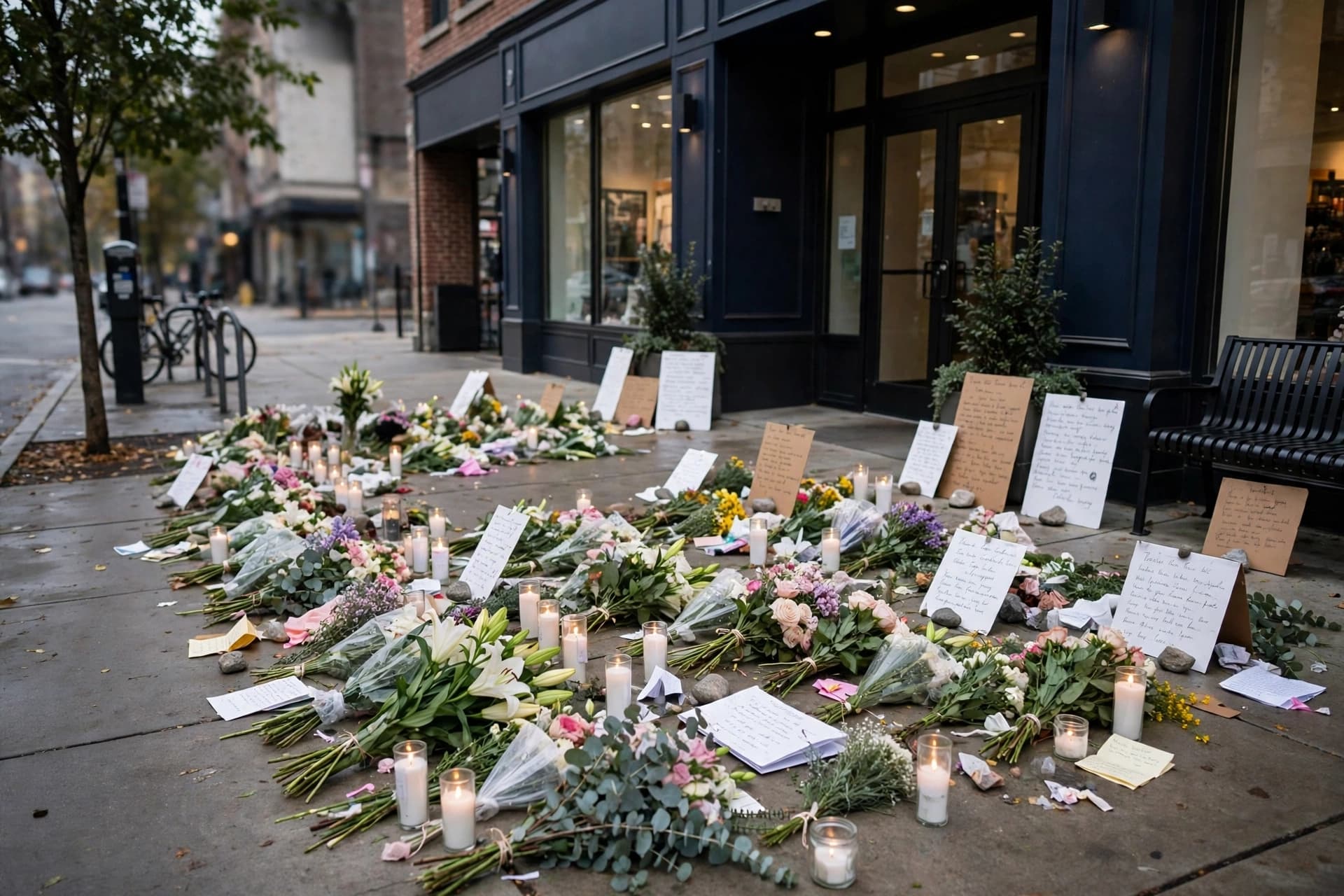
Halloween in America has always carried a dual nature—a night when the ordinary rules loosen, when strangers open their doors to strangers, when the line between playful fright and genuine danger is meant to be safely blurred. This year, in too many cities, the blurring gave way to something else entirely, and the cost was measured in lives.
Across the country, a wave of gun violence marred the weekend's celebrations, leaving more than a dozen dead and over ninety injured in incidents that unfolded at costume stores, football stadiums, college town streets, and neighborhood parties . In Dallas, four people were killed and fifteen wounded in three separate shootings within roughly seventy-five minutes in the Deep Ellum entertainment district . In Birmingham, Alabama, one person died and eight were wounded just outside Legion Field after the annual Magic City Classic football game, a tradition spanning more than a century between two historically Black universities . In Delaware—a state of just over a million people—two mass shootings occurred on Halloween night itself, one at an outdoor party in Ellendale and another on a crowded Main Street near the University of Delaware .
The details carry their own quiet weight. In Fairfield, California, a thirty-one-year-old pregnant woman was killed inside a Spirit Halloween store as people shopped for last-minute costumes . In Bloomington, Illinois, a nineteen-year-old woman died and seven others were injured near the Illinois Wesleyan University campus . In Fayetteville, Arkansas, six people were taken to hospitals after an altercation escalated into gunfire . Each of these places—a store, a campus edge, a strip mall—belongs to the ordinary geography of American life.
Officials have spoken with a mixture of grief and resolve. Delaware Governor Matt Meyer issued a statement that carried the plainness of exhaustion: "This is not normal. We must never accept gun violence as a part of life in Delaware" . Birmingham Mayor Randall Woodfin, speaking after the shooting that followed a game he had celebrated hours earlier, offered a reflection on the tension between tradition and tragedy: "We can have an honest conversation about public safety while continuing to embrace and celebrate the traditions that have helped shape our city and our institution" . The University of Delaware's president, Laura Carlson, asked the community to hold the victims in their thoughts while acknowledging the toll on those who witnessed the violence .
The weekend's violence arrived just over two weeks after a mass shooting at an Oregon elementary school killed three students and a teacher . It is a rhythm that has become familiar in a way that feels like resignation, each incident a note in a refrain that officials condemn and communities mourn and the country struggles to change.
Investigations continue in multiple jurisdictions. Some arrests have been made, though authorities in Dallas said they were still working to determine whether the three shootings there were connected . The questions that remain are the ones that always remain: how the weekend's gatherings, meant to be moments of release and joy, became scenes of grief, and what it would take to keep the next celebration from joining the list.
Image Disclaimer: The visuals in this article were produced by artificial intelligence and are illustrative rather than documentary.
Sources: CNN, The Manila Times, RaiNews
Published by Banx Network. This article is part of the Banx decentralized media programme, powered by the BXE token on the XRP Ledger.