
There is a particular weight that settles over a governor's office when a death warrant crosses the desk—a document that authorizes the state to take a life, signed with the knowledge that the machinery of execution will follow unless something intervenes. On Thursday, Governor Ron DeSantis withdrew such a warrant for the first time in his tenure, canceling the scheduled execution of a 74-year-old man whose lawyers said dementia had left him unable to understand why he was to die.
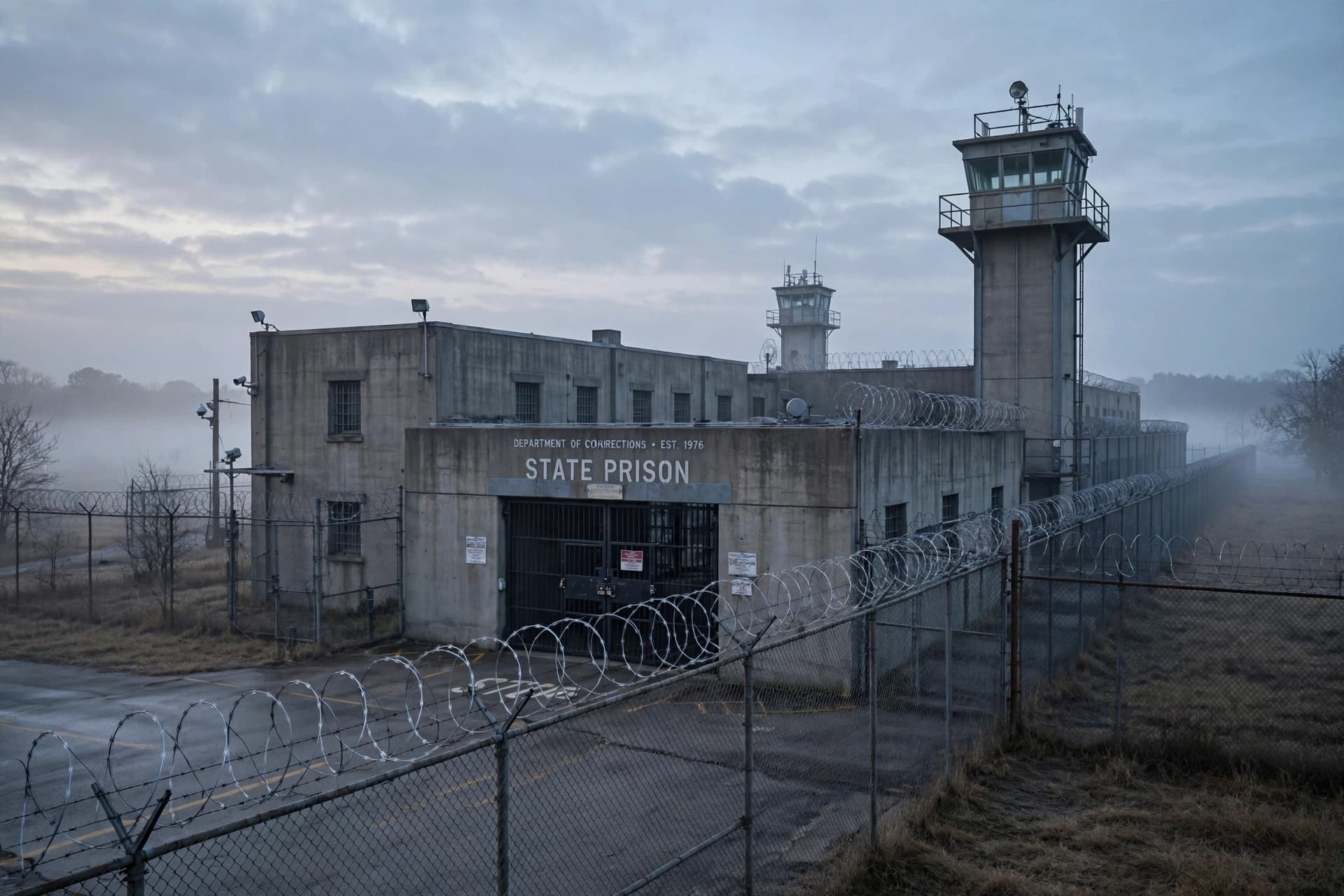
William Lee Thompson had been set to be executed Tuesday at Florida State Prison in Raiford for the 1976 murder of Sally Ivester, a 23-year-old woman who had moved to Miami from Georgia hoping to start anew . He had been on death row, off and on, for nearly five decades—one of Florida's longest-serving condemned inmates .
The crime itself was horrific. Court records describe how Thompson and an accomplice, Rocco Surace, beat Ivester with chains, burned her with cigarettes, and assaulted her with a chair leg after she could provide only $25 of the money they demanded. She died of shock and internal injuries. Police at the time called it "Dade's meanest murder" . A juror fainted during Thompson's trial .
But in recent months, the question before the state was not what Thompson had done in 1976, but whether he could comprehend what was about to be done to him. His attorney, Brittney Lacy, filed an emergency petition describing a man who did not know who the president was—he said "Bush"—and could not recall recent hospitalizations or surgeries . A neuropsychologist concluded he "meets the criteria for insanity due to his dementia and significant cognitive decline" and "lacks the mental capacity to understand the fact of his impending execution and the reason for it" .
DeSantis had temporarily stayed the execution in September and appointed three psychiatrists to evaluate Thompson. The results of that October 1 evaluation were not publicly released . The governor's letter withdrawing the warrant provided no explanation .
Grace Hanna, executive director of Floridians for Alternatives to the Death Penalty, called the decision "correct," saying Thompson "is gravely ill, not competent, and intellectually disabled. His execution would have been an abject violation of the Eighth Amendment and an affront to human dignity" .
The withdrawal comes at a moment of heightened scrutiny on capital punishment in the United States. In Tennessee, an execution attempt on Christa Pike failed last week after she survived two lethal doses. Florida carried out 19 executions last year, a state record since the death penalty was reinstated in 1976
A second execution scheduled for the same day will proceed. James Robertson, 63, is set to die for the 2008 murder of his cellmate, Frank Hart. Robertson has waived all appeals .
Thompson remains on death row, and a new warrant could be signed in the future. For now, the machinery has paused.
AI Image Disclaimer: The images associated with this report were generated by artificial intelligence and are illustrative in nature.
Sources: CBS News Miami, Associated Press, Centre Daily Times, New York Post, Daily Mail, The Canadian Press
Published by Banx Network. This article is part of the Banx decentralized media programme, powered by the BXE token on the XRP Ledger.



.jpg&w=3840&q=75 "Zelensky Warns China Is Helping Russia Develop a Starlink Rival")