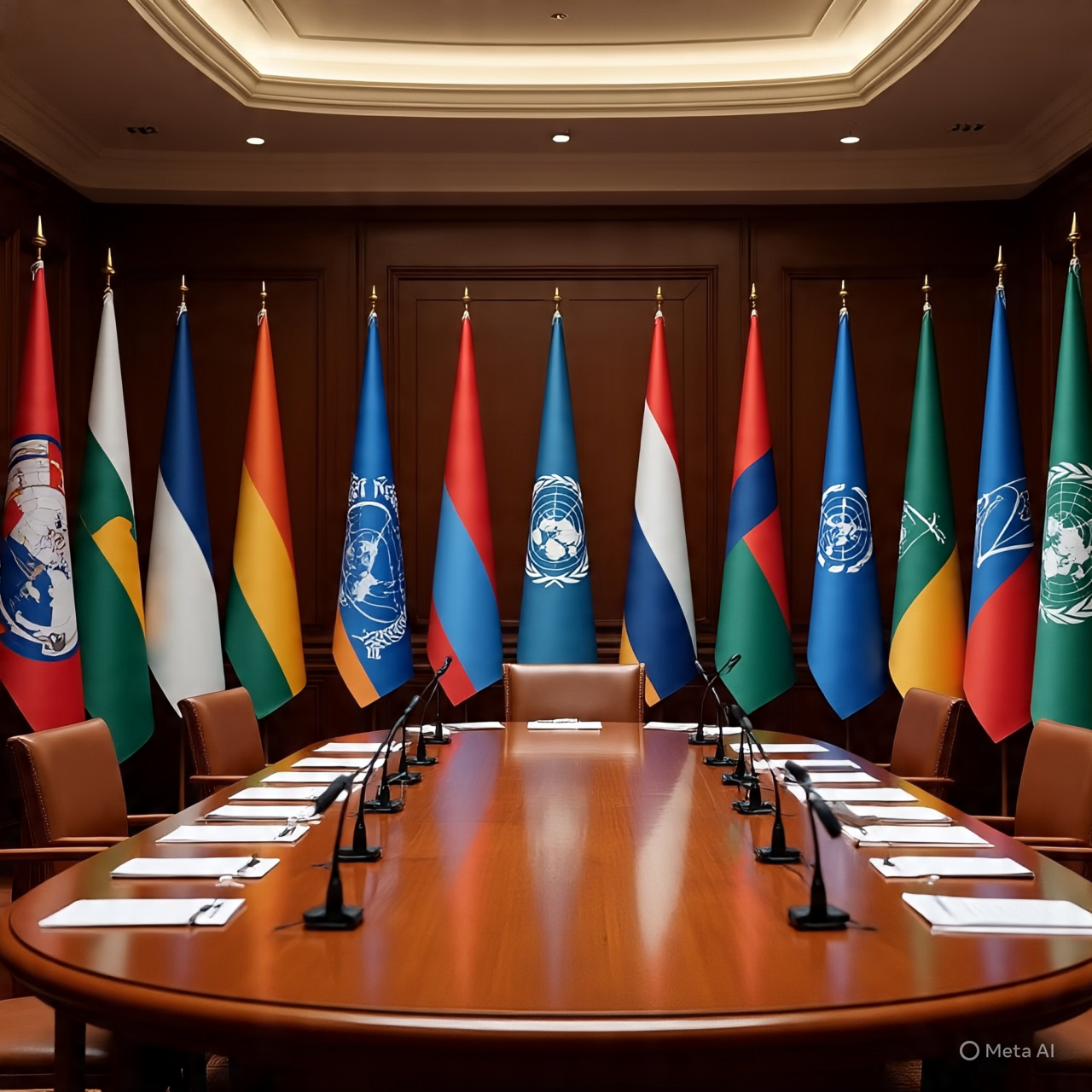
There is a fragile hush in the grand halls of the United Nations tonight — as though the very walls are holding their breath, awaiting a moment that could shift the shape of a war-torn land. In that quiet, the world leans in: will a controversial peace plan find its seal in the chamber of global power?
On Monday, the UN Security Council is set to vote on a United States–drafted resolution that would endorse Donald Trump’s 20-point Gaza peace plan. This vote is not merely symbolic — it aims to sanction a pathway for reconstruction, disarmament, and a new governing structure in Gaza.
The draft resolution envisions establishing a transitional “Board of Peace”, a technocratic body that would oversee Gaza’s reconstruction until December 2027. It also proposes a temporary International Stabilization Force (ISF), tasked with protecting civilians, securing humanitarian corridors, and overseeing the demilitarization of armed groups in Gaza. According to U.S. diplomats, this force would coordinate with Israel, Egypt, and newly trained Palestinian police — crafting a security architecture meant to stabilize the enclave.
Part of what makes this moment so delicate is the tension between competing visions. Russia has submitted a counter-resolution, which reflects a more regionally aligned perspective, calling for greater UN oversight and a less U.S.-centric role. Despite this, Washington insists that a failure to adopt its proposal could carry “grave, tangible … entirely avoidable consequences” for Palestinians in Gaza.
Diplomatically, the United States claims broad backing: several Arab and Muslim states, including Egypt, Saudi Arabia, Qatar, Turkey, and Indonesia, are reportedly open to contributing troops, while also supporting the formation of the “Board of Peace.” The U.S. mission says it has conducted high-level consultations with non-permanent members of the Security Council to build consensus.
Yet, not all are convinced. Critics worry about sovereignty: some see the ISF as imposing foreign control over Gaza, and the notion of a board chaired (in theory) by Trump raises further questions about legitimacy. Meanwhile, right-wing elements within Israel oppose language in the draft that hints at a possible future Palestinian state — a point Moscow and others are pressing.
Beyond geopolitics, there is a deeply human dimension: Gaza remains scarred by two years of war. Civilians continue to endure shortages, displacement, and trauma. For many, this vote could be a turning point — either toward reconstruction and hope, or toward renewed contest.
As diplomats gather and the gavel nears, the world watches. If the resolution passes, it could launch an international mission in Gaza early next year. But if it fails, the fragility of the current ceasefire may be exposed, and with it, the long shadow of a conflict far from resolved.
AI Image Disclaimer “Visuals are created with AI tools and are intended for concept, not real photographs.”
Published by Banx Network. This article is part of the Banx decentralized media programme, powered by the BXE token on the XRP Ledger.