The story of human survival is often told as a narrow escape from the brink of extinction. For decades, scientists have pointed to the cataclysmic eruption of Mount Toba in Indonesia roughly 74,000 years ago as the pivotal moment when our ancestors were reduced to a mere handful of breeding pairs. This "Toba catastrophe theory" suggested that a volcanic winter plunged the Earth into darkness and cold, choking off resources and leaving humanity hanging by a thread. However, new archaeological and genetic evidence is gently unraveling this dramatic narrative, suggesting that while the eruption was indeed massive, its impact on human populations may have been far less devastating than previously thought. It is a reminder that nature’s fury, while immense, does not always dictate the fate of life with absolute finality.
Recent studies examining stone tools and sediment layers across Africa and Asia reveal a surprising continuity in human activity during the period following the eruption. Rather than a sharp decline in population or technological innovation, the archaeological record shows resilience. Communities continued to craft tools, hunt, and adapt to their environments, indicating that the volcanic winter, if it occurred, was not severe enough to cause a global bottleneck. This challenges the long-held belief that Toba was the primary driver of human genetic uniformity.
Genetic data, too, offers a more nuanced picture. While humans do share a relatively low level of genetic diversity compared to other primates, the timing of this reduction does not align perfectly with the Toba event. Instead, it appears that population fluctuations were gradual and influenced by a variety of climatic and ecological factors over thousands of years, rather than a single, sudden disaster. The idea of a near-extinction event is being replaced by a model of steady adaptation and migration.
The revision of this theory does not diminish the power of the Toba eruption itself. It remains one of the largest volcanic events in the last two million years, capable of reshaping landscapes and altering regional climates. But its role in human history is being recalibrated from a singular apocalypse to a significant environmental challenge that our ancestors successfully navigated. This shift in perspective highlights the robustness of early human societies.
For researchers, this discovery opens new avenues for understanding how humans interact with extreme environmental changes. If our ancestors could withstand the aftermath of a super-volcano without collapsing, what does that say about our capacity for resilience? It suggests that cooperation, technological flexibility, and social structures played a crucial role in survival, long before the advent of modern civilization.
The debate continues, as science is rarely settled with a single study. Yet, the growing consensus is that the Toba catastrophe theory was an oversimplification of a complex history. By looking closer at the evidence, we find a story not of near-death, but of endurance. It is a testament to the tenacity of life in the face of planetary upheaval.
The reevaluation of the Mount Toba eruption’s impact suggests that early humans were more resilient than previously believed. While the volcano was a major geological event, it did not bring humanity to the brink of extinction. This insight enriches our understanding of human evolution and adaptability.
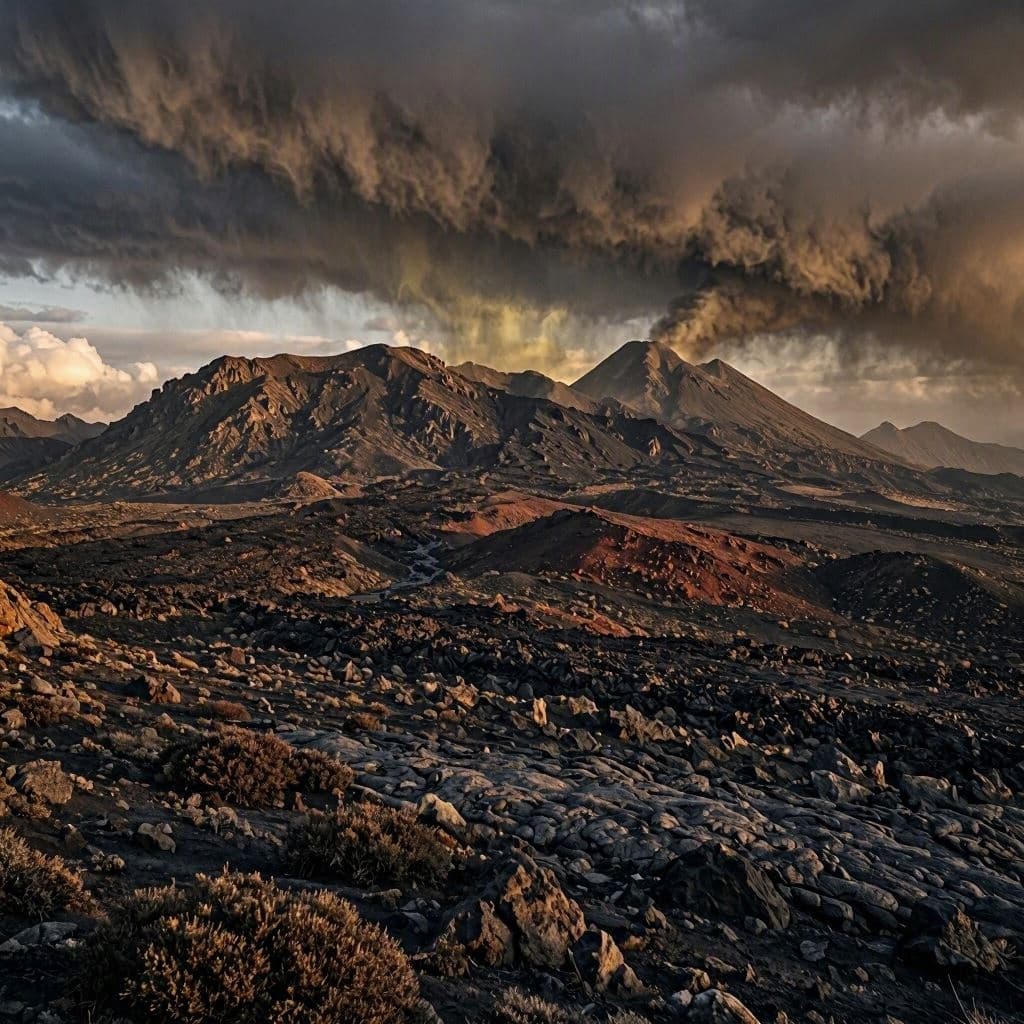
AI Image Disclaimer: The visual elements accompanying this report are AI-generated interpretations designed to reflect the geological and anthropological context of the story.
Sources: Nature Communications Smithsonian Magazine Live Science
Published by Banx Network. This article is part of the Banx decentralized media programme, powered by the BXE token on the XRP Ledger.