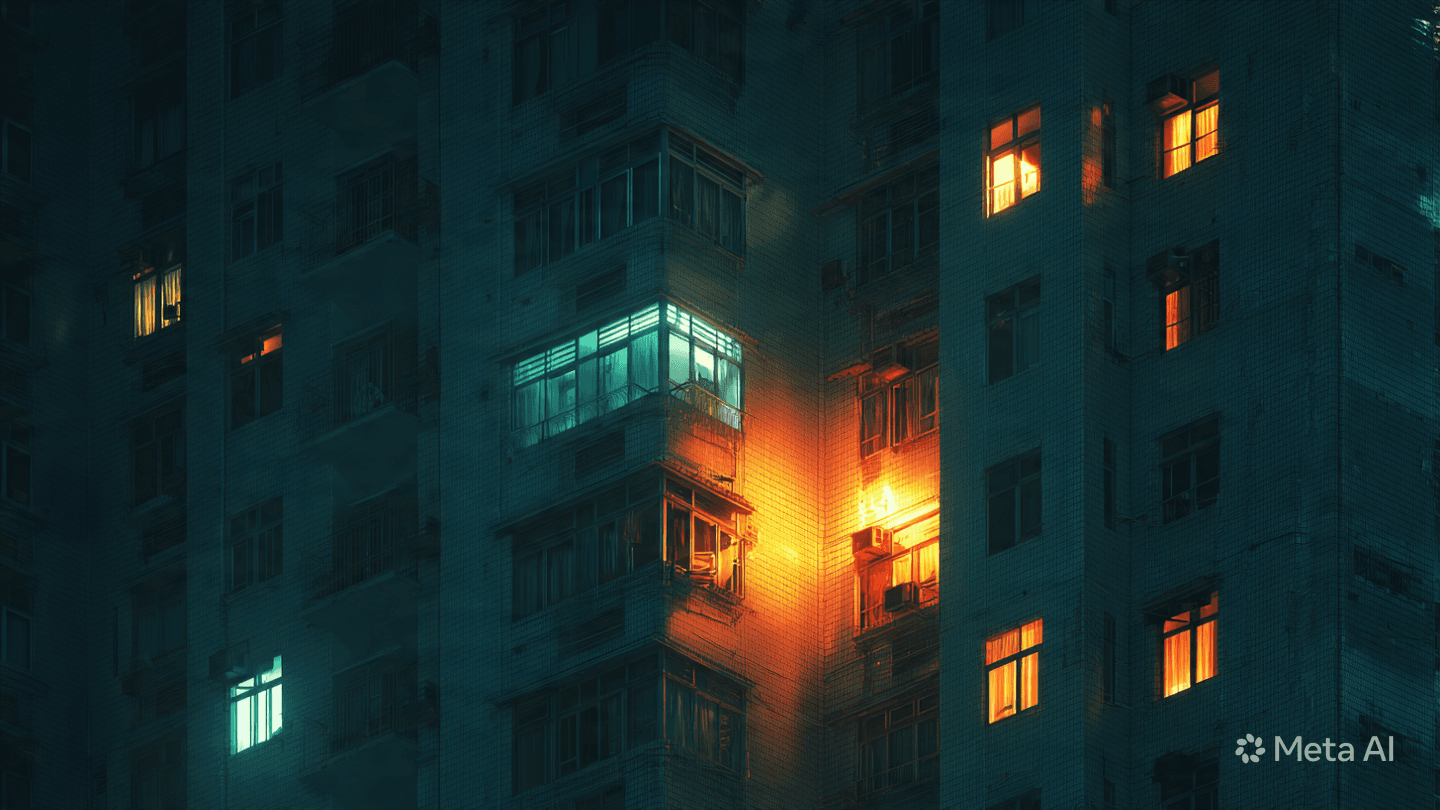
The home is intended to be the ultimate site of safety—a place where the unpredictability of the outside world is held at bay by walls, doors, and the comfort of our daily habits. When a fire breaks out and residents are reported trapped, that sense of sanctuary is shattered. The building is transformed into a site of desperate, high-stakes crisis, pulling the entire neighborhood into a collective moment of anxious, synchronized waiting. It is a reality that reminds us of the fragility of the structures we inhabit and the intensity of the danger that can arise in an instant.
For those trapped, the transition from the comfort of their living space to the suffocating presence of smoke and heat is a trauma beyond words. The arrival of the firefighters—the roar of the trucks, the disciplined movement of the teams in their heavy gear—is the first, vital link to survival. Their work, conducted in the volatile, blinding environment of the fire, is a testament to the essential, protective bond between the community and those who run toward the danger when everyone else is running away.
The investigation that follows is a process of forensic, clinical patience. Experts are now working to sift through the charred remnants of the building, looking for the specific cause of the blaze. It is a necessary, analytical pursuit, yet it is performed with a respectful awareness that the wreckage represents not just a failure of safety, but an interruption of a home and a life. The goal is to understand the event so that the same crisis does not visit another family in the future.
This event serves as a focal point for the wider discourse on fire safety and building code compliance. It forces us to confront the balance between the density of our living spaces and the rigor of the protections we mandate for them. When a fire occurs, it is felt as a lapse in the collective dream of a secure home, a reminder that the infrastructure of our daily lives must be guarded with an unwavering, relentless standard of vigilance.
As the authorities secure the site, the broader community finds itself reflecting on the invisible protections that govern our housing. We live in close proximity, sharing walls and corridors, trusting in the fire safety standards and the communal vigilance that keeps our homes secure. When those standards are tested by fire, it forces a collective re-evaluation, a quiet questioning of the systems that define our safety in our vertical, shared living spaces.
The work of stabilizing the building and supporting the affected families is expected to continue. It is a slow, methodical process that prioritizes both the integrity of the structure and the long-term well-being of the residents. There is little room for haste when the memory of the fire remains so fresh, and the focus remains firmly on the recovery and the prevention of future incidents.
As the rescue operations continue, the attention remains on the well-being of the residents. The incident serves as a stark, cautionary note for the public, emphasizing the critical importance of fire safety awareness and the maintenance of emergency protocols in residential buildings. In the days ahead, the facts behind the fire will be systematically unraveled, providing a clearer narrative of how the crisis began and how it can be mitigated.
Fire and rescue services have deployed multiple aerial ladders and search teams to locate and evacuate individuals reported trapped. The building has been evacuated, and medical units are standing by to provide immediate care for those rescued. Authorities have initiated an investigation into the fire’s origins, with preliminary reports suggesting that electrical faults or improper storage of hazardous materials may be considered as potential factors.
Published by Banx Network. This article is part of the Banx decentralized media programme, powered by the BXE token on the XRP Ledger.