
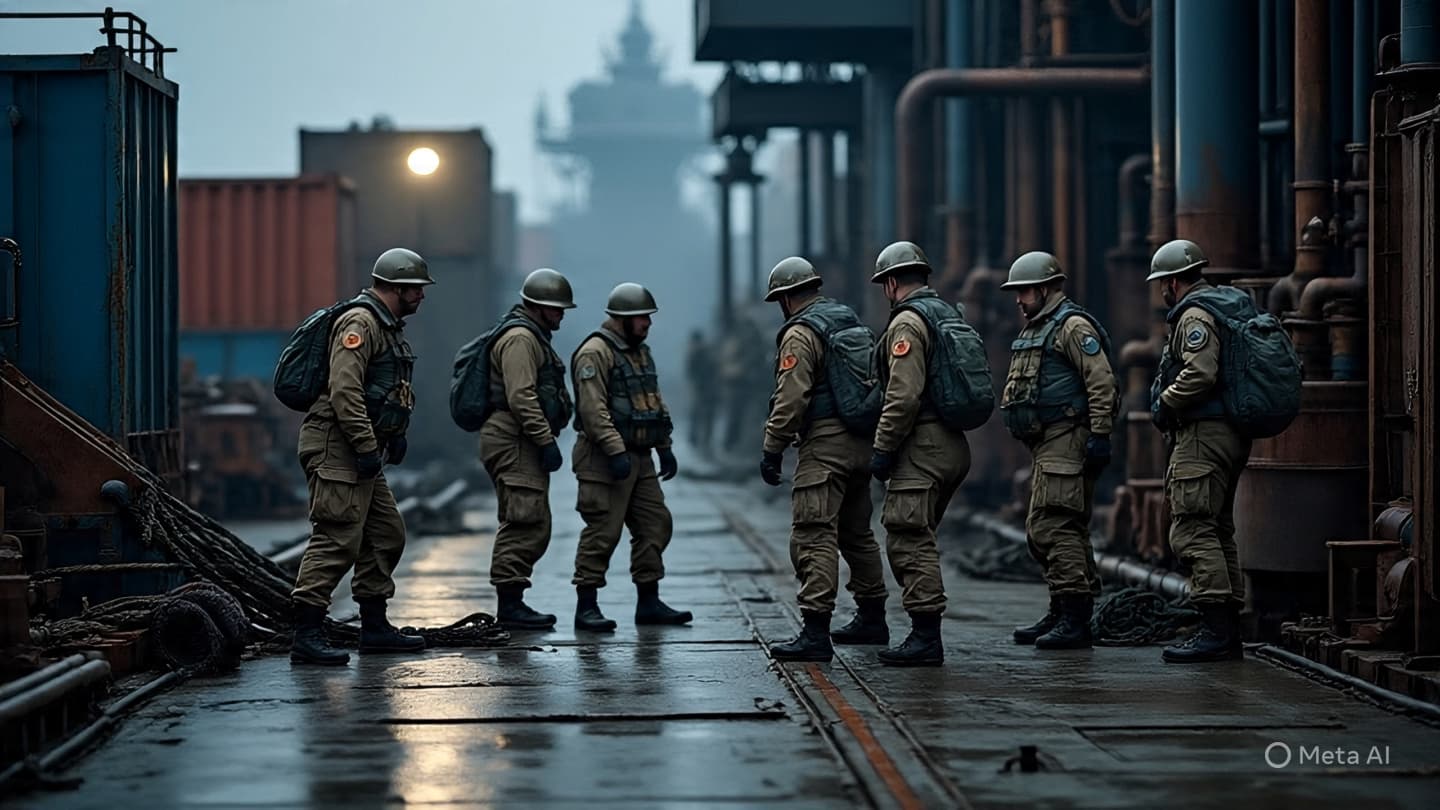
Key Highlights
- Recent U.S. Navy interception of a stateless tanker linked to Iran.
- The tanker was reportedly en route to China amid ongoing sanctions.
- The incident underscores complexities in maritime law and global trade.
The vastness of the ocean often creates a sense of suspension, where the boundaries of nations blur into the currents. Ships traverse these waters, carrying not just cargo but the weight of legal frameworks, restrictions, and the intricate architecture of global trade. A recent incident involving the interception of a stateless tanker by the United States Navy has brought to light the fragile lines that govern maritime navigation and trade.
The stateless tanker, believed to be sailing from Iran towards China, was interdicted by the U.S. Navy, according to official reports. Stateless vessels operate without a clear national registry, placing them in a unique and often precarious position within international maritime law. Such ships frequently navigate heavily monitored corridors, especially when linked to sanctioned energy trade networks or disputed commercial flows.
The shipping routes between Iran and China are part of a complex ecosystem where energy exports, geopolitical alignments, and regulatory frameworks intersect. Oil and petroleum products are central to this network, and vessels transporting them are subject to rigorous inspection and enforcement protocols. The U.S. Navy's action reflects a broader pattern of maritime enforcement operations aimed at implementing sanctions and regulating shipping activities deemed non-compliant with international or national laws.
The interception of the stateless tanker illustrates the ambiguity surrounding such vessels. Without a clear flag state, questions arise regarding accountability, insurance, and legal jurisdiction. This ambiguity makes stateless ships focal points in discussions about maritime governance and enforcement. For Iran, maritime exports, particularly energy-related shipments, have been significantly influenced by shifting sanction regimes and international negotiations. Conversely, for China, energy imports are crucial for sustaining its vast industrial economy, making maritime supply chains a persistent strategic concern.
The U.S. Navy's presence in this incident highlights the role of naval power in maintaining and enforcing maritime regulations. Operations typically involve monitoring, boarding procedures, and verification of cargo and documentation when vessels are suspected of violating sanctions. However, beyond enforcement, there exists a quieter reality of maritime ambiguity. The sea can obscure identity, diffuse ownership, and create legal grey zones shaped by shifting registries and commercial arrangements.
As global trade adapts to geopolitical pressures, incidents like this one reflect not only enforcement actions but also the evolving structure of maritime order. The routes between Iran and China remain active corridors for energy movement, increasingly shaped by monitoring systems and regulatory constraints. In this broader oceanic expanse, where jurisdiction is defined by maritime zones and enforcement by coordinated patrols, each interception becomes part of a larger narrative—one that emphasizes the ongoing negotiation between mobility and control.
The stateless tanker, now subject to inspection and inquiry, represents another point on a much larger map of global movement. This map is drawn not only by geography but also by the accumulation of rules governing what can pass and what must pause in the complex world of international trade.
Published by Banx Network. This article is part of the Banx decentralized media programme, powered by the BXE token on the XRP Ledger.



