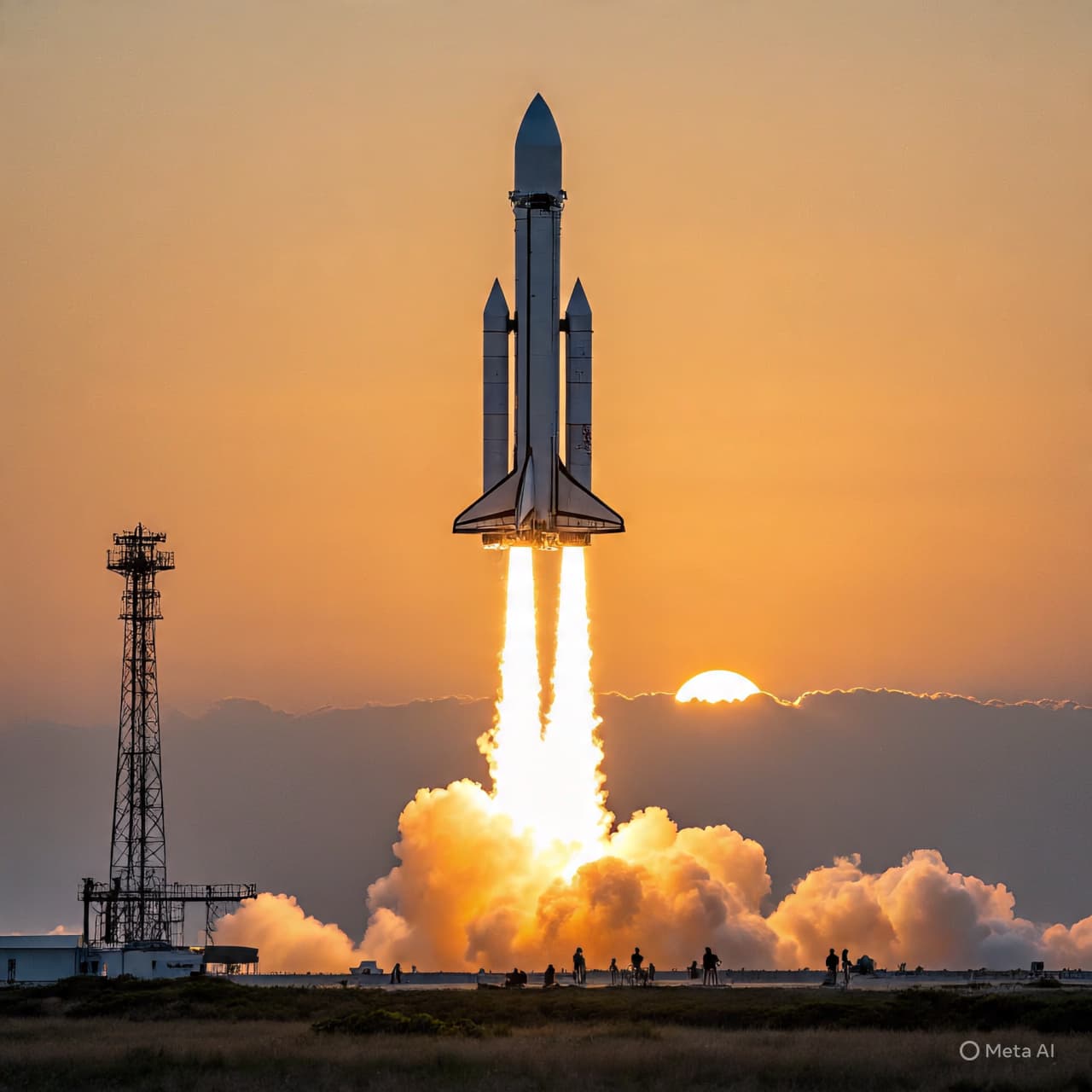
There are moments in space exploration when timing and symbolism align—so much so that a mission dubbed Crew-12 arrives at the International Space Station (ISS) on Valentine’s Day, turning a day of human connection into a moment of human achievement. After a successful early-morning liftoff from Cape Canaveral on Feb. 13, 2026, SpaceX’s Crew-12 astronauts are now approaching the culmination of their 34-hour journey: docking with the orbiting laboratory.
Riding aboard the SpaceX Crew Dragon “Freedom” and launched on a Falcon 9 rocket, four astronauts — NASA’s Jessica Meir and Jack Hathaway, European Space Agency astronaut Sophie Adenot, and Roscosmos cosmonaut Andrey Fedyaev — are set to link up with the ISS around 3:15 p.m. Eastern Time on Feb. 14.
This mission comes at a crucial moment. Expedition 74 aboard the ISS has been operating with fewer crew members following the early return of Crew-11 in January due to a medical evacuation. With Crew-12’s arrival, the station’s complement will be restored to full strength, allowing science operations and maintenance work to proceed with renewed capacity.
The voyage so far has been smooth. After separation from its Falcon 9 upper stage, Dragon entered orbit and unfurled its docking system, with the protective nose cone opening to expose the docking port as it closes in on the station.
NASA’s plans for the docking milestone include a livestream of the event, followed by the crew de-suited and preparing cargo for transfer once attached to the ISS. The hatch between Dragon and the ISS’s Harmony module is expected to open later in the afternoon, at which point the astronauts will be welcomed aboard by their station colleagues.
Once aboard, the Crew-12 team will embark on an eight-month mission conducting experiments in biology, microgravity science and materials research, contributing to long-duration human spaceflight knowledge that supports future deep-space missions. The visit will also involve routine station upkeep and possibly spacewalks, as the crew transitions into the rhythm of life on the orbiting laboratory.
The mission underscores the enduring collaboration among NASA, SpaceX, ESA and Roscosmos in managing the ISS—a partnership that has kept the station continuously inhabited for over two decades. It also highlights the role of commercial crew services in maintaining human presence in low Earth orbit.
As Dragon approaches for docking today, space enthusiasts around the world are watching this rendezvous with anticipation. It reflects not only engineering precision and teamwork, but also a symbolic return to normalcy for the ISS after recent crew transitions.
AI Image Disclaimer Images in this article are AI-generated illustrations, meant for concept only.
Sources
Reuters Associated Press BBC News Space.com Hindustan Times
Published by Banx Network. This article is part of the Banx decentralized media programme, powered by the BXE token on the XRP Ledger.