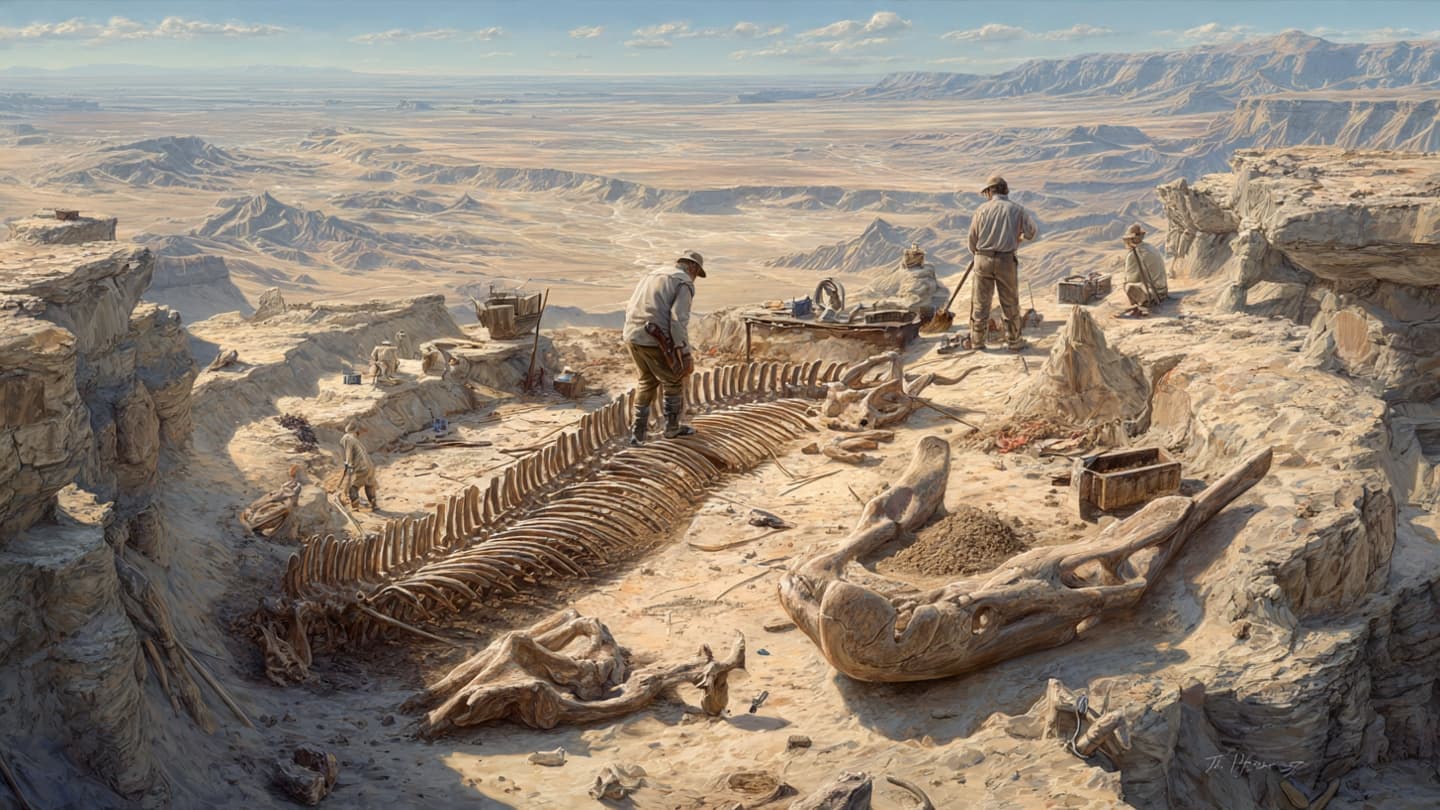
In the quiet layers of ancient earth, where deserts now stretch under modern skies, fossils occasionally reveal creatures that seem to defy expectation. A toothless relative of modern crocodilians discovered in New Mexico offers one such moment of scientific surprise.
The fossil remains suggest a reptile that lived during the Late Triassic period, a time when ecosystems were rapidly evolving and early dinosaurs were beginning to emerge.
Unlike modern crocodiles, this ancient species appears to have lacked teeth, a feature that immediately challenges assumptions about how early crocodilian relatives hunted and survived.
Researchers believe this adaptation may indicate a specialized feeding strategy, possibly relying on suction or soft-bodied prey rather than the powerful bite associated with modern descendants.
Such findings highlight the diversity of evolutionary experimentation that occurred among early archosaurs, the broader group that includes crocodiles, dinosaurs, and birds.
Paleontologists note that New Mexico’s fossil-rich formations continue to provide key insights into transitional periods of vertebrate evolution, especially during times of ecological upheaval.
Each discovery adds complexity to the evolutionary tree, showing that traits we consider “defining” today were often absent or radically different in ancient relatives.
While further analysis is ongoing, the discovery reinforces how evolution often moves through unexpected paths, shaping life in ways that can surprise even modern science.
AI Image Disclaimer: All visuals associated with this article are AI-generated artistic reconstructions for educational interpretation.
Sources (source verification check): Nature Communications, Smithsonian Magazine, Live Science, BBC Science Focus
Published by Banx Network. This article is part of the Banx decentralized media programme, powered by the BXE token on the XRP Ledger.