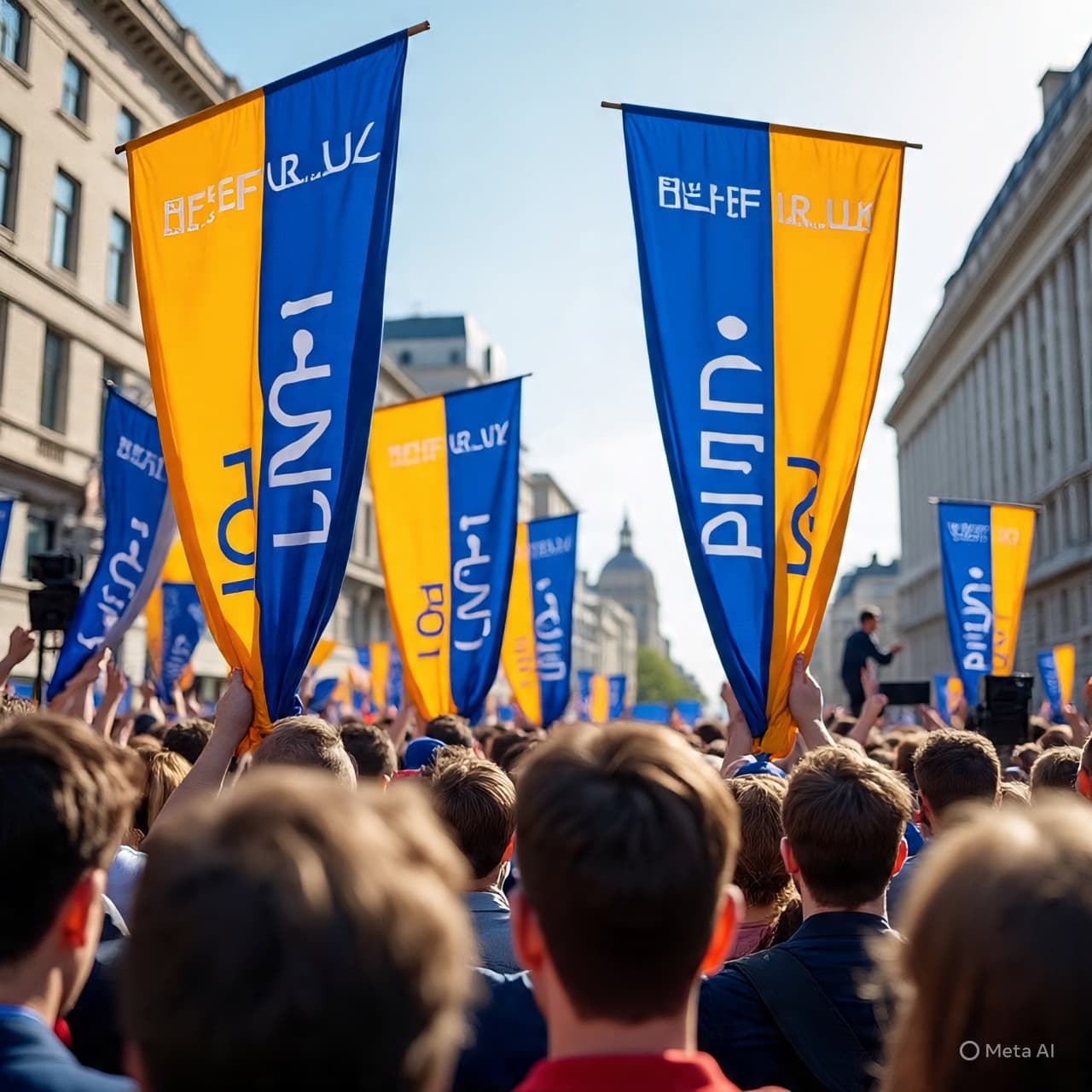
In the late afternoon light of Britain’s political landscape, a familiar silhouette walked across the parliamentary floor — not as a whisper from the wings of the past, but as a marker of change. Suella Braverman, once a figure firmly rooted in the Conservative Party’s long arc of history, declared herself affiliated with Reform UK — a gesture that sends ripples across the still waters of Westminster. Like a seasoned oak loosening its grip on familiar soil, her journey seemed both surprising and yet oddly inevitable.
For decades, Braverman’s name was etched into the story of her former party, and her voice echoed through halls where decisions shaped the direction of the realm. Yet on this chilly January day, that echo carried a different cadence — a sense of departure and arrival intertwined. At a Reform UK rally in London, she spoke from the heart of her conviction, recounting years as a Conservative and describing her choice to step toward a vision she felt was more in tune with her sense of Britain’s future.
Her defection did not stand alone like an island in a sea of continuity. In recent weeks, others — Robert Jenrick and Andrew Rosindell — had already crossed the floor, adding their footsteps to this unexpected procession. In this gentle cascade of departures from the Conservative fold, there emerged a narrative that felt less like isolated incidents and more like a current, quietly strengthening its course toward a new channel.
The language used by commentators — framing Braverman as a “big beast” of recent Tory history — hints at both her stature and the symbolic weight of her move. Such metaphors are not idle; they remind us that political life is as much about perception and momentum as it is about policy and party lines. In another time, such a figure might have remained anchored where she began; today, her choice becomes part of a broader story of realignment and reevaluation.
Perhaps what feels most affecting is not the tactical aspect of the shift, but the human texture woven through it — a blend of loyalty, disillusionment, hope, and risk. Braverman, like those who came before her in recent days, spoke of a Britain she believes is calling for something different — a sense of country “broken,” needing repair. Whether one agrees or disagrees with her conclusions, there is a wistfulness in her words: the quiet longing of someone convinced of a new path.
In the reflecting pools of public discourse, the Conservatives watched and commented, some with disappointment, others with measured acceptance. In the wings, Reform UK’s leader welcomed the newest entrant, speaking of experience and shared purpose. These scenes unfold like a slow interweaving of old hopes and new beginnings — an intricate fabric in which each thread, however familiar, must find its place.
And so the day gave way to dusk, and a narrative of change continued its quiet arc — not as a shout, nor a rupture, but as a gentle realignment under the wide sky of British politics.
In the end, what remains is not a single defection, but a mood stirring in the corridors of power — a sense that momentum, like water, finds its level.
🖼️ AI Image Disclaimer (rotated wording) “Visuals are created with AI tools and are not real photographs.”
📌 Sources The Guardian AOL / Yahoo News Yahoo News NZ BDNews24/Reuters The Week/AP
Published by Banx Network. This article is part of the Banx decentralized media programme, powered by the BXE token on the XRP Ledger.