There is a particular arithmetic to modern warfare, a calculus measured not in territory gained or lost but in the distance a drone can travel and the value of what it destroys. This weekend, that arithmetic produced a number that is difficult to ignore: more than one thousand. It is the largest aerial bombardment of its kind in a war that has already redefined what large means.
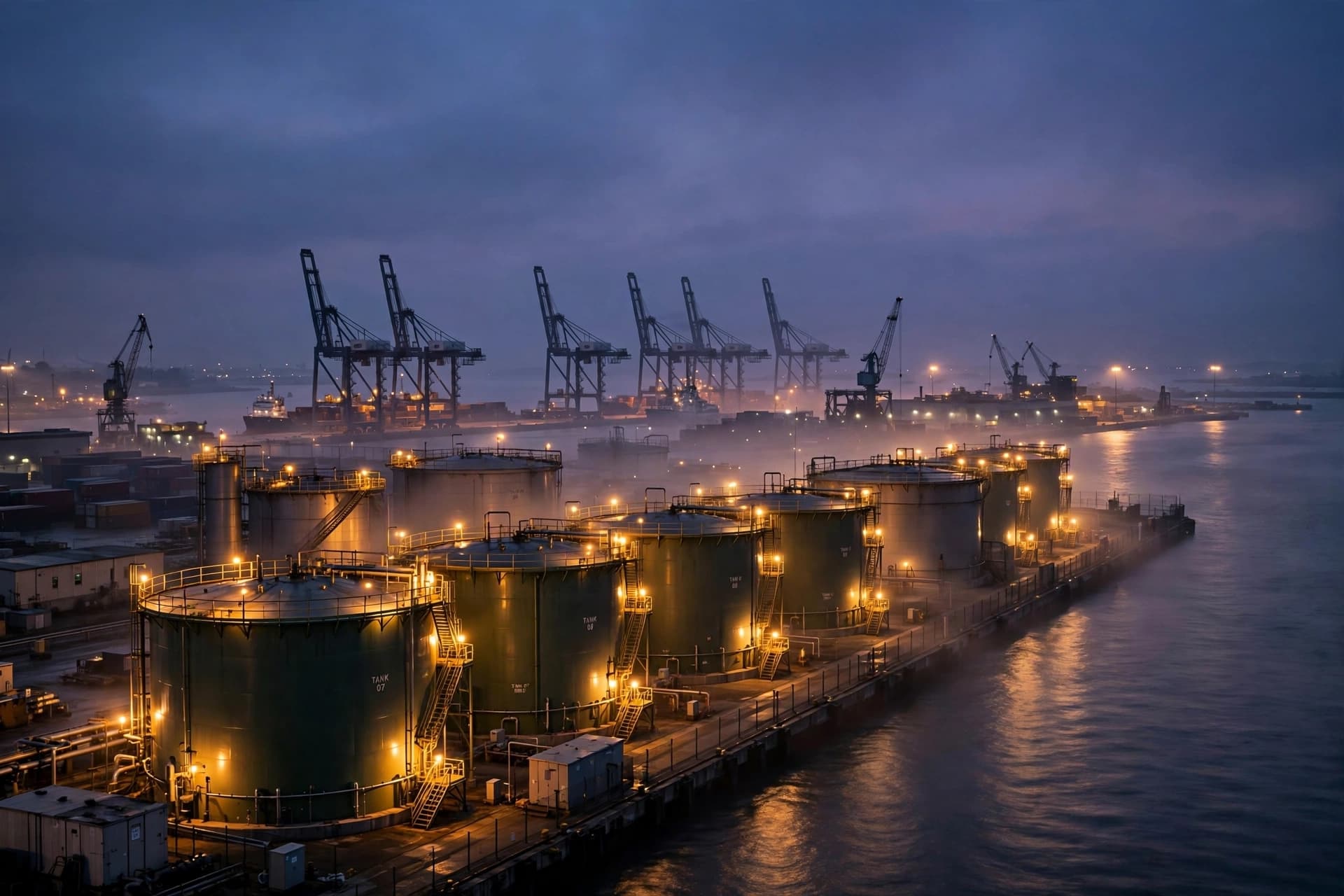
Ukraine launched more than 1,000 drones across Russia on Sunday in one of its largest aerial attacks since the war began, setting an oil export terminal and a depot ablaze in St. Petersburg . The strikes hit the Petersburg Oil Terminal and the city's Ruchi oil depot, according to local Governor Alexander Beglov, who reported one person killed and five wounded . A logistics center belonging to retailer Ozon and a data center for tech company VK were also targeted, both companies confirmed .
Russia's Defense Ministry said its forces destroyed 1,015 Ukrainian drones over 15 Russian regions, as well as the annexed Crimean peninsula and the Black Sea . The figure, if accurate, represents an extraordinary volume of air defense activity—more than a thousand intercepts in a single night, spread across a territory that stretches from Belgorod to Moscow to the Black Sea . Independent verification of such figures is impossible under wartime conditions, but the scale alone signals a shift in the tempo of the conflict.
The strikes came amid deepening tensions between Kyiv and Washington. President Trump has criticized Ukraine's attacks on Russian oil infrastructure, and the prospect of further U.S. sanctions against Moscow remains uncertain . Trump announced on October 11 that Russia and Ukraine had agreed to an "energy ceasefire," but offered no details, and Kyiv reported continued Russian attacks on energy sites after his statement . Ukraine confirmed Thursday it had resumed strikes on Russian oil after a three-day pause .
Ukrainian President Volodymyr Zelenskyy responded to the weekend's events with a statement on social media accusing Russia of defying the ceasefire. He said that in the week since Trump's announcement, Russia had attacked Ukraine's energy, oil, and gas sectors 76 times, and that energy facilities in four Ukrainian regions had been struck overnight, leaving tens of thousands of families without power . "America should see that Russia is not taking any reciprocal steps," he wrote. "It is Russia that must face pressure for peace to have a chance" .
On the same weekend, Russian attacks on the southern Ukrainian city of Zaporizhzhia killed a woman and wounded at least two others, including a six-year-old girl, according to local officials. Two apartment buildings, 18 cars, and an educational institution were damaged . The exchange of attacks—drones for oil, missiles for apartments—has become the rhythm of a war that shows no sign of finding a different cadence.
The strikes on St. Petersburg carry a particular symbolism. The city is Russia's second-largest and a symbol of its imperial history, and the targeting of its oil infrastructure is a message about vulnerability as much as it is a tactical operation. Whether that message will be received in Moscow, or whether it will be answered with further escalation, is a question that the coming days will answer. For now, the fires in St. Petersburg have been extinguished, the count of drones has been tallied, and the war continues on its terms, not anyone else's.
AI Image Disclaimer: The visuals in this report were produced using artificial intelligence and serve an illustrative purpose only.
Sources: CBC, The Canadian Press, News On AIR, Qatar News Agency
Published by Banx Network. This article is part of the Banx decentralized media programme, powered by the BXE token on the XRP Ledger.