There are moments in astronomy when the universe seems to misplace its own rulebook. A flash of light arrives from across the cosmos, and for a few precious minutes, everything scientists thought they understood about certain kinds of catastrophes is quietly set aside. In July 2025, three separate satellites detected just such a flash—a burst of gamma rays lasting less than half a second, followed by an X-ray glow that lingered for nearly ten minutes . The event, designated EP250704a, was not supposed to behave this way. Gamma-ray bursts from colliding neutron stars are typically brief, their high-energy signatures vanishing in under two seconds. This one refused to fade.
The observations came from a network of eyes, both in orbit and on the ground. The Einstein Probe, a joint European-Chinese mission designed to scan the sky for high-energy X-ray events, first caught the initial signal. Ground-based telescopes, including the Very Large Telescope in Chile, swung toward the source in a distant galaxy billions of light-years away . What they saw was unprecedented: the longest X-ray flash ever recorded from what appeared to be a neutron star merger. The gamma-ray component was fleeting, as expected. The X-ray afterglow, however, persisted, burning brighter and longer than any comparable event in the astronomical record.
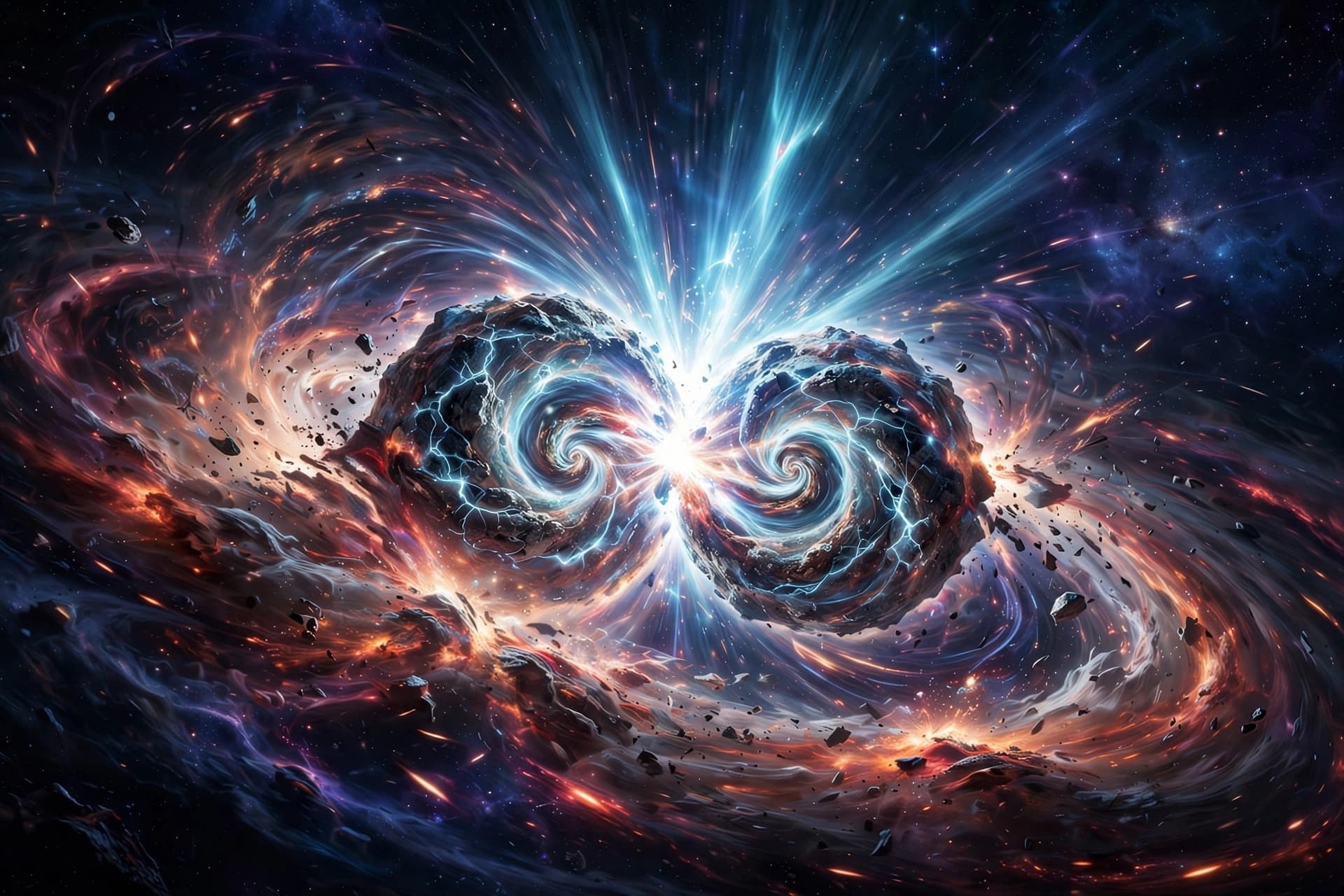
The leading explanation, published in Science Bulletin, points to a magnetar—a newborn neutron star with a magnetic field a trillion times stronger than Earth's . When two neutron stars collide, they do not simply annihilate. They leave behind a remnant, a hyperdense object whose intense magnetic field can interact with the surrounding debris, amplifying the explosion and stretching its luminous signature across minutes rather than seconds. The magnetar, in this interpretation, acts as a dynamo, feeding energy into the wreckage and keeping the X-ray fire burning long after the initial collision.
This is not merely a curiosity. Neutron star mergers are the universe's forge for heavy elements—gold, platinum, silver—created in the extreme conditions of the collision and scattered into space . They are also laboratories for physics at densities and temperatures impossible to reproduce on Earth. The longer the flash, the more time astronomers have to study the conditions in those first critical minutes. As one researcher put it, the gamma-ray flash vanishes almost instantly, but the X-ray flash lingers, offering a window into the immediate aftermath of the collision .
The event also raises questions about what else might be hiding in the data. Since its launch in 2024, the Einstein Probe has detected hundreds of X-ray flares from distant galaxies, some of which remain unexplained . Some may be conventional gamma-ray bursts seen from an unusual angle. Others may represent entirely new classes of cosmic explosions. EP250704a is one of the clearest cases, its behavior pointing toward a specific mechanism—the magnetar—but the broader population of mysterious flashes suggests that the universe has more ways of announcing violence than astronomers have yet catalogued.
There is a particular kind of humility that comes with this work. The instruments are more sensitive than ever, the models more sophisticated, and yet the sky still produces events that confound expectation. A flash lasting ten minutes, when theory predicted seconds, is a reminder that the cosmos is not obliged to conform to our equations. It is, instead, an invitation to refine them.
The researchers will continue to watch. Longer wavelengths, additional observations, more events like this one—each will add a piece to the puzzle. For now, the ten-minute X-ray flash stands as a marker, a moment when the universe did something scientists did not expect, and in doing so, taught them something new about the engines that power the most violent collisions in existence.
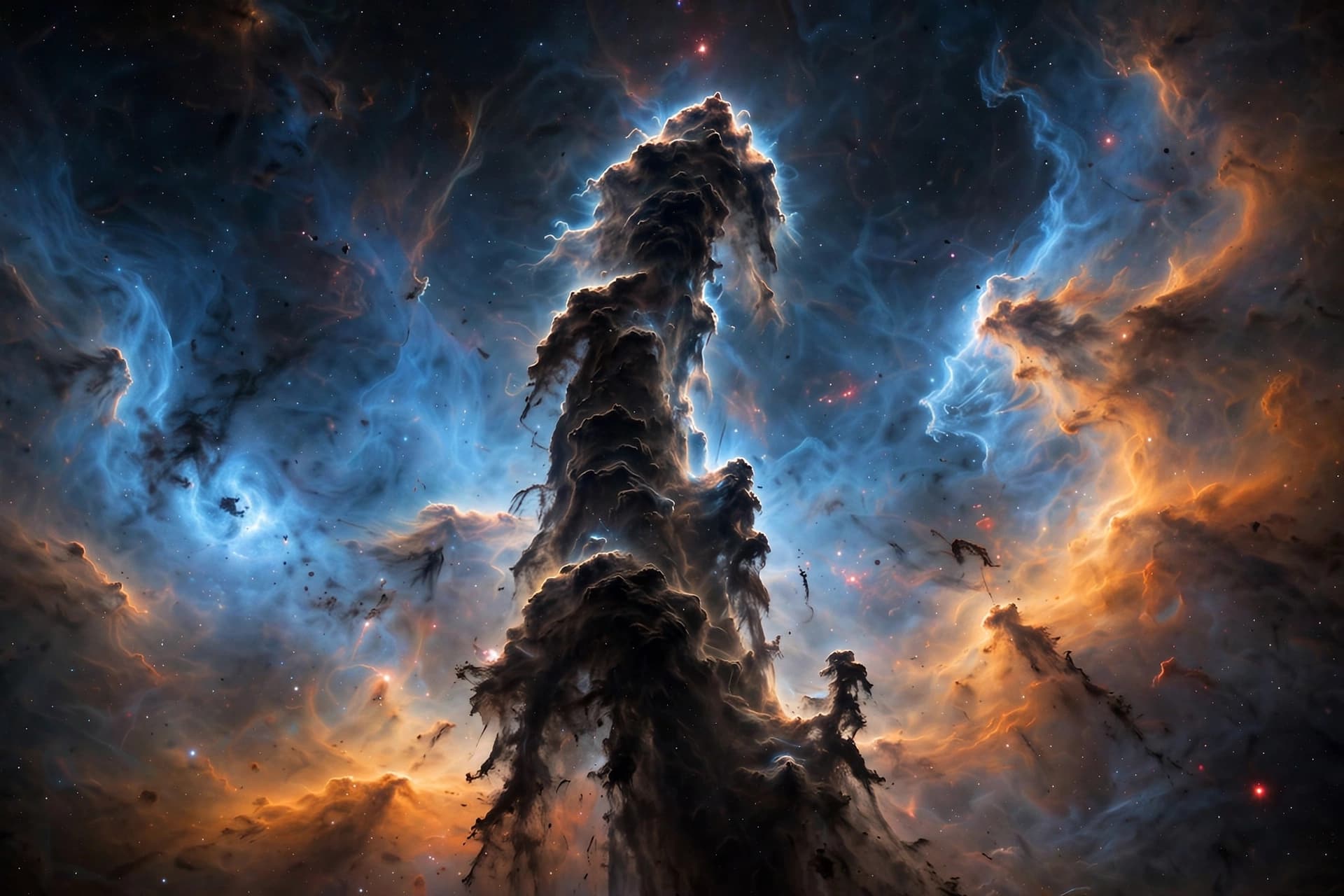
Image Disclaimer: The visual accompanying this article was generated by artificial intelligence and is not an actual astronomical photograph.
Sources: BBC Science Focus Magazine, Science Bulletin, EurekAlert, Youm7, Al-Mayadeen
Published by Banx Network. This article is part of the Banx decentralized media programme, powered by the BXE token on the XRP Ledger.