

Key Highlights
- New Telescope:A state-of-the-art telescope has been inaugurated in Chile.
- Cosmic Exploration:It aims to study distant galaxies and exoplanets.
- Ecological Considerations:The project addresses environmental impacts and cultural heritage.
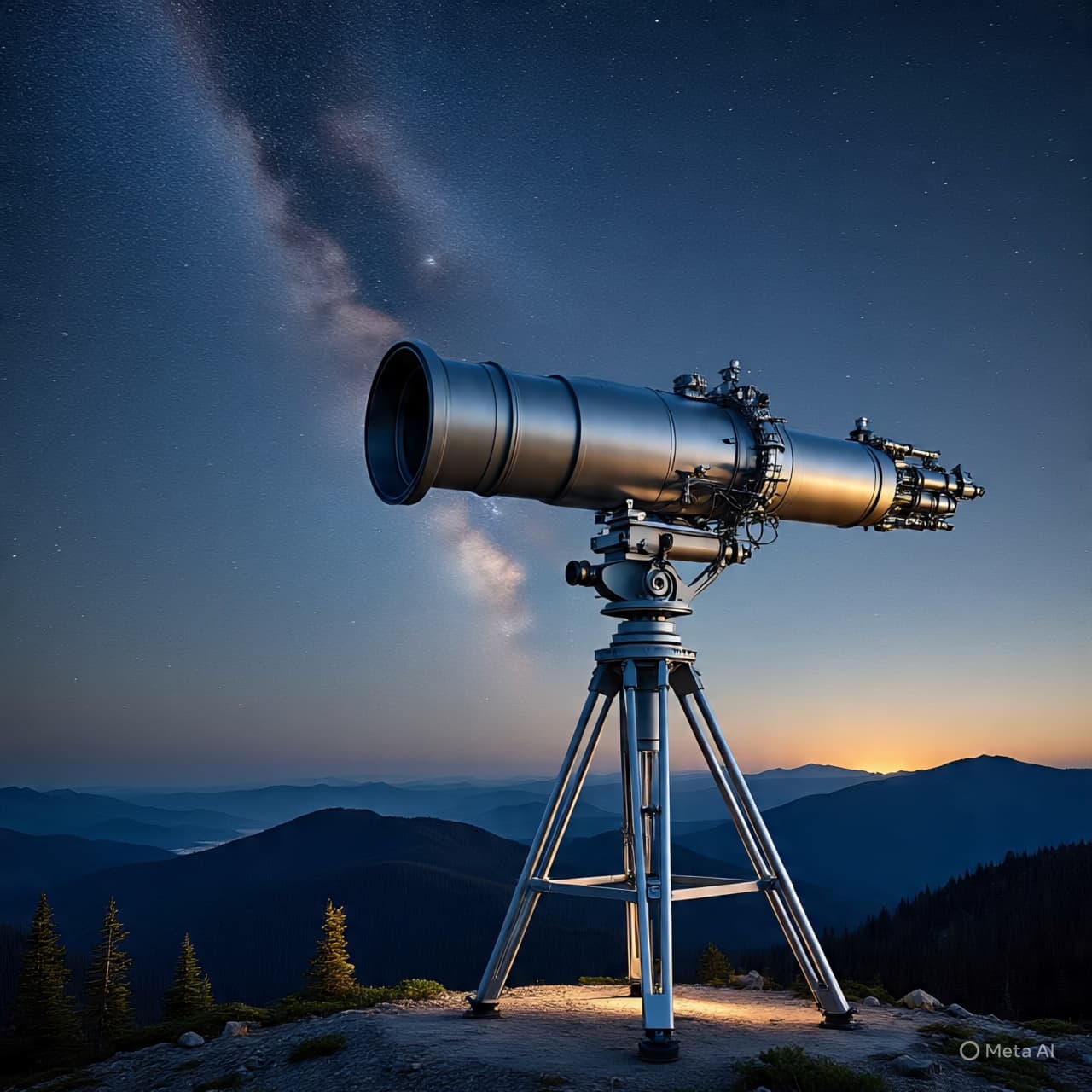
A new telescope has been inaugurated high above the shifting dust and distant echoes of civilization in Chile, where the air thins and the sky deepens into an almost endless blue. This major instrument stands not merely as a machine, but as a patient witness to time itself, marking a significant step forward in humanity’s ongoing effort to understand the universe.
Positioned in one of the most optimal astronomical locations on Earth, the observatory benefits from minimal atmospheric disturbance, allowing it to capture images with remarkable precision. Scientists say this new facility is designed to explore phenomena ranging from distant galaxies to the faint signatures of exoplanets, potentially reshaping our understanding of the cosmos.
Unlike earlier generations of telescopes, this instrument integrates advanced optics and cutting-edge sensors. Its mirrors, engineered with extreme accuracy, can gather light that has traveled for billions of years. Each photon collected becomes part of a larger narrative—one that scientists hope will shed light on cosmic origins, dark matter, and the evolving structure of the universe.
Chile has long been a hub for astronomical research, hosting some of the world’s most powerful observatories. The addition of this new telescope strengthens its position as a global center for space observation. International collaboration has played a crucial role in its development, with institutions from multiple countries contributing expertise, funding, and technology.
Researchers involved in the project emphasize that the telescope’s capabilities extend beyond traditional observation. It is equipped to conduct large-scale surveys of the night sky, generating vast datasets that can be analyzed using artificial intelligence. This approach allows scientists to detect patterns and anomalies that might otherwise remain hidden, enhancing our understanding of the universe.
The telescope is also expected to contribute to the search for potentially habitable worlds. By analyzing the light spectra of distant planets, scientists can infer the presence of atmospheric elements such as water vapor or methane. These findings could bring humanity closer to answering one of its oldest questions: whether life exists beyond Earth.
At the same time, the project reflects broader challenges in modern science. The scale of data produced requires robust infrastructure and collaboration across disciplines. Managing and interpreting this information will demand not only technological resources but also sustained global cooperation.
Local communities and environmental considerations have also been part of the discussion surrounding the telescope’s construction. Efforts have been made to minimize ecological impact and respect cultural heritage, particularly in regions where the land holds historical significance. As the telescope begins its operations, its presence is both quiet and profound. It does not speak, yet it listens—to the faintest whispers of the cosmos, carried across unimaginable distances.
In the years ahead, its discoveries may reshape our understanding of space and time. For now, it stands as a reminder that even from a small planet, humanity continues to look outward, guided by curiosity and the enduring desire to know.
Published by Banx Network. This article is part of the Banx decentralized media programme, powered by the BXE token on the XRP Ledger.




