Return to the Moon is not merely a destination but a complex choreography of technology, teamwork, and timing. NASA’s Artemis III mission, poised to land the first woman and person of color on the lunar surface, represents a leap in operational complexity unlike any before. Involving four astronauts, three distinct spacecraft, and a critical two-week window in orbit, the mission demands precision at every stage. It is a endeavor that invites reflection on human ingenuity and the collaborative spirit required to push the boundaries of exploration once again.
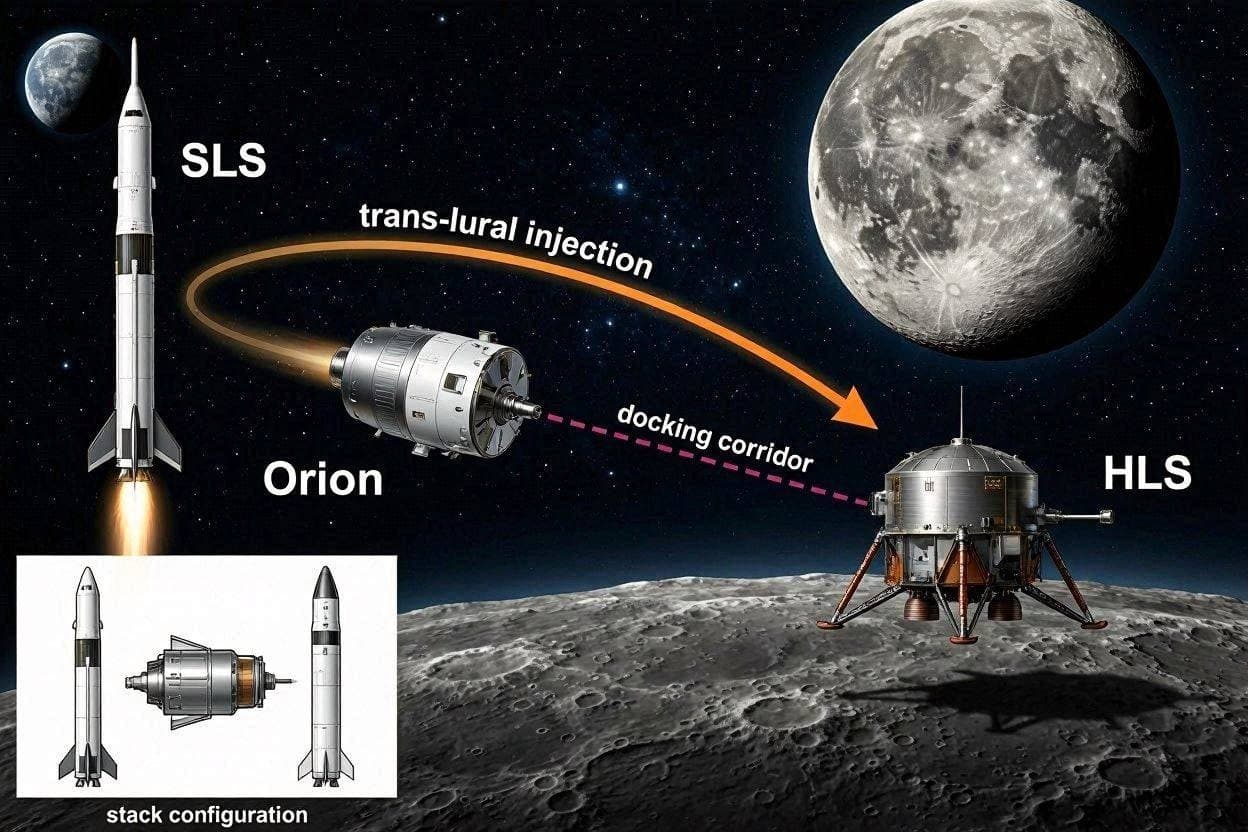
Body: The architecture of Artemis III is intricate, relying on the seamless integration of the Space Launch System (SLS), the Orion capsule, and the Human Landing System (HLS). Unlike the Apollo missions, which used a single launch vehicle for both crew and landing gear, Artemis separates these functions, requiring rendezvous and docking in lunar orbit. This modular approach offers flexibility but introduces multiple points of failure that must be meticulously managed. Each spacecraft plays a vital role, acting as a link in the chain that connects Earth to the Moon and back.
The crew of four adds another layer of complexity, with roles divided between those who will descend to the surface and those who will remain in orbit aboard Orion. This division requires precise coordination and communication, ensuring that both teams can support each other despite the distance. The astronauts undergo rigorous training to handle emergencies, navigate the lunar terrain, and conduct scientific experiments. Their readiness is the human element that binds the technological components together.
The two-week duration in orbit is a critical constraint, dictated by fuel limits, life support systems, and orbital mechanics. Every hour is accounted for, from launch to landing and return. This tight schedule leaves little room for error, demanding flawless execution from ground control and the crew alike. The pressure of such a timeline highlights the importance of redundancy and contingency planning in spaceflight.
Scientific objectives are central to the mission, with astronauts tasked with collecting samples, deploying instruments, and studying the lunar south pole. This region, believed to contain water ice, holds clues to the history of the solar system and resources for future exploration. The data gathered will inform subsequent missions, paving the way for a sustainable presence on the Moon. Science drives the mission, giving purpose to the technical challenges.
International and commercial partnerships are integral to Artemis III’s success. Companies like SpaceX are developing the HLS, while international agencies contribute expertise and modules. This collaboration spreads risk and cost, fostering a global effort to explore space. The mission is not just a NASA achievement but a testament to what humanity can accomplish when working together toward a common goal.
Public engagement is also a key component, with live broadcasts and educational programs sharing the journey with the world. Inspiring the next generation of scientists and engineers is a vital outcome, ensuring that the spirit of exploration continues. The visibility of Artemis III helps build support for space exploration, reminding society of the benefits of pushing beyond our planet.
Closing: Artemis III stands as a pinnacle of modern space exploration, combining advanced technology with human courage. Its complexity is a measure of its ambition, reflecting our desire to return to the Moon and stay. As the mission approaches, the world watches with anticipation, ready to witness history made anew.
AI Image Disclaimer: Please note that the images accompanying this article are AI-generated and intended for illustrative purposes only.
Sources: NASA SpaceNews The Verge Ars Technica
Published by Banx Network. This article is part of the Banx decentralized media programme, powered by the BXE token on the XRP Ledger.