
Key Highlights
- Australia enhances its lunar communication capabilities with upgraded technology.
- The Canberra Deep Space Communications Complex plays a pivotal role in supporting NASA's Artemis missions.
- The Australian National University is testing advanced laser communication systems for improved data transmission.
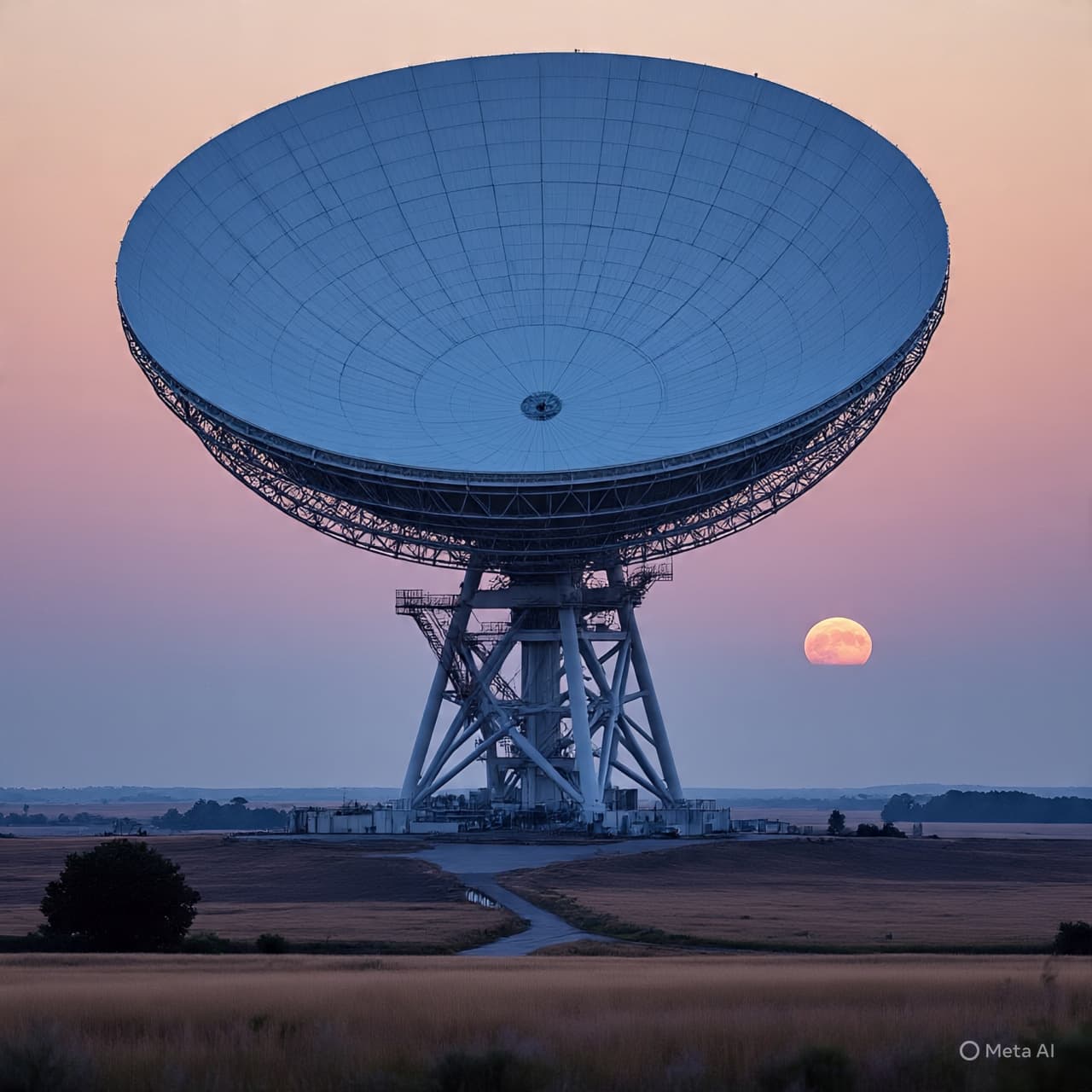
Australia's space ambitions are reaching new heights as the Canberra Deep Space Communications Complex prepares to support the upcoming Artemis lunar missions. This facility, known for its massive white dishes, has been a cornerstone of deep space communication for decades. As the moon rises over the Australian horizon this April, the complex is undergoing significant upgrades to enhance its capabilities, ensuring it remains a vital link in the global space exploration network.
The Canberra facility has long been a silent observer of the cosmos, capturing signals from distant spacecraft. With the renewed focus on lunar exploration, it is now transforming into a critical hub for the Artemis generation. This month, as NASA's latest maneuvers unfold, the complex's tracking stations are synchronizing with mission operations, marking a new chapter in Australia's involvement in space exploration.
The beauty of the Canberra Deep Space Communications Complex lies not only in its architectural presence but also in its function as a bridge between Earth and the moon. The technicians and scientists working within its walls are the unsung heroes of space missions, ensuring that every signal is received with precision. Their work is characterized by patience and attention to detail, as they filter out interference and account for delays in communication, which are crucial for the success of lunar missions.
In addition to traditional radio communications, the Australian National University is pioneering a new frontier in space communication with its Quantum Optical Ground Station. Located on Mount Stromlo, this facility is set to demonstrate advanced laser communications, which promise to revolutionize data transmission to and from the moon. This shift from radio waves to laser beams represents a significant leap forward, allowing for a richer flow of information that was once considered the realm of science fiction.
The integration of these advanced technologies reflects Australia's commitment to becoming a key player in the international space race. The investments in quantum timing and optical tracking are not just technical upgrades; they signify a national purpose and a determination to contribute meaningfully to global space exploration efforts. As the country positions itself as a leader in deep-space communications, it is also laying the groundwork for a sovereign space capability that will enhance its scientific relevance for years to come.
As data streams back from the lunar south pole, it reveals a wealth of information about the moon's surface, including its soil composition and ancient geological features. For the teams at the Canberra facility, each packet of data is a testament to their hard work and dedication. The ongoing dialogue between Earth and the moon is not just a technical achievement; it is a reminder of humanity's shared quest for knowledge and exploration.
In conclusion, the Canberra Deep Space Communications Complex's upgrades and the Australian National University's advancements in laser communication are setting the stage for a new era in lunar exploration. As Australia embraces its role in the Artemis missions, it is not merely a participant but an architect of the future of space exploration, committed to expanding our understanding of the universe.
Published by Banx Network. This article is part of the Banx decentralized media programme, powered by the BXE token on the XRP Ledger.



