In the quiet spaces between headline breakthroughs and technical realities, bold visions often take shape — some rooted in careful engineering, others in the audacious dreams of those who have already reshaped industries once thought immovable. This week, Elon Musk again captured the imagination with a proposal that mixes daring with uncertainty: he vowed to build data centers in space powered entirely by solar energy, aiming to support sprawling artificial intelligence systems without burdening Earth’s electrical grids.
Musk’s idea builds on his companies’ existing ventures — SpaceX’s rocket and satellite infrastructure, and xAI’s ambitions for large‑scale computing. The concept, he says, is simple in its appeal: space is always sunny, free from terrestrial constraints, and could provide an environment where computing isn’t shackled by Earth’s climate limits. In a preview of remarks set for an upcoming podcast, he predicted that within 30 to 36 months, space could become “the most economically compelling place to put AI.”
On paper, the idea plays to strengths that have defined Musk’s career: pushing technology to where others have hesitated and integrating capabilities across companies. He has even combined SpaceX with xAI and signaled intentions to fund these ambitions via a future initial public offering — part of a broader strategy to scale AI infrastructure off‑planet.
Yet experts hear a quite different cadence beneath the excitement: one of significant technical hurdles and unanswered questions. For instance, while space is cold, it is also a vacuum — which actually traps heat rather than dissipates it. On Earth, data centers rely on air and liquids to carry heat away from servers; in orbit, that mechanism doesn’t exist. Computer chips generate enormous warmth as they perform intensive calculations, and without atmosphere, heat must be radiated away — a slow and inefficient process that would likely require very large and fragile radiator arrays that have never been built at the scale envisioned.
There are other challenges that experts emphasize. The idea of launching up to a million satellites — each a node in a vast data network — raises concerns about space debris. Collisions at orbital speeds can cascade, creating fields of fragments that threaten other satellites and essential systems like weather monitoring and communications. Musk’s Starlink constellation has already highlighted how crowded low Earth orbit can become, and expansion plans on this scale only heighten those risks.
Maintenance presents a further complication. On Earth, if a server fails, technicians replace chips, upgrade hardware, and keep systems humming. In space, there are no repair crews or easy access; satellites have limited lifespans, and components like specialized GPUs may degrade quickly under bombardment from high‑energy particles. One workaround is to provision extra chips — a costly solution given the high price of space‑qualified hardware.
These obstacles are not entirely novel. Other companies have toyed with similar ideas — from experimental satellites testing single AI chips to ventures like Google’s Project Suncatcher exploring orbital data centers — but they, too, wrestle with the same fundamentals of physics and economics. Even some industry leaders regard such concepts as distant from practical reality.
At its heart, Musk’s vision resonates with a long tradition in space exploration: stretching what is possible beyond the confines of Earth. Yet the tension between aspiration and feasibility is palpable. Calling space “the only way to scale” evokes both the promise of limitless solar energy and the stark reality of engineering at the edge of human capability. In the coming years, the path from vision to vehicle — from solar orbit to scalable computing — will likely reveal how much of this dream can survive the crucible of practical constraints.
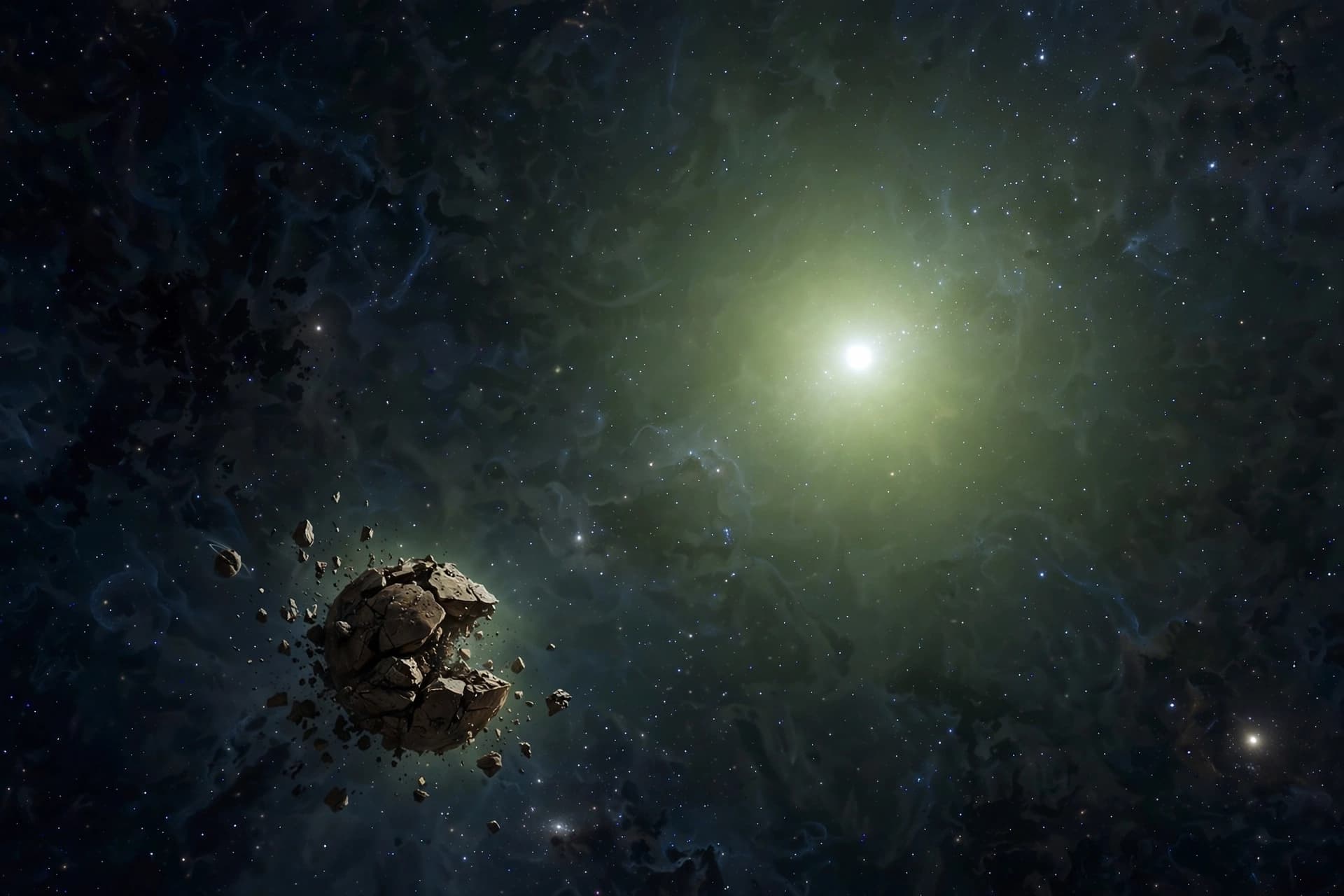
AI Image Disclaimer (rotated wording) “Graphics are AI‑generated and intended for representation, not reality.”
Sources (Media Names Only) Associated Press, Live Mint, Reuters, Business Standard, Times of India.
Published by Banx Network. This article is part of the Banx decentralized media programme, powered by the BXE token on the XRP Ledger.