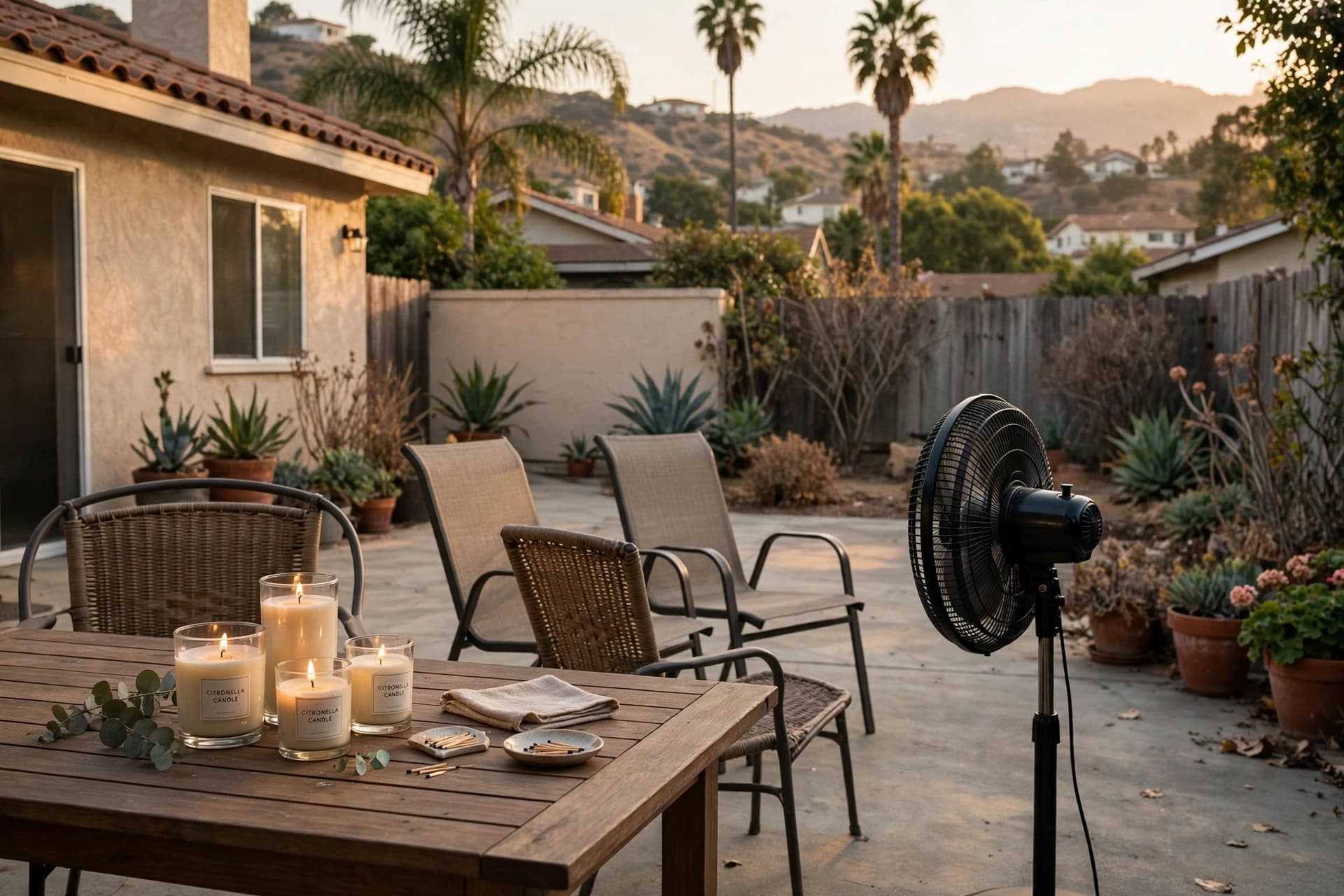
There is a particular irony in a city built on the promise of endless summer discovering that the very warmth it celebrates has turned against it. Los Angeles, a place defined by its blue skies and outdoor living, has in recent years become the most mosquito-infested city in America—a distinction that residents describe not with civic pride but with the weary frustration of people who can no longer sit on their own patios without being bitten .
This year has been especially punishing. A series of heatwaves and an extra-powerful El Niño have created conditions that mosquito experts call one of the worst seasons in recent memory . Overnight temperatures have stayed warm enough to keep mosquitoes active through the night, and unusual humidity has provided ample breeding grounds. Anais Medina Diaz, communications director for the San Gabriel mosquito and vector control district, attributed the surge to a “very warm winter” that allowed mosquitoes to remain active year-round .
The numbers tell a sobering story. Los Angeles County has documented more than 180 cases of West Nile virus this year, the highest in nearly a decade . Orange County’s mosquito control district has found West Nile virus in roughly 850 of its traps . The virus, carried by birds and transmitted to humans through the Culex mosquito, can cause fever, neurological damage, and in rare cases, death. At least five deaths in Los Angeles County have been linked to mosquito-borne illness this year .
But the mosquitoes that residents notice most are not the Culex. They belong to the Aedes genus—invasive “ankle biters” that first appeared in Southern California around 2014 and have proliferated relentlessly since . Unlike the native Culex, which prefers birds, Aedes mosquitoes target humans directly. “They like human blood,” Medina Diaz said. “They will bite you multiple times to get a full blood meal” . Because they are new to the region, people have had less exposure to their bites, and the welts they leave are often larger and more persistent.
The Aedes mosquitoes are also active during the day, which means there is no safe hour for outdoor activity. Karthikeyan Chandrasegaran, a UC Irvine ecologist who studies mosquitoes, noted that they are “wily”—if swatted at and missed, they learn to attack from a different angle next time . For residents, the result is a summer of constant vigilance: long sleeves in the heat, fans pointed at ankles, towels stuffed under doors, and a growing arsenal of repellents and zappers .
Beyond the nuisance lies a more serious concern. Aedes mosquitoes are capable of transmitting dengue, chikungunya, Zika, and yellow fever. While these diseases have not yet established local transmission in Los Angeles, the presence of a competent vector raises the possibility that a traveler returning from an outbreak region could introduce a pathogen that the local mosquito population could then spread .
Authorities have urged residents to eliminate standing water—even a tablespoon can serve as a breeding site for Aedes mosquitoes . But vector control teams face challenges in accessing private property, and the sheer scale of the infestation makes complete elimination unrealistic . As temperatures remain warm and rains bring new breeding opportunities, the season shows no clear end.
For a city that has long sold itself as a paradise of outdoor living, the mosquito has become an unwelcome tenant—one that cannot be evicted, only managed.
AI Image Disclaimer: All images associated with this article are AI-generated and serve illustrative purposes only, not as documentary records of the conditions described.
Sources: The Guardian, Sacramento Bee, Los Angeles Times, Total News
Published by Banx Network. This article is part of the Banx decentralized media programme, powered by the BXE token on the XRP Ledger.