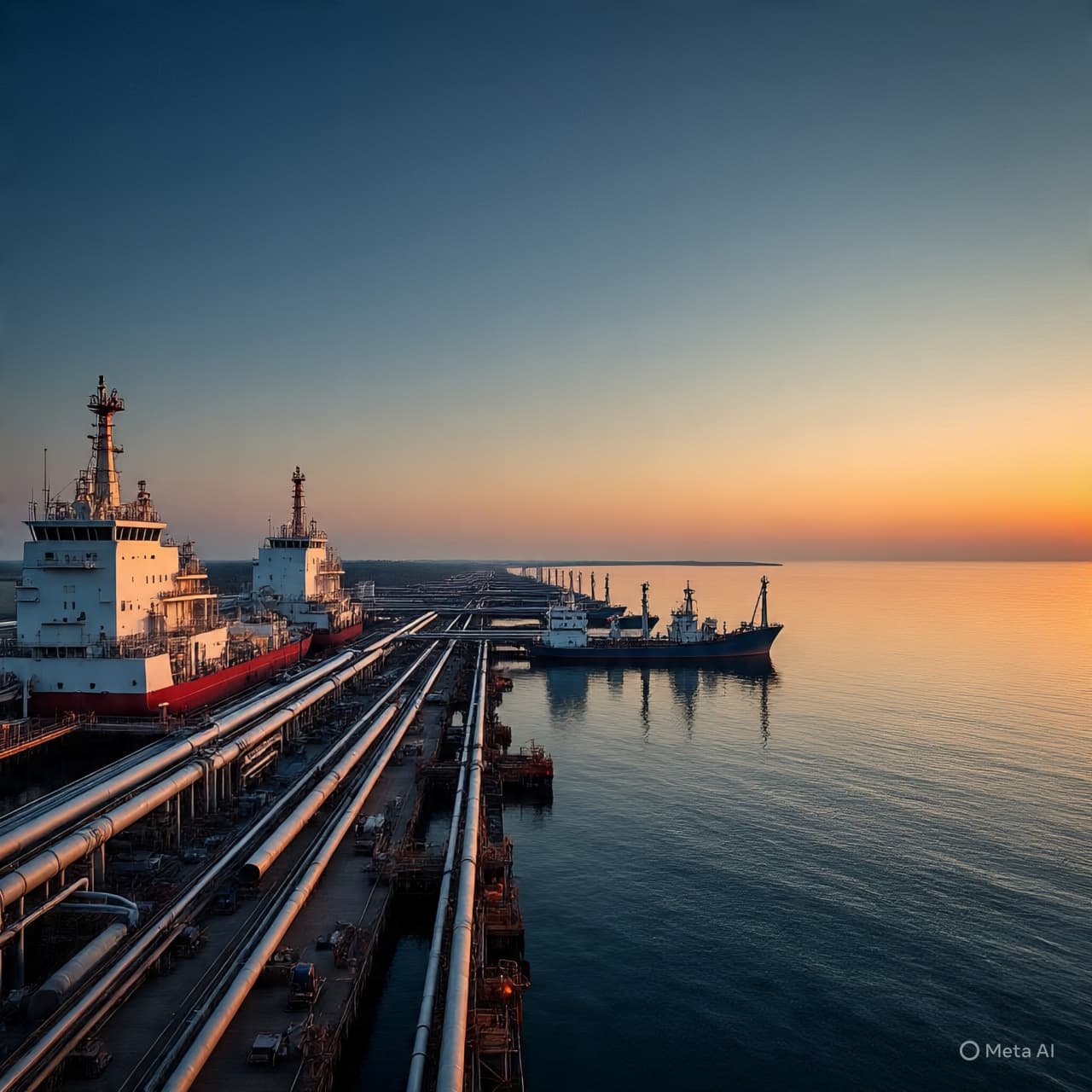
Morning in the world’s energy markets often begins before the sun rises. Screens glow in trading rooms from Singapore to New York, numbers appearing in steady rows while analysts trace the quiet language of supply and risk. Oil—dark, heavy, and ancient—moves through pipelines and tankers across oceans, its price shifting with each new whisper from the world’s political capitals.
In recent days, those whispers have carried the suggestion of a shorter war.
President Donald Trump said the conflict involving Iran could be nearing its conclusion, describing the campaign as likely to end “very soon.” The remarks arrived as the United States and Israel continue military operations aimed at Iranian military infrastructure.
Markets responded almost immediately. After days of sharp gains driven by fears of disruption, global oil prices retreated noticeably, falling back from recent highs as traders recalculated the risks of prolonged conflict in the region.
Energy markets often behave like sensitive instruments, registering even the faintest shifts in geopolitical weather. The possibility that the war might end quickly—however uncertain—introduced a different expectation into trading floors already tense from weeks of volatility.
At the center of those concerns lies the narrow maritime passage known as the Strait of Hormuz. Through these waters flows roughly a fifth of the world’s traded oil, carried by tankers that navigate between desert coastlines and heavily monitored sea lanes.
Whenever tensions rise near the strait, markets tend to react swiftly. Even the suggestion of interference with shipping can send prices climbing, reflecting the fragile balance that keeps global energy supplies moving smoothly.
In the early days of the conflict, those fears pushed oil prices sharply upward. Traders worried that missile strikes, naval encounters, or regional escalation could disrupt the flow of tankers through the Gulf. Governments across Asia and Europe, heavily reliant on Middle Eastern crude, watched developments closely.
But markets are equally quick to sense relief.
Trump’s suggestion that the war might soon conclude created a momentary shift in sentiment. Investors who had anticipated a longer conflict began adjusting their expectations, allowing prices to ease as the perceived risk of supply disruption declined.
Even so, the broader picture remains uncertain. Military operations in the region continue, and analysts caution that conflicts rarely follow a predictable timetable. Energy markets, shaped by both real supply conditions and human expectations, often swing between caution and optimism with remarkable speed.
For consumers far removed from the Middle East, the consequences appear gradually: fuel costs inching upward or downward, shipping rates adjusting, airlines recalculating expenses for routes that stretch across continents.
In this sense, oil markets function as a quiet mirror of global events. A speech in Washington, a naval patrol in the Persian Gulf, or a diplomatic message sent between capitals can ripple outward until it appears in the everyday arithmetic of the world’s economy.
And so the fall in oil prices this week reflects not only barrels of crude and tanker routes, but also the fragile hope that conflict might be shorter than feared.
Whether that hope proves accurate remains uncertain. For now, the markets have simply paused—listening closely to the signals traveling across oceans and deserts.
In the language of energy, even a hint of peace can move the tide.
AI Image Disclaimer Illustrations were created using AI tools and are not real photographs.
Sources Reuters Bloomberg BBC News Al Jazeera Associated Press
Published by Banx Network. This article is part of the Banx decentralized media programme, powered by the BXE token on the XRP Ledger.