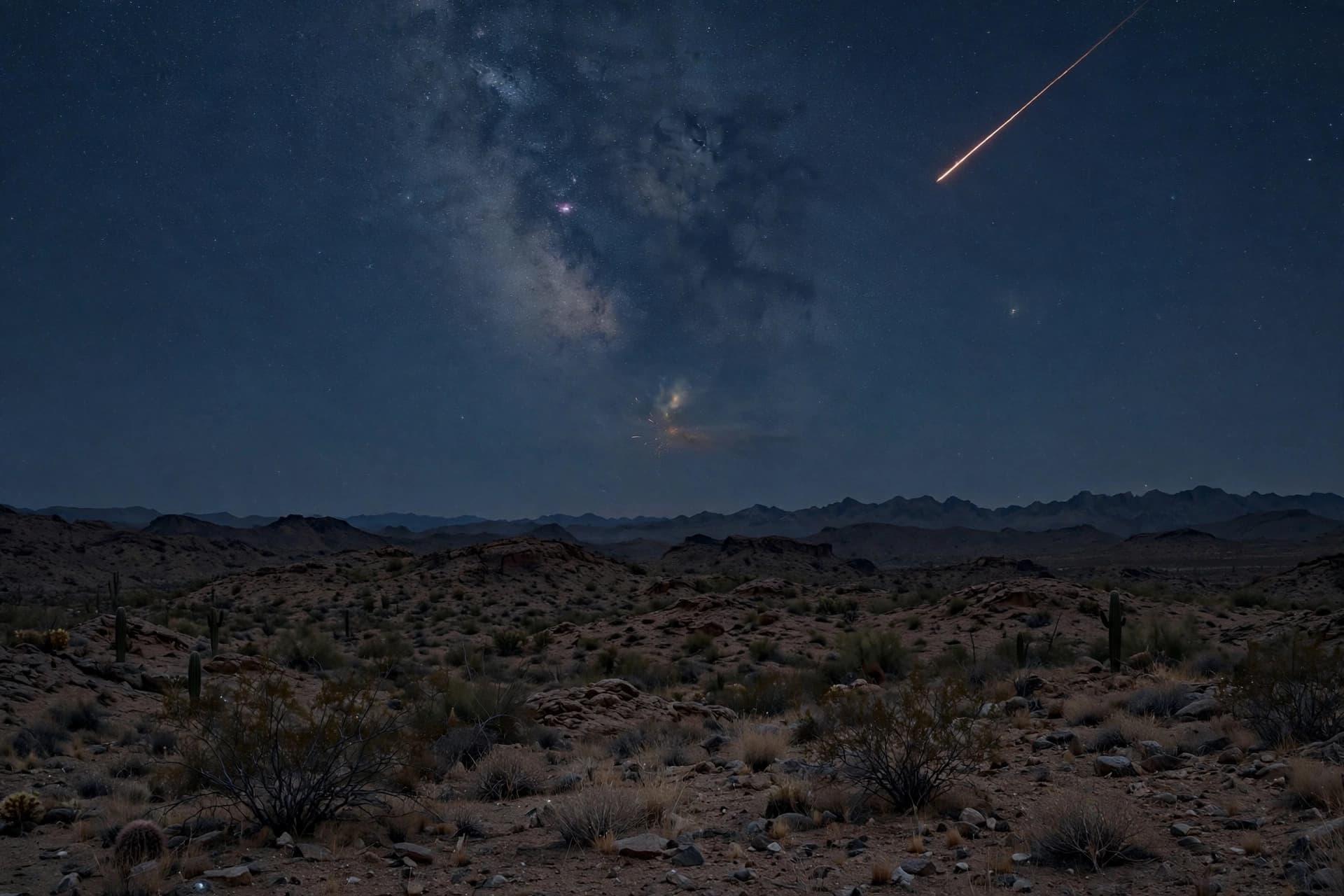
They appear without warning. A sharp burst of blue light flares across the sky, brighter than most supernovae, then fades almost as quickly as it arrived. For years, these strange events—often called fast, blue optical transients—have unsettled astronomers, defying tidy explanations and stretching the limits of known cosmic behavior.
Now, researchers believe they may finally understand what causes them.
Unlike typical stellar explosions, these blue flashes rise and fall in days, not weeks or months. Their color signals extreme temperatures, while their speed suggests a violent release of energy from a compact source. Early theories ranged from exotic supernovae to black hole disruptions, but none fully explained the combination of brightness, color, and brevity.
The emerging explanation points to a rare kind of stellar death involving a newborn compact object. In this scenario, a massive star collapses and forms either a rapidly spinning neutron star or a nascent black hole. Instead of a symmetrical explosion, the collapse drives powerful jets or winds that punch through surrounding material, releasing intense blue light before the system settles or collapses further.
What makes this model compelling is how well it matches observations. The early blue glow aligns with shock-heated material moving at extreme speeds. The rapid fading fits a system that expends its energy quickly, rather than sustaining a long-lived explosion. Even the unusual spectra—once a puzzle—begin to make sense when viewed through this lens.
These events are not just oddities. They occupy a space between known categories, offering insight into how stars die under extreme conditions. They may represent a missing link between ordinary supernovae and more exotic phenomena like gamma-ray bursts.
Technology has played a quiet but crucial role in the breakthrough. New sky surveys now scan the heavens continuously, catching fleeting events that older instruments would have missed. What once looked like cosmic noise is now being cataloged, compared, and understood as part of a broader pattern.
The realization also reshapes expectations. If these flashes are tied to specific stellar deaths, they may be more common than once believed—just easy to overlook. Their brevity made them invisible to earlier generations of astronomers.
There is still caution in the conclusion. Nature rarely offers single explanations, and not every blue flash may share the same origin. But the pieces now fit better than before, turning a mystery into a working theory.
In astronomy, understanding often arrives not with a single revelation, but with convergence. In this case, light curves, spectra, and timing have begun to agree. The universe still flashes unexpectedly—but now, those flashes are starting to speak a language scientists can finally interpret.
Published by Banx Network. This article is part of the Banx decentralized media programme, powered by the BXE token on the XRP Ledger.