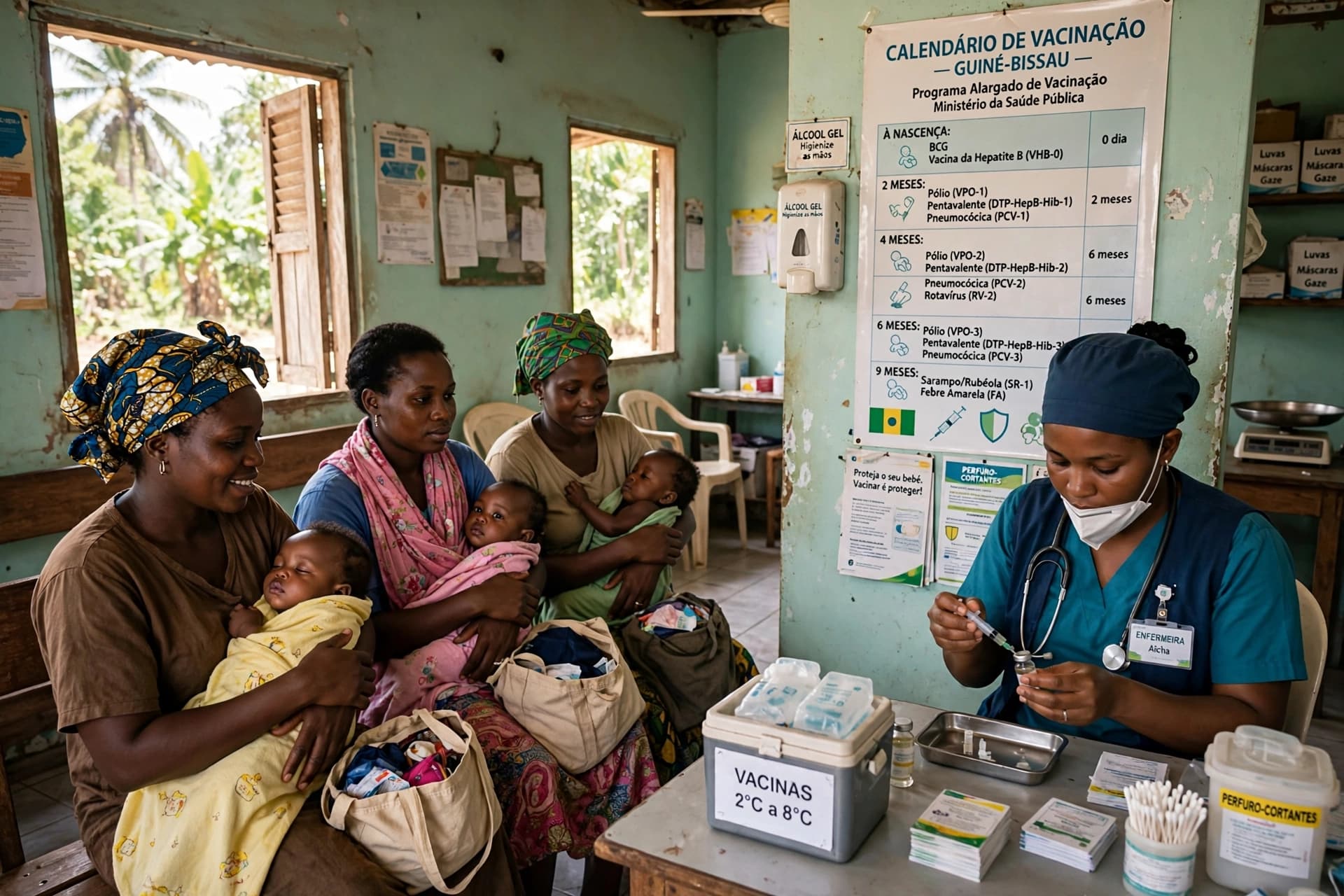
There is a particular unease that settles over global health when the line between research and exploitation becomes difficult to see, when the language of science is used to justify a study that the communities involved did not ask for and that the evidence did not require. In Guinea-Bissau, a small West African nation where nearly two-thirds of the population lives below the poverty line, that unease has now been resolved by the government's decision to stop a US-funded hepatitis B vaccine trial before it could begin.
The study, funded with $1.6 million from the US Centers for Disease Control and Prevention and matched by private foundations, was designed to randomly assign 14,500 newborns to receive the hepatitis B vaccine either at birth or at six weeks of age . The researchers—Danish scientists from the Bandim Health Project—argued that the trial would examine whether the timing of the vaccine affected early-life mortality and morbidity. But critics saw something else: a study that would withhold a proven, lifesaving vaccine from infants in a country where 18 percent of adults and 11 percent of children carry the virus .
The ethical objections were swift and severe. Paul Offit, director of the Vaccine Education Center at Children's Hospital of Philadelphia, called the study "unconscionable," noting that it would take thousands of children from a resource-poor setting and allow them to go without the vaccine for the first six weeks of life—the incubation period of the virus . Three members of the US House of Representatives wrote to the CDC describing the study as "scientifically meritless and ethically appalling" . Comparisons to the Tuskegee syphilis experiment, in which Black men were denied treatment for decades, circulated widely .
On Wednesday, the lead researcher, Frederik Schaltz-Buchholzer, wrote on LinkedIn that it was "now clear" the study "will not move forward in Guinea-Bissau," adding that the researchers "were not given the necessary governmental approval" . The health minister, Quinhin Nantote, had already denied that the project would proceed. Earlier this week, judicial police searched the offices of the Bandim Health Project and seized doses of the hepatitis B vaccine .
There is a context to this controversy that extends beyond a single trial. The researchers behind the study, Christine Stabell Benn and Peter Aaby, have argued for years that live vaccines like BCG may have nonspecific benefits that extend beyond the diseases they prevent, and that other vaccines given alongside them might dampen those effects . Their hypothesis has been contested by mainstream immunologists, and their previous work has faced methodological criticism . The trial's funding was also championed by allies of Health and Human Services Secretary Robert F. Kennedy Jr., who has repeatedly linked childhood vaccination with autism—a claim that has been thoroughly debunked .
The World Health Organization recommends that all infants receive the hepatitis B vaccine as soon as possible after birth, preferably within 24 hours . Guinea-Bissau does not currently have a birth-dose program but plans to introduce one by 2028. Critics argued that the $3.2 million in total funding could have been used to provide the vaccine to newborns now rather than studying whether delaying it was safe .
For the people of Guinea-Bissau, the decision to halt the trial is a assertion of sovereignty over research conducted within their borders. The researchers have not commented beyond the LinkedIn post, and the CDC has not said whether the funding will be redirected toward vaccine rollout. What remains is a question that global health has not fully answered: how to conduct research in resource-poor settings without exploiting the very vulnerabilities that make those settings attractive to researchers in the first place.
---
AI Image Disclaimer: The images accompanying this article are generated by artificial intelligence and are intended for illustrative purposes only.
Sources: The Guardian, The Lancet Infectious Diseases, The BMJ, BBC
Published by Banx Network. This article is part of the Banx decentralized media programme, powered by the BXE token on the XRP Ledger.