
Key Highlights
- Recent Israeli airstrike targets Hamas military leader, escalating tensions.
- Ongoing military operations in Gaza continue to affect civilian life.
- International calls for restraint and humanitarian aid grow amid conflict.
The Gaza Strip has long existed beneath the shadow of conflict, where days often unfold between moments of waiting and sudden eruptions of violence. In streets marked by damaged buildings and interrupted routines, every military development carries consequences that extend far beyond strategy alone. News of the reported death of Hamas’ military wing leader in an Israeli strike once again placed the region at the center of an already fragile landscape.
Israeli authorities stated that the operation targeted a senior Hamas military figure believed to hold a significant command role within the organization. The strike reportedly occurred amid continuing military operations in Gaza, where tensions have remained high following months of confrontation between Israeli forces and armed groups operating in the territory. This incident is part of a broader pattern of military engagement that has characterized the region for years.
Hamas, which governs Gaza, has been involved in prolonged conflict with Israel, shaping a cycle of military escalation and humanitarian strain that continues to affect civilians on both sides. Leadership losses within armed organizations are often viewed as strategically important, though they can also deepen uncertainty surrounding future developments in the region. Analysts suggest that such strikes are intended to disrupt Hamas's operational capabilities, but they also risk inflaming tensions further.
Reports surrounding the strike quickly circulated across international media outlets, while analysts observed that such incidents frequently influence both military calculations and political messaging. Israeli officials described the operation as part of broader security measures targeting militant infrastructure and leadership networks connected to armed attacks. This framing underscores the ongoing narrative of security versus humanitarian needs in the region.
Meanwhile, humanitarian concerns in Gaza remain central to global attention. Civilian populations continue to experience displacement, infrastructure damage, and limited access to essential services as military activity persists across densely populated areas. International organizations have repeatedly urged restraint and renewed diplomatic engagement to prevent further escalation. The humanitarian crisis is exacerbated by the ongoing military operations, which have left many without basic necessities.
The conflict has also continued to shape diplomatic discussions involving regional powers and international actors. Governments across the Middle East and beyond have maintained differing positions regarding ceasefire efforts, humanitarian aid access, and long-term political solutions tied to the Israeli-Palestinian conflict. The international community remains divided, with some nations advocating for immediate ceasefire while others support Israel's right to defend itself.
For many residents in Gaza, military announcements often arrive alongside personal uncertainty. Markets reopen cautiously, families move between temporary shelters, and ordinary routines continue under conditions shaped by instability. Beneath every headline lies a population attempting to preserve fragments of normal life despite recurring violence. The psychological toll of such instability is profound, affecting the mental health and well-being of countless individuals.
Israeli officials have not indicated whether the operation may lead to broader military developments in the coming days. International observers continue monitoring the situation as tensions remain high across the region. The coming days will be crucial in determining whether this latest escalation will lead to further conflict or a renewed push for peace.
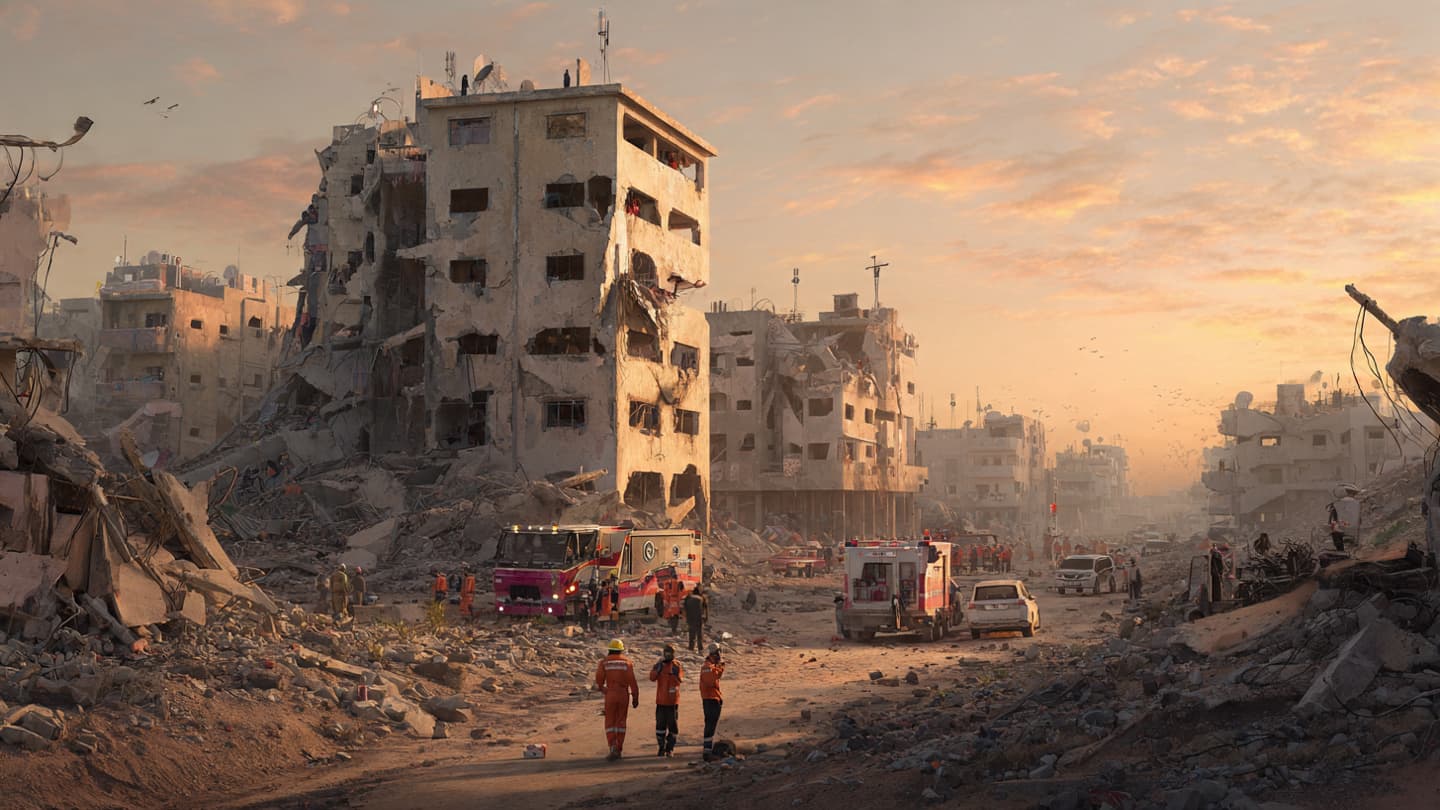
Visual illustrations accompanying this report were generated using AI technology for representational purposes.
Published by Banx Network. This article is part of the Banx decentralized media programme, powered by the BXE token on the XRP Ledger.



