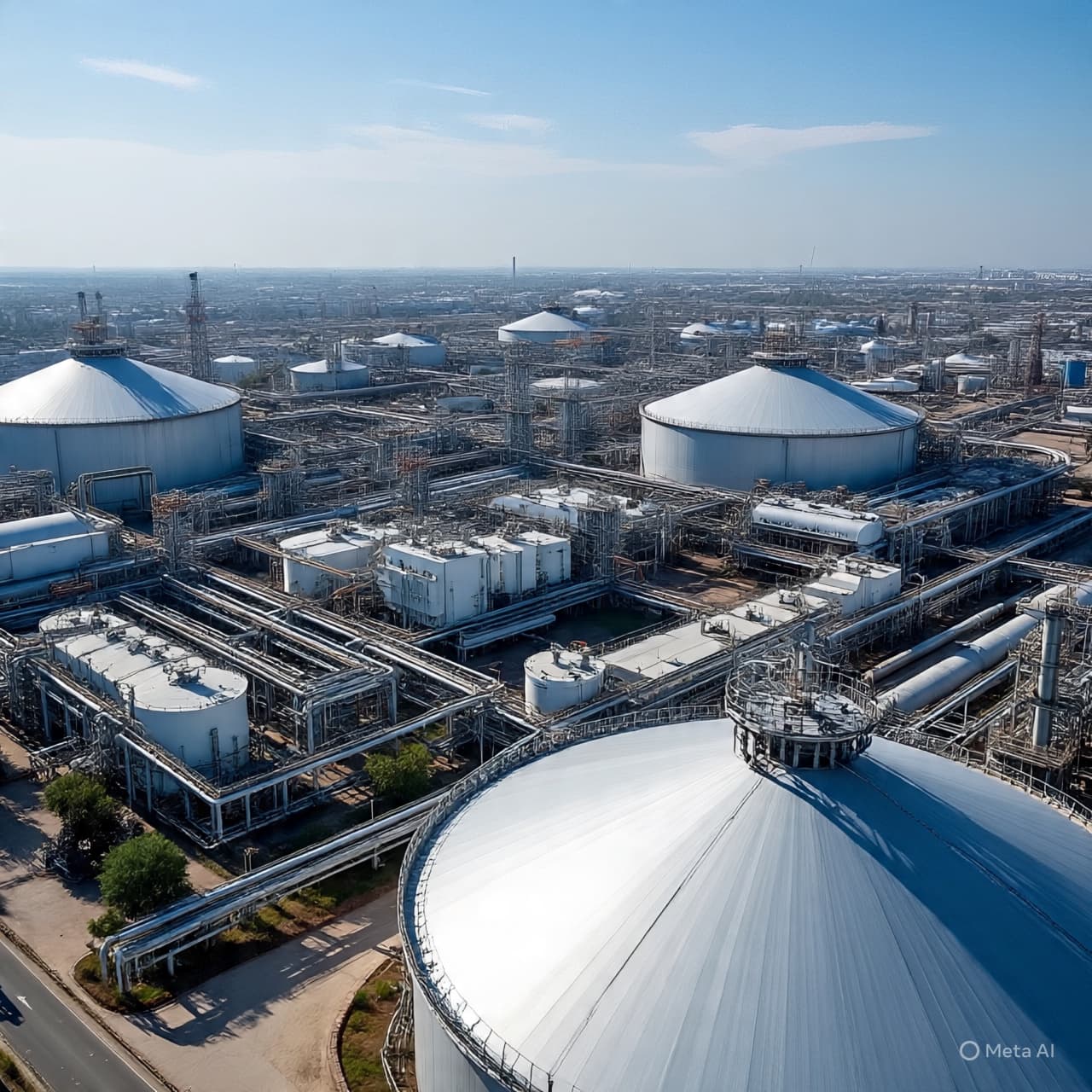
Along the quiet industrial coastline north of Doha, where tankers line the horizon and pipelines stretch across the desert, Qatar’s long-term energy ambitions continue to take shape. The country’s massive liquefied natural gas expansion—one of the largest energy projects in the world—will now begin operations toward the end of 2026, according to updated planning.
The adjustment reflects the complex scale and coordination required for a project designed to significantly increase Qatar’s production capacity over the coming years. The expansion, centered on the development of the North Field, is a cornerstone of the country’s economic strategy as it seeks to maintain its position as a leading global supplier of LNG.
Qatar’s gas reserves are among the largest in the world, and demand for LNG has grown steadily as countries look for alternatives to coal and more flexible energy sources than pipeline gas. The shift accelerated after supply disruptions in Europe and geopolitical tensions reshaped global energy trade flows, increasing the importance of long-term LNG contracts and diversified supply.
Large-scale energy projects, however, rarely move without adjustment. Engineering timelines, contractor coordination, equipment delivery, and global supply chain conditions all influence the pace of development. Industry analysts note that schedule refinements are common for projects of this size and do not necessarily signal a change in overall strategy.
For global energy markets, the timing matters. Additional Qatari supply is expected to play a significant role in balancing future demand, particularly in Asia and Europe, where natural gas remains a key component of energy transition strategies. Many importing countries are securing long-term agreements in anticipation of tighter markets later in the decade.
The revised timeline also comes at a moment of uncertainty about the long-term pace of global gas demand. While renewable energy is expanding rapidly, natural gas continues to be viewed by many governments as a transition fuel—providing reliability while lower-carbon systems scale up.
Qatar has pursued a steady approach, prioritizing long-term contracts, partnerships with international energy companies, and cost-efficient production. This strategy has helped insulate the country from short-term price swings while reinforcing its role as a stable supplier in a volatile market.
The expansion is expected to strengthen that position further, increasing output capacity and extending Qatar’s influence in global energy trade well into the next decade. At the same time, the project reflects a broader reality facing the energy sector: even as the world talks about transition, investment in large-scale gas infrastructure continues.
As construction progresses toward the revised start date, attention will remain focused on how new supply aligns with future demand. For importing nations, the additional volumes represent energy security. For Qatar, they represent continuity—an effort to ensure that its vast gas reserves remain central to the global energy system for years to come.
The end-2026 target does not alter the project’s long-term significance. Instead, it underscores the measured pace of an industry where timelines stretch across decades and where strategic positioning often matters more than speed.
Published by Banx Network. This article is part of the Banx decentralized media programme, powered by the BXE token on the XRP Ledger.