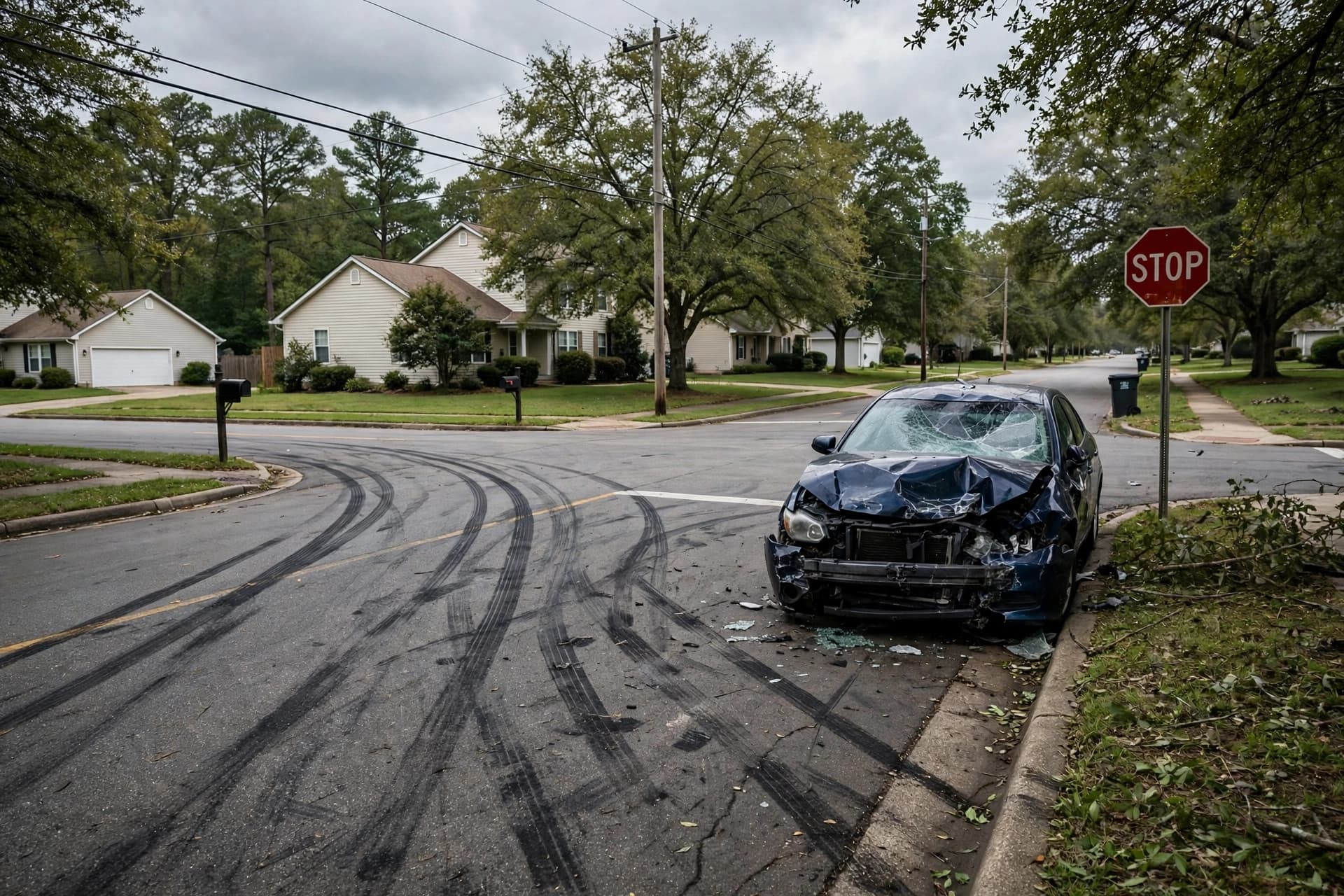
There is a particular sequence of decisions that turns an ordinary afternoon into something else entirely—a moment of inattention, a choice made without weighing consequence, a reflex to flee rather than face what has happened. On October 28, just after 4:30 p.m., a vehicle drove through a stop sign at the intersection of Amber Street and Parkland Crescent in Sault Ste. Marie, struck another vehicle, and then kept moving. The driver did not stop. The vehicle was later located in a parking lot on Denwood Drive, and when officers spoke with the man behind the wheel, they developed grounds to believe his ability to operate a vehicle was impaired by alcohol .
The accused, fifty-five-year-old Christopher Mears, was arrested at the scene. Officers observed multiple open containers of alcohol within his reach. He was transported to the police services building, where he provided breath samples to a qualified technician. His blood-alcohol concentration registered above the legal limit . The charges that followed were numerous and specific: operation while impaired by alcohol and/or drug, operation while impaired with a blood-alcohol concentration of 80-plus, dangerous operation, failure to remain under the Highway Traffic Act, failure to surrender his license, disobeying a stop sign, and driving with an open container of liquor under the Liquor Licence and Control Act .
The list of charges tells a story in its own quiet way. It is not simply a story of impairment. It is a story of a series of choices, each one compounding the last. Driving through a stop sign. Striking another vehicle. Leaving the scene. Being found with open containers within reach. Each decision was a fork in the road, and each fork was taken in the direction of greater risk. The police do not speculate on why. They simply record what happened, and the record is enough to convey the gravity of the afternoon.
There is a particular vulnerability in the moment of collision, when two vehicles meet unexpectedly and the people inside them are suddenly at the mercy of physics and chance. The other driver in this case has not been named, nor have their injuries been described. What is known is that they were struck by a vehicle that had run a stop sign, and that the driver of that vehicle did not stop to see what had happened. The legal system will address that failure. The human cost, whatever it was, remains a matter of record only in the abstract.
Mears was released on an appearance notice and is scheduled to appear in court on November 30, 2026 . The charges against him are allegations, not convictions, and the presumption of innocence applies as it does in every case. But the police release describes a sequence of events that is difficult to read without a sense of unease—not because it is unusual, but because it is not. Impaired driving cases appear in police briefs with regularity, each one a reminder of how quickly an ordinary afternoon can become something else.
The intersection of Amber Street and Parkland Crescent is not a landmark. It is a place where people drive, where they stop or fail to stop, where the ordinary rules of the road are meant to keep everyone safe. On October 28, those rules were broken in a way that led to charges. The court will decide what happens next. In the meantime, the file remains open, a small entry in the daily record of a city that, like all cities, lives with the consequences of choices made behind the wheel.
Image Disclaimer: The visual accompanying this article was generated by artificial intelligence and does not depict the actual incident or individuals involved.
Sources: SooToday, Sault Ste. Marie Police Service
Published by Banx Network. This article is part of the Banx decentralized media programme, powered by the BXE token on the XRP Ledger.