Key Highlights
- Industry Growth:Finnish mass timber exports reached €1.2 billion in 2025.
- Sustainable Practices:The sector emphasizes carbon sequestration and renewable resources.
- Architectural Innovation:Projects like Wood City showcase advanced timber construction.
Finland's mass timber sector is experiencing a renaissance, transforming the landscape of modern architecture while championing sustainability. The production of Cross-Laminated Timber (CLT) and Glue-Laminated Timber (Glulam) has become a cornerstone of this industry, with significant implications for both the environment and the economy. As the world increasingly seeks sustainable building materials, Finland's timber industry stands out as a leader, blending traditional forestry practices with cutting-edge technology.
At the heart of this transformation is the relationship between foresters and architects, grounded in the principles of Sustainable Forest Management (SFM). This model ensures that for every tree harvested, multiple seedlings are planted, fostering a cycle of renewal that benefits both the forest and the economy. The precision of sawmills and advanced bonding processes allow for the creation of massive, load-bearing panels that are not only structurally sound but also environmentally friendly. This synergy between nature and technology is crucial for the future of urban development.
The construction of a CLT panel at a site in Helsinki exemplifies the industry's commitment to sustainability. As the wood is lowered into place, the aroma of resin fills the air, reminding onlookers of the natural origins of this material. The goal is to create buildings that act as carbon sinks, sequestering CO2 for generations. This approach not only addresses climate change but also positions Finnish timber architecture as a symbol of the nation's bio-economy, showcasing the potential of renewable materials in modern construction.
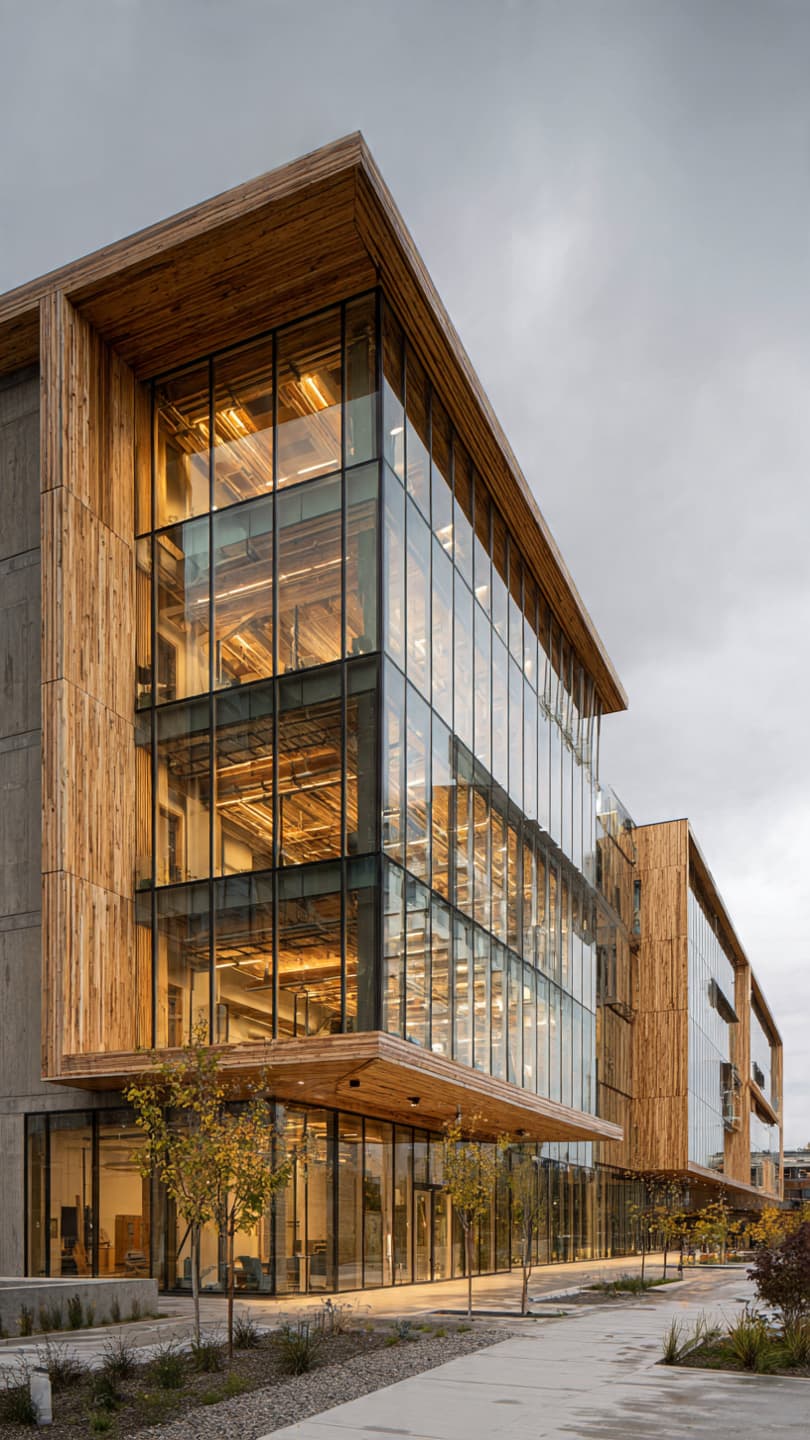
Digital design and manufacturing technologies, such as Building Information Modeling (BIM) and CNC machining, have revolutionized the timber industry. These innovations allow for precise prefabrication of timber components, significantly reducing waste and construction time. The result is a new generation of wooden buildings that are not only aesthetically pleasing but also promote the well-being of their inhabitants through natural acoustics and warmth. The architectural landscape is evolving, with mass timber structures becoming increasingly common in urban settings.
The visual impact of modern mass timber buildings is striking. Their exposed wooden beams create a sense of connection to the natural environment, even in bustling city centers. This phenomenon, often referred to as
Published by Banx Network. This article is part of the Banx decentralized media programme, powered by the BXE token on the XRP Ledger.