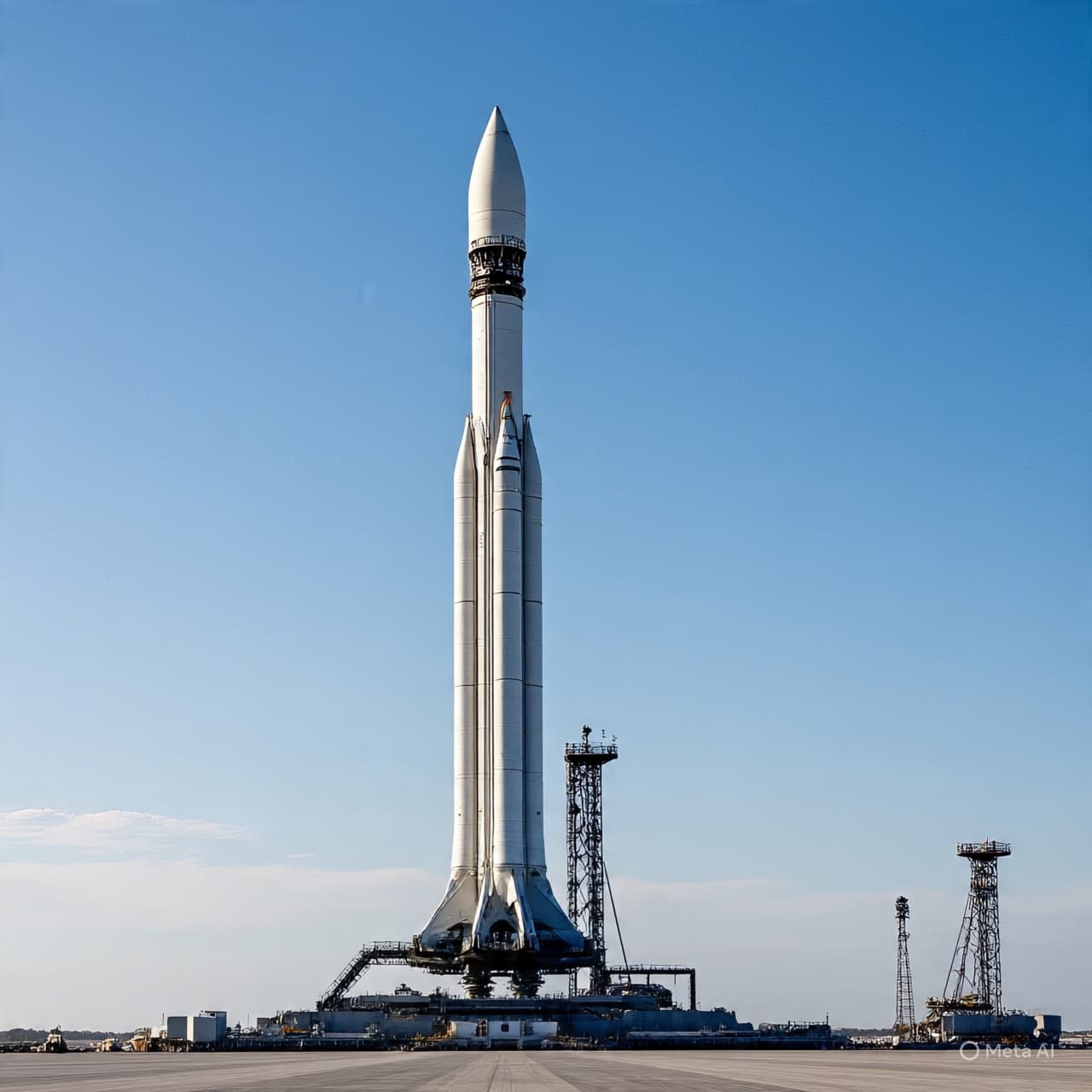
There are moments in exploration when a path that once seemed straight and true must be rethought, as though a traveler pauses at a crossroads to look again at the horizon. This is such a moment for NASA’s long-awaited return to the lunar surface. After years of planning and ambition, the space agency announced a shift in its roadmap for putting astronauts back on the moon, adding steps and adjusting its journey in a way that reflects both caution and renewed focus.
In the early plans of the Artemis program, NASA had imagined a relatively direct sequence from uncrewed tests to a crewed landing near the moon’s south pole. Each mission was to build upon the last, culminating in boots on lunar dust. Yet, like the slow unfolding of a complex symphony, unforeseen delays and technical complexities reminded planners that spaceflight rarely adheres to a straight line. Rocket hardware challenges with the Space Launch System and questions about lander readiness have prompted a thoughtful reexamination of how best to proceed.
At a recent briefing, NASA Administrator Jared Isaacman described a new approach that inserts an additional mission before any attempt to set foot on the moon. What had been envisioned as Artemis III — the mission slated to carry astronauts to the lunar surface — will now serve a different role: a test flight in low-Earth orbit designed to practice rendezvous and docking procedures with lunar landers developed by private partners such as SpaceX and Blue Origin. This orbital mission, expected in 2027, is meant to mirror the incremental progress of the early Apollo era, where tests and smaller milestones paved the way for historic landings decades ago.
Through this reframing, NASA seeks to build confidence in critical systems — from the Orion spacecraft to the human landing systems — before pushing crews toward the lunar surface. The first actual lunar landing in this revised plan is now projected for Artemis IV in 2028, with the possibility of two landings that year. Officials emphasize that increasing the flight cadence — achieving a mission roughly every ten months — could nurture skills and experience within the agency and its partners, reducing gaps that can dull operational momentum.
This approach also comes amid international context and growing interest in lunar exploration by other nations. The retooled schedule strives to balance ambition with prudence — aiming for sustained progress rather than rushing toward marquee milestones without adequate preparation. NASA’s intent is to standardize its rocket configuration, focus on reliable launches, and grow the workforce needed to support a long-term lunar presence.
By reframing Artemis III and adding a transitional mission, NASA is acknowledging the intricate choreography required for safe and effective human spaceflight. The path may no longer be as straightforward as previously envisioned, but it represents a deliberate step toward the goal of returning astronauts to the moon and ultimately fostering a sustained presence there.
In practical terms, the immediate schedule now calls for the crewed Artemis II mission to orbit the moon and return in 2026, weather and technical readiness permitting. Following that, the newly purposed Artemis III mission is slated for 2027 in low-Earth orbit, focusing on operational tests rather than lunar touchdown. After these preparatory flights, NASA aims to land humans on the moon’s surface in 2028 under the Artemis IV designation, potentially followed by additional surface missions in the same year.
AI Image Disclaimer Graphics are AI-generated and intended for representation, not reality.
Sources NASA Reuters Space.com Science News The Guardian
Published by Banx Network. This article is part of the Banx decentralized media programme, powered by the BXE token on the XRP Ledger.