There are mysteries that refuse to close, not because the evidence is absent, but because the human imagination will not let them go. Amelia Earhart vanished over the Pacific in 1937, and for nearly ninety years, the question of what happened to her has lingered like a half-remembered song. This month, a team of researchers returned to a remote coral atoll to see whether the song might finally have an ending.
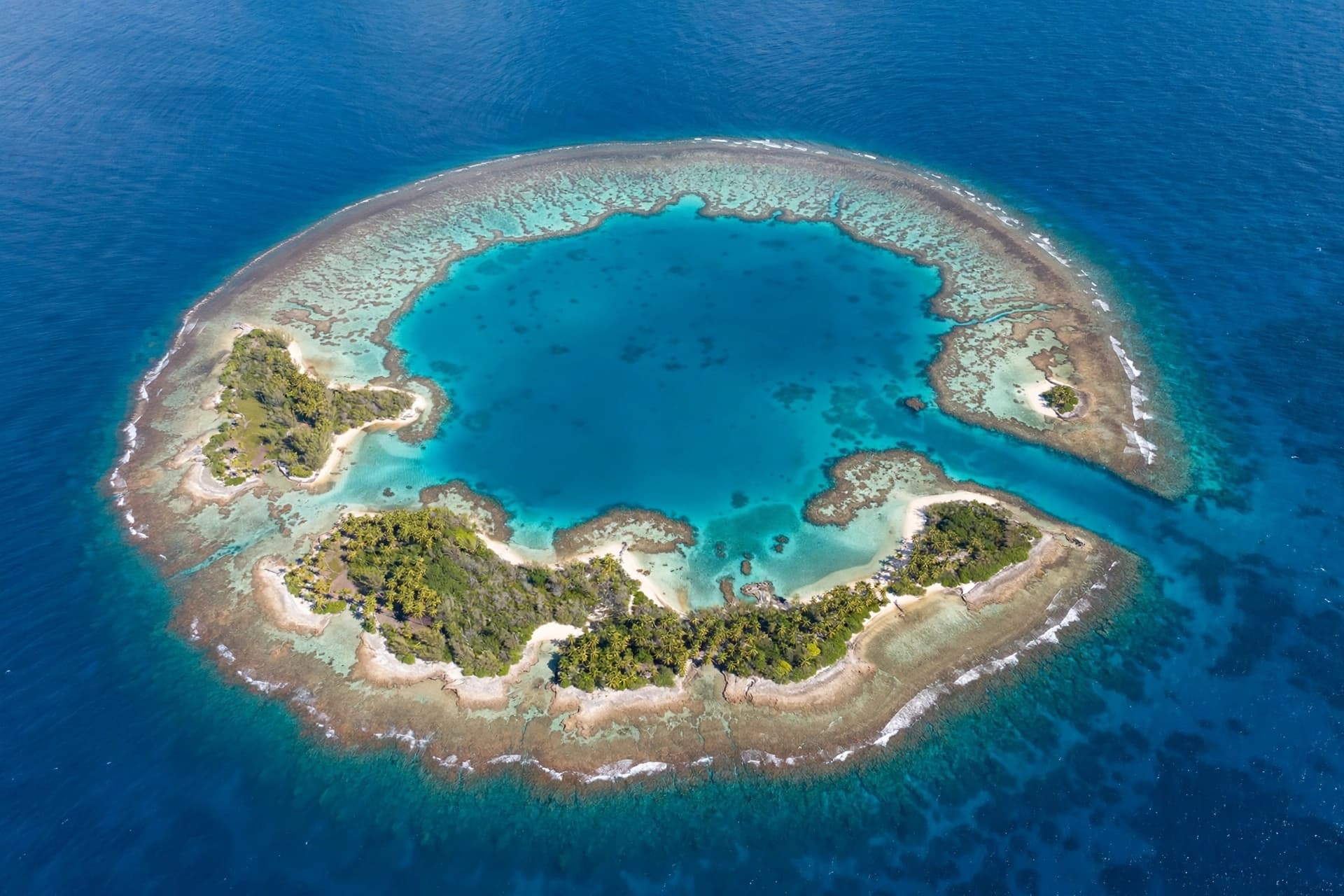
The expedition, backed by Purdue University and the Archaeological Legacy Institute, traveled to Nikumaroro Island in the Republic of Kiribati to investigate an object first spotted in satellite imagery in 2020. Dubbed the "Taraia Object," the multi-branched shape sitting in the island's lagoon was believed by some to be the wreckage of Earhart's twin-engine Lockheed Electra . The team arrived in mid-October after a five-day, 830-mile voyage from the Kiribati capital, navigating through a narrow gap in the atoll's reef that had been blasted by the British in 1963 .
The search was not without its challenges. Coconut crabs, the largest land-dwelling crustaceans on earth, patrol the island at night, forcing the crew to sleep aboard their vessel rather than on shore . El Niño conditions brought rough seas and strong winds that delayed the team's work for several days . When the weather finally cleared, researchers used dredging equipment to examine the object, which sat in shallow water just ten feet from shore .
The hypothesis they hoped to prove is one that has divided aviation historians for decades. The official U.S. government position has long held that Earhart and her navigator, Fred Noonan, ran out of fuel and crashed into the ocean near Howland Island, their intended refueling stop . But a rival theory, championed by researcher Ric Gillespie and his organization TIGHAR, suggests Earhart landed on Nikumaroro and died there as a castaway. Gillespie's evidence includes radio distress signals traced to the area, a 1930s freckle cream jar found on the island, and forensic analysis of skeletal remains .
Gillespie himself was skeptical of the Taraia Object, predicting before the expedition that it would turn out to be a fallen pandanus tree. "You can see the root ball. You can see the branches," he told Reuters. "It's a tree. People see what they want to see" . His prediction proved correct. On Monday, expedition leaders announced that the object was "likely a collection of large trees" wedged in the sand, its reflective surface coming from a carbonate veneer rather than metal .
Steve Schultz, a Purdue representative on the expedition, recorded a video message from the island. "Unfortunately, we weren't able to find that smoking gun," he said, before quoting Earhart herself: "Adventure is worthwhile in itself" . The team did report uncovering other artifacts, including a thirty-inch steel tube found in the lagoon, that may yield evidence upon further study .
The official search for Earhart's plane has now spanned generations and consumed millions of dollars. Previous expeditions, including a 2019 effort by the archaeologist who found the Titanic, have come up empty . The mystery endures not for lack of trying, but because the Pacific is vast and the past is patient.
The expedition has concluded its fieldwork and returned from Nikumaroro. Whether the steel tube or other artifacts will add to the castaway hypothesis remains to be seen. What is certain is that the question of Amelia Earhart will not be retired easily, and the next team will sail again.
The images in this article were generated by AI.
Sources: BBC, RNZ, Reuters, VRT NWS, Otago Daily Times
Published by Banx Network. This article is part of the Banx decentralized media programme, powered by the BXE token on the XRP Ledger.