
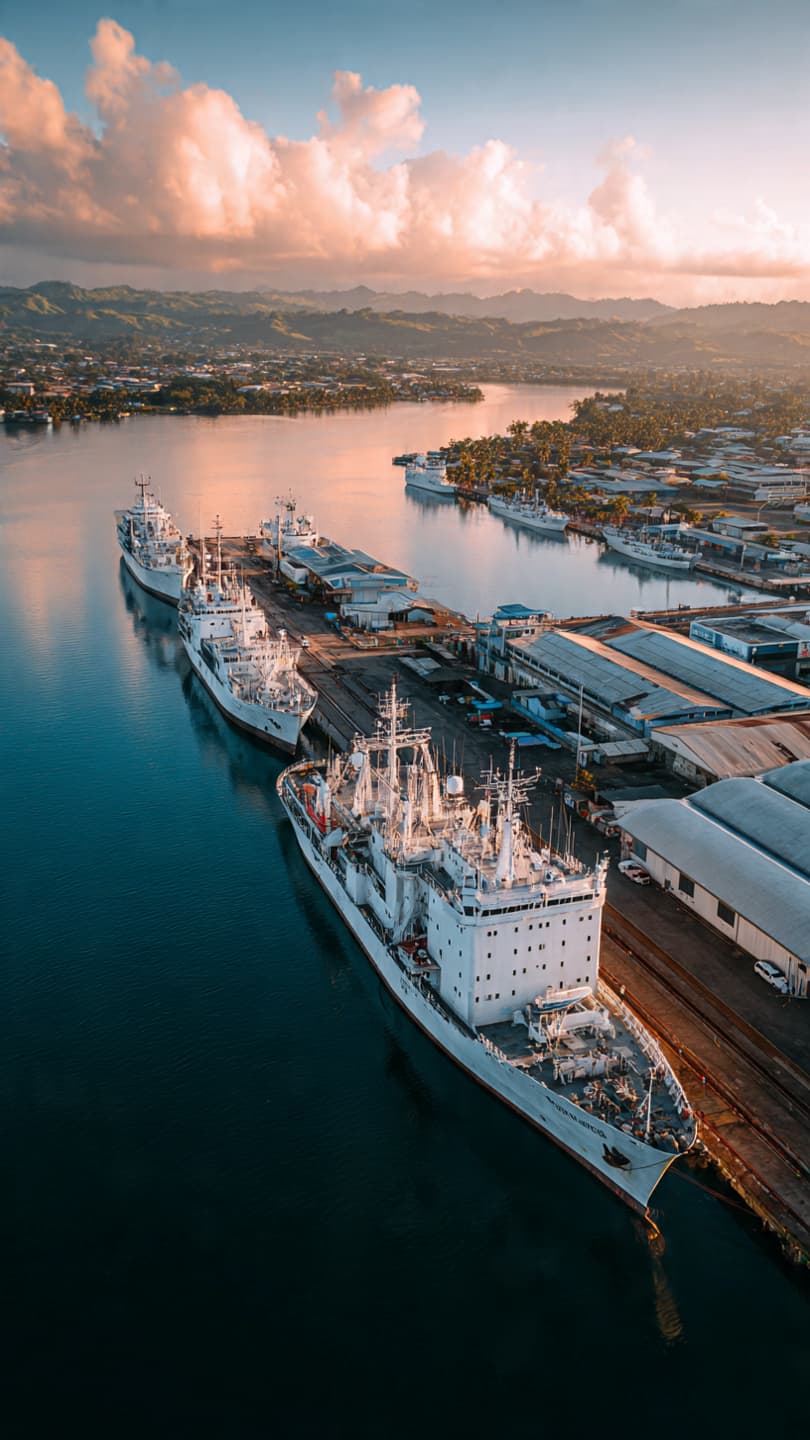
Key Highlights
- Fiji is now the primary humanitarian logistics hub for the South Pacific.
- The new facilities in Suva aim to accelerate aid delivery during disasters.
- This strategic move enhances regional resilience against climate challenges.
Fiji has officially been designated as the primary humanitarian logistics hub for the South Pacific, a significant development that underscores the archipelago's strategic importance in disaster response. This designation, announced by the United Nations and regional partners, involves the establishment of specialized storage and distribution facilities in Suva, aimed at streamlining the delivery of aid and emergency supplies to neighboring island nations during natural disasters.
The decision to center humanitarian logistics in Fiji is a recognition of the country's geographical advantages. Located in the heart of the South Pacific, Fiji serves as a natural gateway for aid distribution to various island nations that are often vulnerable to the impacts of climate change and natural disasters. The new facilities at the Suva docks are designed to enhance the speed and efficiency of aid delivery, ensuring that assistance reaches those in need as quickly as possible.
The atmosphere at the Suva docks is one of industrious preparation. Cranes and containers move with purpose, reflecting a commitment to readiness rather than mere commerce. This new humanitarian center is not just a logistical hub; it is a sanctuary of sorts, where the tools of recovery are gathered in anticipation of future crises. The calm energy present in the docks speaks volumes about the foresight and collective effort of the region to address the unpredictability of climate-related challenges.
Mapping the islands reveals a constellation of vulnerabilities, with each community tied to the whims of the ocean. By establishing Fiji as a logistics hub, the region is creating a more resilient network, effectively shortening the distance between a crisis and its relief. This initiative is a deliberate and thoughtful build-up of infrastructure, designed to withstand the challenges posed by a changing climate.
The narrative surrounding this hub transcends machinery and logistics; it is fundamentally about people and the promise of timely assistance. The establishment of this center signifies a commitment to regional solidarity, transforming the geography of the Pacific from a challenge into a source of strength. As the morning mist lifts over the Suva foothills, the new facilities stand as a testament to the art of preparedness, reflecting a society that understands the weight of natural elements and the necessity of being ready to respond.
The transition of Suva from a mere transit point to a humanitarian hub marks a significant evolution for the port. This new role places the city at the center of the Pacific’s safety net, a responsibility that carries both gravity and honor. The atmosphere of the port has shifted, now infused with a sense of purpose that extends beyond its own shores, embodying a collective commitment to ensuring that no island community faces the elements alone.
In the quiet of the warehouses, where supplies are meticulously organized, one can sense the pulse of a region that has chosen to take its safety into its own hands. This initiative is a story of coordination and foresight, a bridge built between islands to ensure that aid is always within reach when disaster strikes.
The establishment of Fiji as the primary humanitarian logistics hub is a proactive step towards enhancing regional resilience and ensuring that communities are better equipped to face the challenges posed by natural disasters. This strategic move not only strengthens the logistics framework but also reinforces the bonds of solidarity among Pacific nations, paving the way for a more secure future.
Published by Banx Network. This article is part of the Banx decentralized media programme, powered by the BXE token on the XRP Ledger.



