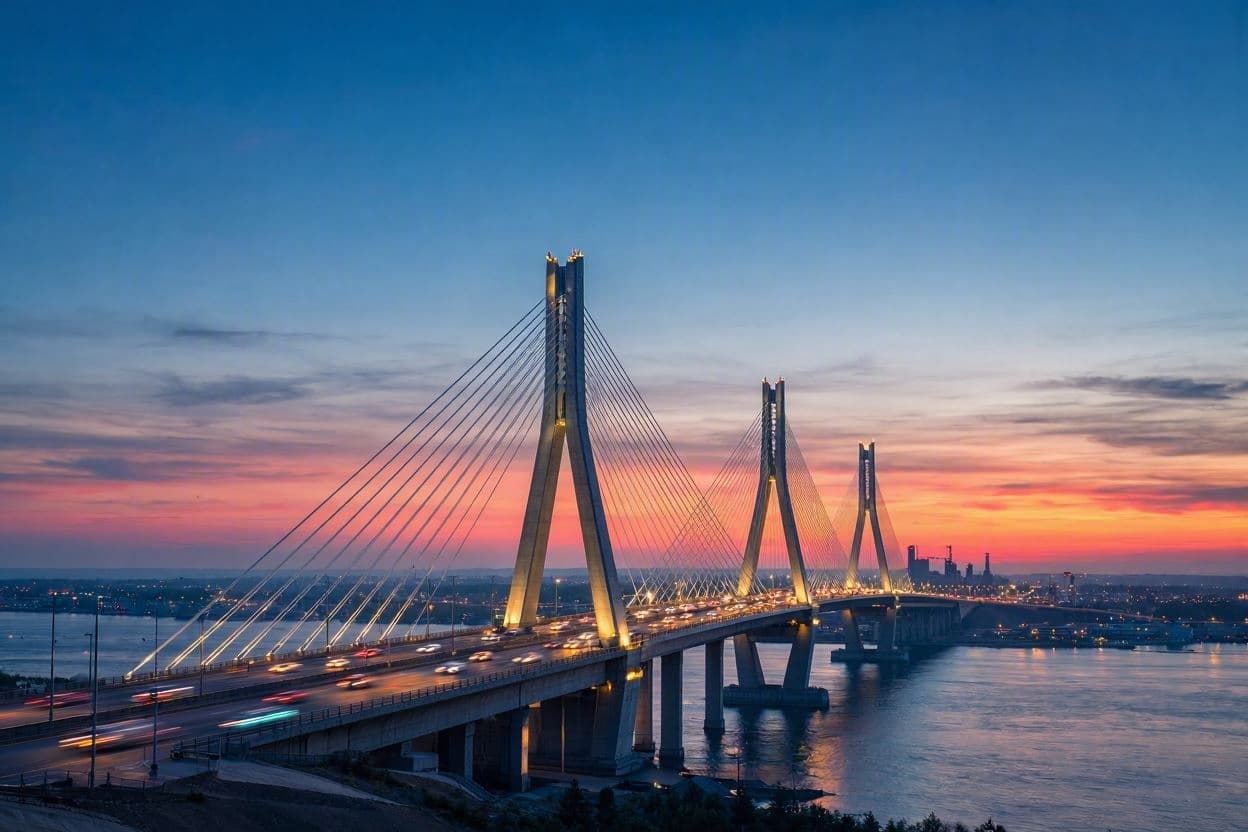
Bridges are more than concrete and steel; they are connectors of communities, economies, and cultures. The newly opened Gordie Howe International Bridge, spanning the Detroit River between Windsor, Ontario, and Detroit, Michigan, has already begun to weave itself into the fabric of cross-border life. In its first full month of operation, the bridge recorded more than 270,000 crossings, a significant milestone that highlights its immediate importance to travelers and trade. Yet, beneath the numbers lies a complex narrative of adaptation and changing travel patterns.
Statistics Canada reported that August saw nearly 135,000 return trips by Canadian residents and 101,000 trips by U.S. residents, along with approximately 34,800 commercial crossings. These figures demonstrate a robust initial uptake, suggesting that drivers are eager to utilize the new route. The bridge offers a modern alternative to the aging Ambassador Bridge, promising smoother traffic flow and enhanced security features. For many, it represents a fresh start in binational connectivity.
However, the data also reveals a 35.4% drop in crossings compared to August 2025, a period when the bridge was not yet fully operational or when traffic was distributed differently across existing crossings. This decline may reflect broader trends in cross-border travel, including economic factors, shifting tourism patterns, or the gradual normalization of post-pandemic mobility. It serves as a reminder that infrastructure success is measured not just by volume, but by its ability to meet evolving needs.
For commercial transport, the bridge provides a vital link for supply chains, facilitating the movement of goods between two of North America’s most integrated economies. The efficiency of customs processing and the bridge’s capacity to handle heavy traffic are critical for maintaining the flow of commerce. Early reports suggest that the new infrastructure is helping to reduce bottlenecks, though long-term impacts will depend on continued investment and coordination between Canadian and U.S. authorities.
Local communities on both sides of the border are watching closely, hoping that the bridge will bring economic benefits without disrupting neighborhood tranquility. Residents have expressed concerns about increased traffic noise and environmental impacts, urging planners to implement mitigation measures. Balancing the needs of global trade with local quality of life remains a key challenge for policymakers and bridge operators.
The Gordie Howe Bridge also stands as a symbol of bilateral cooperation, named after the legendary hockey player who embodied sportsmanship and unity. Its opening marks a new chapter in Canada-U.S. relations, emphasizing shared interests and mutual reliance. As travelers cross its span, they participate in a daily ritual of connection, reinforcing the ties that bind the two nations.
Looking ahead, the bridge’s role will likely expand as more drivers become accustomed to the new route. Marketing efforts and improved signage will help to integrate it into the regional transportation network. The goal is to make it a preferred choice for both leisure and business travel, enhancing the overall experience of crossing the border.
In the end, the 270,000 crossings are just the beginning. The true measure of the Gordie Howe International Bridge’s success will be its ability to serve as a reliable, efficient, and welcoming gateway for years to come. It is a structure built not just for today, but for the future of cross-border collaboration.
Note: Visuals for this article are AI-generated representations of the bridge and its surroundings, designed to complement the narrative.
Sources: CBS Detroit, CTV News Windsor, CP24, Statistics Canada
Published by Banx Network. This article is part of the Banx decentralized media programme, powered by the BXE token on the XRP Ledger.