There is something quietly poetic about repetition in rocketry. Once, a launch was a singular spectacle — fire and thunder rising only after years of preparation. Now, boosters return, land, and rise again, like seasoned travelers who know the road by heart. In that rhythm of reuse, the extraordinary begins to feel almost routine.
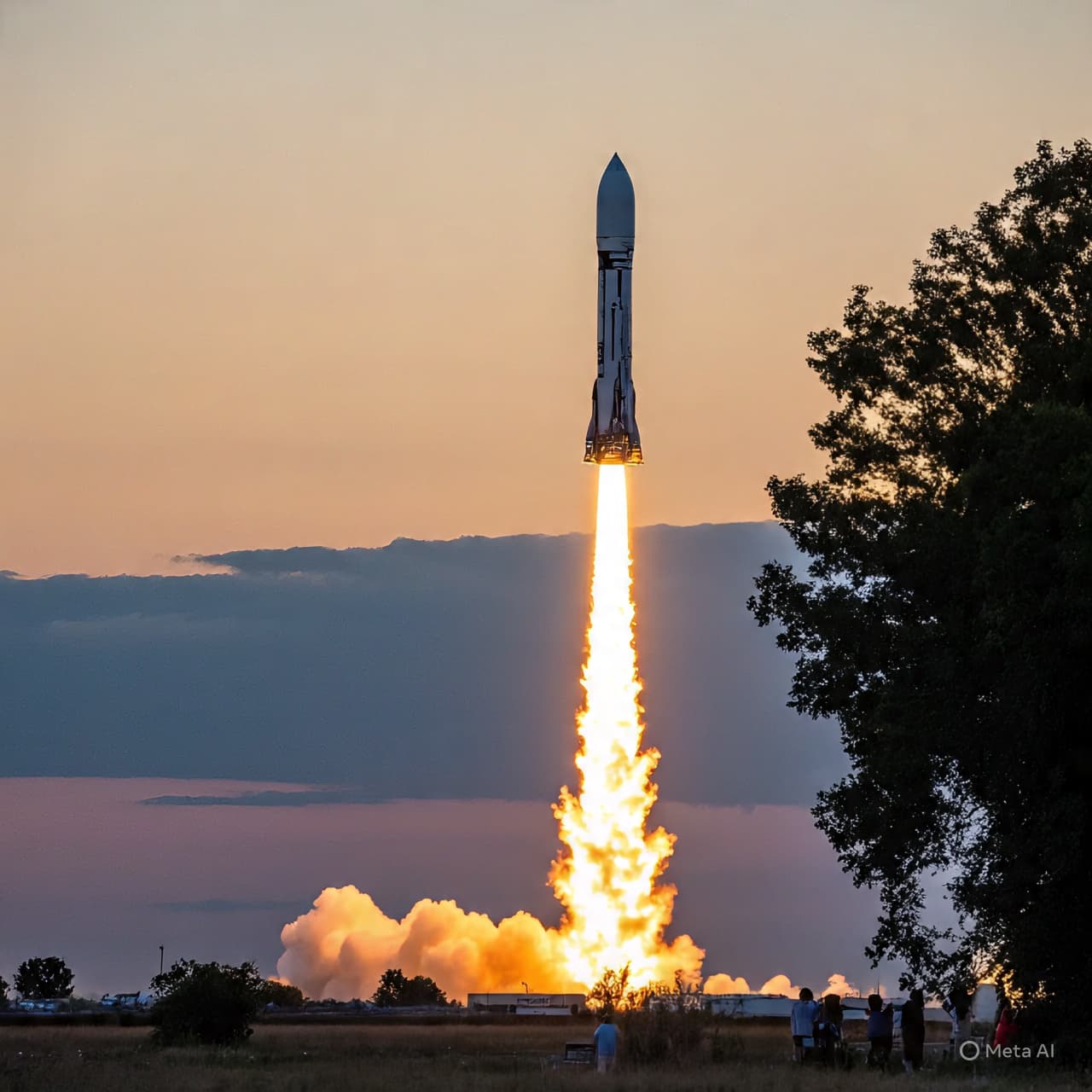
On its second Starlink mission of the same day, a Falcon 9 rocket set a new milestone for reusability, underscoring how far commercial spaceflight has evolved. The booster, already a veteran of numerous missions, lifted off once more carrying a fresh batch of Starlink internet satellites into low Earth orbit. After stage separation, it executed a controlled descent and landing, marking a record number of flights for a single Falcon 9 first stage.
The achievement is not merely numerical. Each successful reuse represents a refinement of engineering, logistics, and trust in hardware that must endure the stresses of launch and reentry. Falcon 9 boosters are designed to withstand the intense heat and pressure of ascent, only to return through the atmosphere and land either on a droneship at sea or on a designated landing pad. To fly again — and again — requires detailed inspections, component swaps where necessary, and confidence built on data.
Starlink, the satellite internet constellation developed by SpaceX, continues to expand with each mission. The network aims to provide global broadband coverage, particularly in remote and underserved regions. With dozens of launches per year, cadence has become as significant as capability. Conducting two Starlink launches in a single day reflects not just operational ambition, but an infrastructure capable of supporting it.
The reuse milestone also highlights a broader shift in space economics. Traditional launch systems were largely expendable, their first stages discarded into the ocean after one use. Falcon 9 changed that model, introducing routine booster landings and rapid refurbishment cycles. By extending hardware life, SpaceX reduces per-launch costs and accelerates mission frequency — a formula that has reshaped expectations across the industry.
Observers note that reusability records once seemed aspirational. Now they are surpassed with regularity. Each additional flight tests the durability of engines, tanks, avionics, and structural components. Engineers study performance data closely, balancing innovation with caution. The process is iterative, guided by experience rather than spectacle.
The video footage of the launch and landing captures a familiar yet still arresting scene: engines igniting in synchronized brilliance, a slender column of flame carving a path skyward, and later, the booster descending with controlled precision before touching down upright. The choreography speaks to years of incremental advancement.
SpaceX has confirmed that the booster completed its record-setting flight successfully and that the Starlink satellites were deployed as planned. The company continues preparations for upcoming missions as it expands its launch manifest. For now, the new reuse record stands as another quiet marker in the evolving story of commercial spaceflight — a reminder that progress often arrives not in singular leaps, but in steady, repeatable returns.
AI Image Disclaimer Images in this article are AI-generated illustrations, meant for concept only.
Sources
Space.com
Reuters
The Associated Press
CNBC
Ars Technica
Published by Banx Network. This article is part of the Banx decentralized media programme, powered by the BXE token on the XRP Ledger.