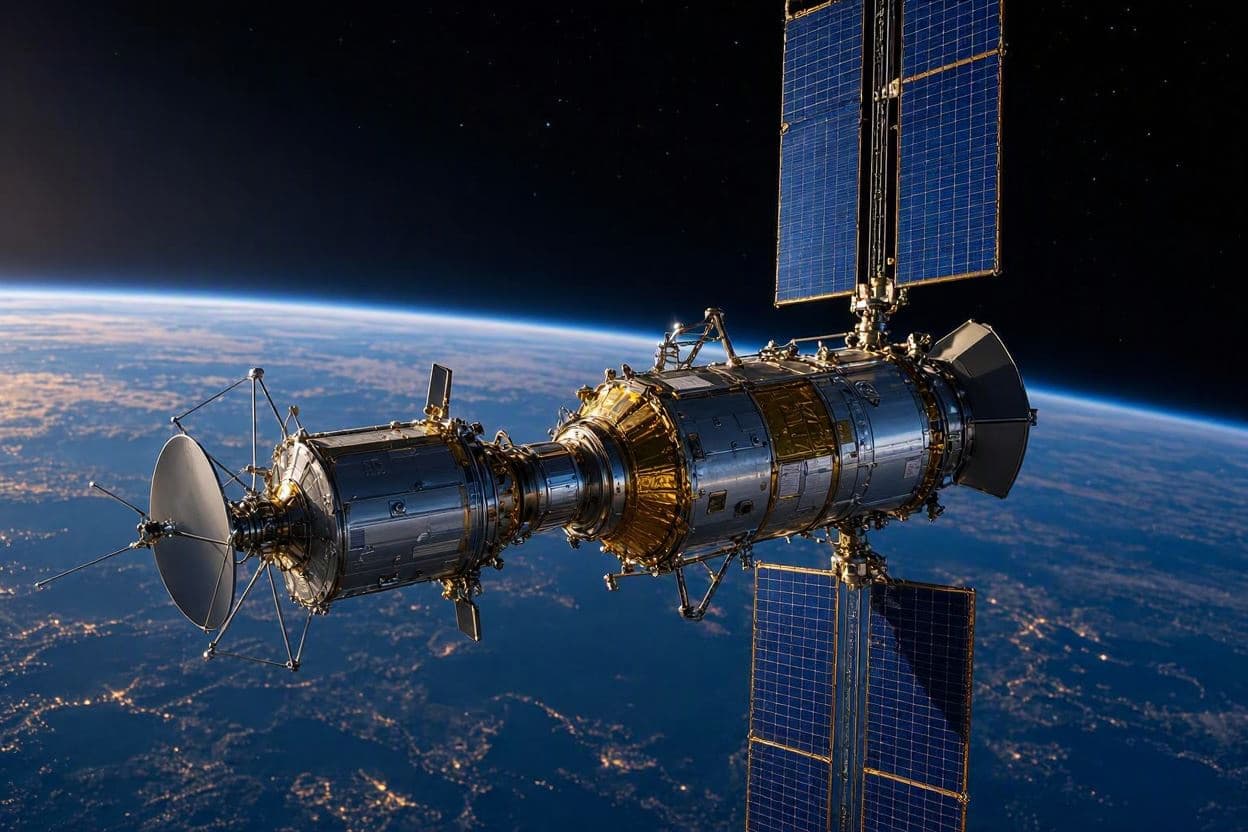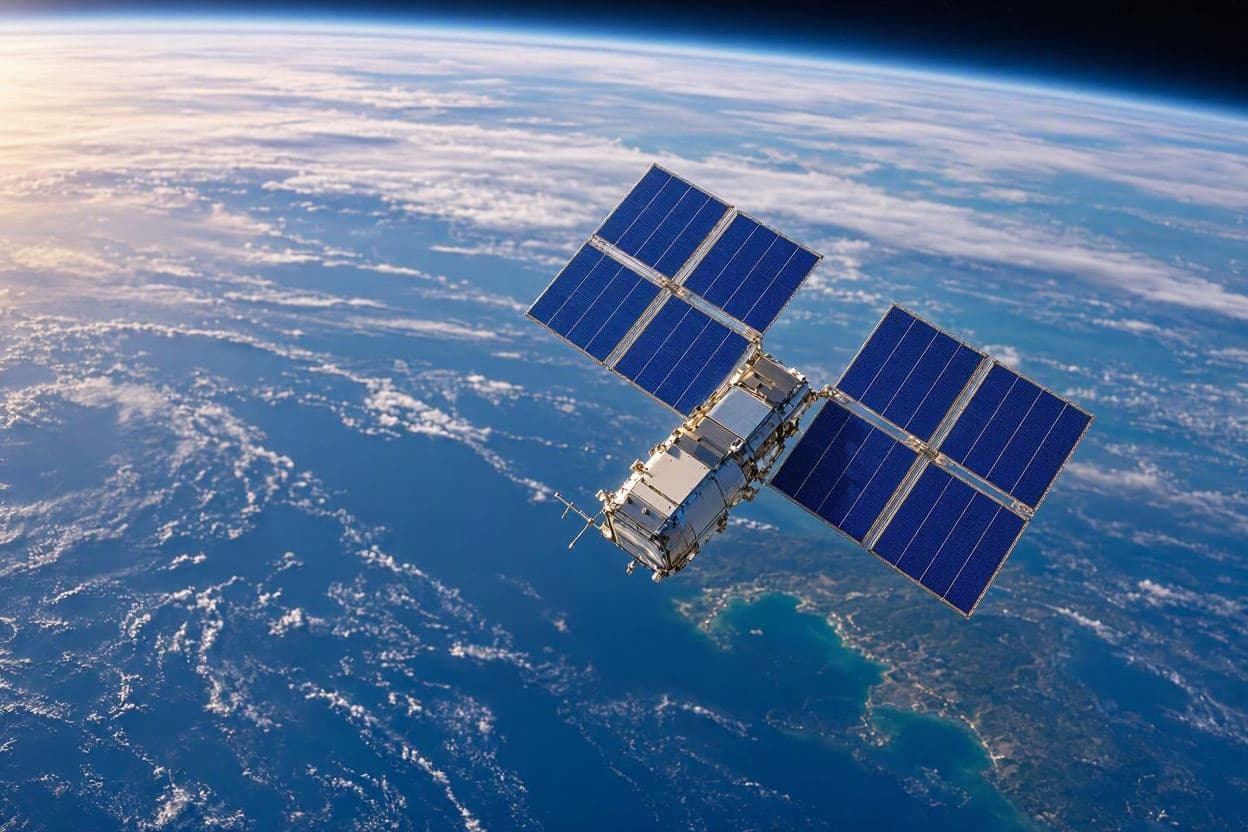
There is a particular kind of patience required to travel to the outer solar system—the kind that accepts a long, curving path rather than a straight line. A spacecraft bound for Jupiter cannot simply fire its engines and go. It must borrow speed from the planets themselves, swinging past them like a traveler catching the momentum of a passing train. On December 3, NASA's Europa Clipper will do exactly that, skimming past Earth for the second and final time before it turns toward the Jovian system, where it will spend years studying a moon that may harbor the conditions for life .
The spacecraft launched on October 14, 2024, aboard a SpaceX Falcon Heavy. Its trajectory is called a Mars-Earth Gravity Assist, or MEGA—a path chosen not only for efficiency but to avoid the problematic thermal environment near Venus . It completed its Mars flyby on March 1, 2025, and has been cruising since, calibrating instruments and waiting for the geometry to align for its Earth encounter .
The December flyby is more than a navigational maneuver. Earth's well-characterized magnetic, plasma, atmospheric, and thermal environments offer a uniquely valuable target for testing and calibration that cannot be replicated on the ground . The Europa Clipper Magnetometer will use Earth's magnetic field for its only post-launch absolute calibration, while the Plasma Instrument for Magnetic Sounding will cross-check its measurements against data from other near-Earth spacecraft .
Additional activities are under consideration. The radar instrument could use terrestrial lightning over the Amazon or Africa to characterize its beam pattern. The thermal imager could observe Earth and the Moon to calibrate its extended range. The ultraviolet spectrograph could test stellar occultations by Earth and the Moon, preparing for similar measurements at Europa . These are not mission objectives in the traditional sense; they are rehearsals, a chance to practice the tightly coordinated operations that will be required in the harsh radiation environment of Jupiter.
The reason for this care lies in the destination. Europa, one of Jupiter's largest moons, is believed to hold a vast salty ocean beneath its icy shell—an environment that could potentially support life. Europa Clipper will not orbit Europa directly, because the radiation near the moon is intense enough to damage spacecraft electronics within a short time. Instead, it will orbit Jupiter and make approximately 49 flybys of Europa, passing as close as 25 kilometers above the surface .
Between each flyby, the spacecraft will have seven to ten days to transmit the data it collects. This approach allows nearly three times as much data to be returned to Earth compared to a direct orbiter, while dramatically reducing radiation exposure . The mission's goal is to investigate Europa's habitability—to understand its ice shell, its ocean, its chemistry, and its energy sources .
NASA's Europa Clipper will make its second and final Earth gravity assist on December 3, 2026, using the flyby to calibrate its instruments before heading to Jupiter. The spacecraft is scheduled to arrive in 2030 and will study whether Europa's subsurface ocean could support life.
AI Image Disclaimer: The images accompanying this article are generated by artificial intelligence and are intended for illustrative purposes only.
Sources: EGU General Assembly, Copernicus.org, Europlanet Science Congress, The Journal of the Astronautical Sciences, Wikipedia
Published by Banx Network. This article is part of the Banx decentralized media programme, powered by the BXE token on the XRP Ledger.