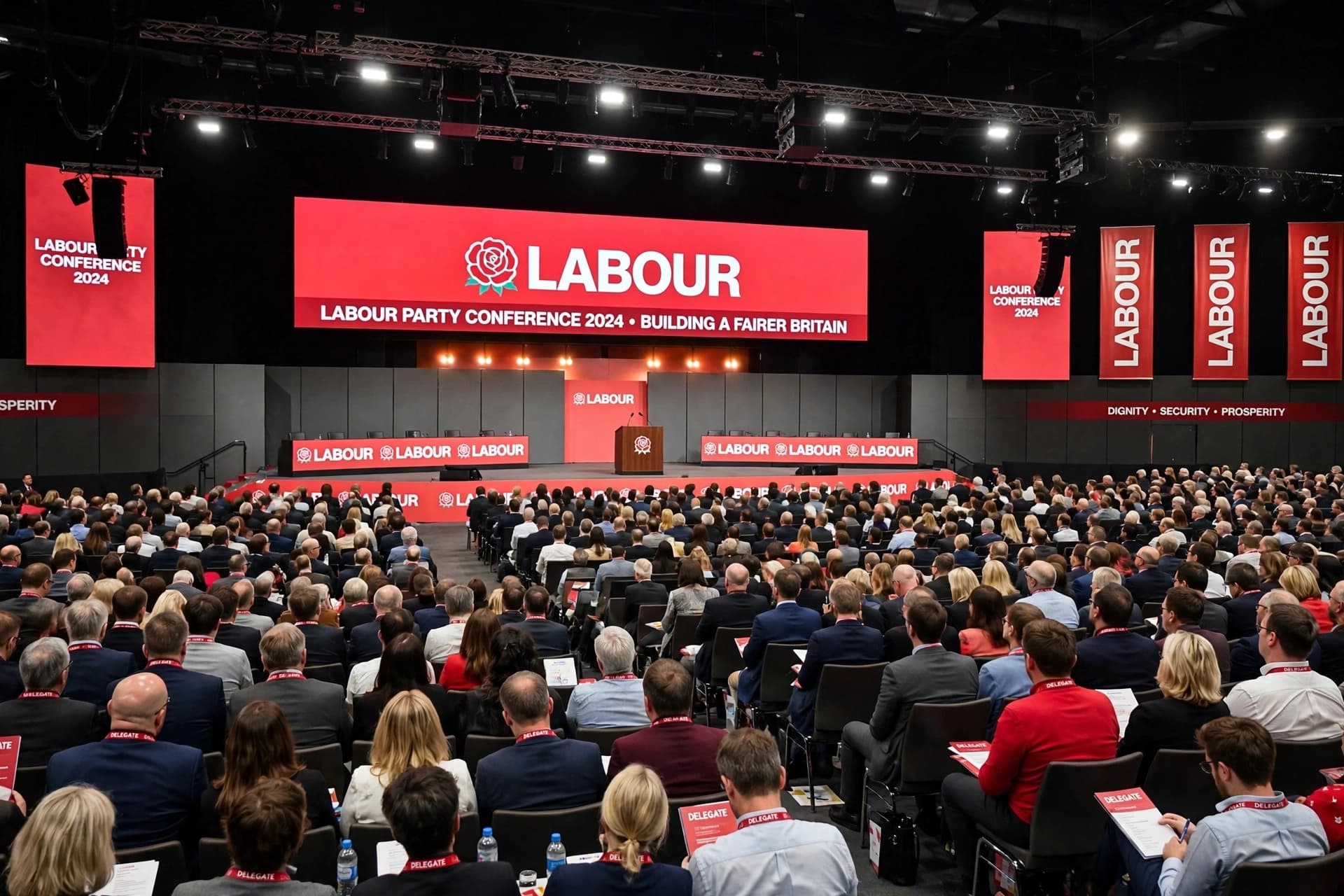
There are speeches that merely outline policy, and then there are speeches that attempt to redraw the map of what a nation believes it owes its citizens. On Tuesday, Prime Minister Andy Burnham stood before the Labour Party conference and chose the latter, promising a “new social contract for the 21st century” that would fundamentally expand the role of the state in British life . It was a speech framed by a personal grief that had not yet fully settled.
Burnham’s father, Roy, died earlier this month after living with Alzheimer’s disease. The Prime Minister’s voice faltered as he spoke of the care system that had shaped his final years, and it was this experience—more than any ideological blueprint—that anchored his central proposal: a National Care Service for England, free at the point of use and funded through general taxation, modeled on the founding principles of the NHS . He described the existing system as “broken,” and said fixing it would be as significant as the creation of the health service itself .
The ambition is substantial, and so is the cost. To help fund it, Burnham announced that after the next election, the state pension “triple lock”—which guarantees annual increases by the highest of inflation, average earnings, or 2.5 percent—would be adjusted to remove the earnings link on an annual basis . He estimated the change would save approximately £15 billion a year by 2040 compared to the current formula . “I accept I may pay a political price,” he said. “But someone has to go through the pain barrier and rip the plaster off” .
Beyond social care, Burnham pledged a broader reorientation of British economic life. He vowed to end what he characterized as a four-decade drift toward privatization and deregulation, promising greater public control over water companies and energy utilities . He announced that Labour would contest the next election on a commitment to reform Britain’s winner-takes-all electoral system toward some form of proportional representation, and said Brexit had “done more harm than good,” signaling a desire to reset the relationship with Europe .
The speech acknowledged its own constraints. Burnham insisted his government would “stick to our fiscal rules to get borrowing and debt down,” and admitted that economic realities limited how quickly his vision could be realized . The proposals remain a manifesto for the next election rather than immediate legislation, giving the government time to work out the precise funding mechanisms—details that will likely determine whether the ambition can survive contact with parliamentary arithmetic .
Some of the announcements will face immediate resistance. The adjustment to the pension triple lock touches a policy that has significantly reduced pensioner poverty since 2011, and any change invites accusations of betraying older voters . The electoral reform proposal unsettles a system that has historically favored the two largest parties. And the expansion of public services carries an implicit tax burden that has not yet been fully specified.
For all its breadth, the speech returned repeatedly to a single, intimate source. Burnham said the National Care Service would be built “in memory of my dad and out of complete respect for everyone who cared for him” . It was a reminder that the largest questions of public policy are often, at their root, questions about how we treat one another in the most vulnerable moments. Whether that personal clarity can translate into durable national consensus remains the open question of British politics this week.
AI Image Disclaimer: The imagery in this article has been generated by artificial intelligence and is not documentary in nature.
Sources: The Associated Press, BBC News, The Mirror, Daily Express, La Nación
Published by Banx Network. This article is part of the Banx decentralized media programme, powered by the BXE token on the XRP Ledger.