
In the quiet courtyards of Qom’s seminaries, where the wind moves softly through old stone corridors and clerical students walk beneath pale afternoon light, power in the Islamic Republic has often traveled quietly—less like a proclamation and more like a current passing through unseen channels. Iran’s leadership has long been shaped not only by formal institutions but also by networks of loyalty, religious authority, and history.
Into that quiet current now steps Mojtaba Khamenei, a figure who for decades remained largely out of public view. His name rarely appeared in speeches or official portraits, yet within the inner circles of Iran’s clerical establishment he was widely understood to hold influence close to the center of power.
In early March 2026, following the death of his father, Ayatollah Ali Khamenei, Iran’s Assembly of Experts—the clerical body responsible for selecting the country’s supreme leader—announced that Mojtaba Khamenei would become the third supreme leader of the Islamic Republic since the revolution of 1979.
The moment arrived during one of the most turbulent periods in the country’s modern history. Ali Khamenei, who had ruled for nearly four decades, was killed in late February during a wave of military strikes linked to the escalating war between Iran and a U.S.–Israel coalition. His death opened a sudden and uncertain transition at the highest level of the Iranian state.
Mojtaba Khamenei, 56, is a mid-ranking Shiite cleric who spent much of his life studying theology in the religious centers of Qom. Unlike many senior figures in Iranian politics, he never ran for elected office and rarely appeared in public political debates. Yet behind the scenes, analysts say, he played a role in managing access to his father and cultivating relationships with powerful institutions such as the Islamic Revolutionary Guard Corps.
Those relationships helped shape his reputation as a discreet but influential figure within the ruling system. Over the years, observers often described him as part of the small circle surrounding the supreme leader’s office—an environment where religious authority, military influence, and state power intersect.
His elevation also carries symbolic weight in Iran’s political story. Since the Islamic Revolution sought to dismantle hereditary rule associated with the shah, leadership passing from father to son is a rare and sensitive development. Some analysts see it as a sign of continuity within the system, while others view it as a reflection of how power has consolidated among Iran’s most entrenched institutions.
Inside Iran, key political figures and military commanders quickly pledged allegiance to the new leader. The Islamic Revolutionary Guard Corps declared its support and emphasized its commitment to defending the state under his leadership.
Beyond Iran’s borders, reactions have been varied and closely watched. Russia’s leadership signaled support for the transition, while Western officials expressed skepticism about the direction the new leadership might take. These responses unfold against the backdrop of ongoing regional conflict, making the leadership change more than a domestic event—it becomes a moment tied to the broader currents of geopolitics.
For Mojtaba Khamenei, the path ahead begins not in calm succession but in the shadow of war and uncertainty. The office he now holds carries vast authority: control over the armed forces, influence over the judiciary and state broadcasting, and the power to shape Iran’s strategic direction.
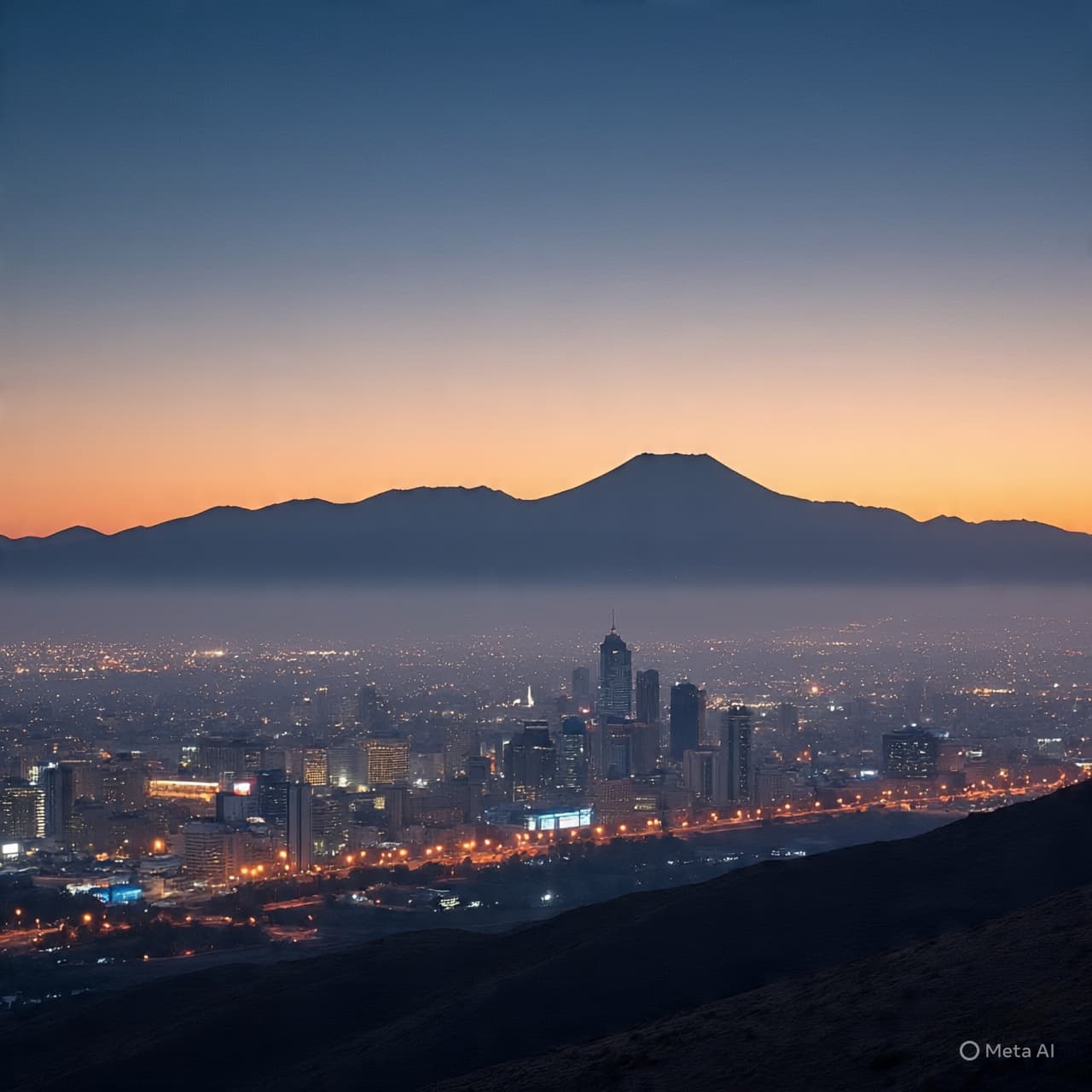
In Tehran, where the city’s lights shimmer against the mountains at night and traffic moves endlessly through wide avenues, the transition signals the beginning of another chapter in the long narrative of the Islamic Republic. Leadership has changed hands before, but rarely under circumstances so charged with conflict and expectation.
History will determine how this new chapter unfolds. For now, the figure who once stood quietly in the background has stepped into the most powerful role in Iran—at a moment when the country, and much of the region around it, stands at a crossroads.
AI Image Disclaimer Illustrations were created using AI tools and are not real photographs.
Sources Reuters Al Jazeera Bloomberg The Guardian Associated Press
Published by Banx Network. This article is part of the Banx decentralized media programme, powered by the BXE token on the XRP Ledger.


