October does not care about your regular season. It does not care about your run differential, your rotation depth, or the fact that you won ninety-five games in a division that sent three teams to the playoffs. October is a different country, with its own weather and its own physics. The teams that survive it are not always the best ones—they are the ones best suited to the particular gravity of a short series.
That is the exercise before us now: not to predict, but to rank. Not to crown a champion in September, but to assess which of the twelve teams arriving in this year's postseason carry the qualities that tend to matter when the calendar turns. Starting pitching, bullpen depth, defensive competence, and the ability to hit good pitching—these are the currencies of October. Some teams have more of them. Some have less.
The rankings begin, as they must, with the team that has been the most complete. The Dodgers, for all the noise about their payroll, have the deepest roster in the field. Their rotation, even without its full complement, has been the best in baseball by park-adjusted ERA. Their lineup does not chase. They do not give away outs. They are the team everyone else will measure themselves against.
Behind them sit the Braves, a team that has quietly assembled one of the most balanced rosters in the National League. Their offense does not rely on a single slugger. Their bullpen has been the best in the game since June. What they lack in star power, they make up for in the absence of weakness—and in October, the absence of weakness is often what decides a series.
The American League side is more complicated. The Orioles are young, fearless, and deep in ways that defy their payroll. The Astros are old, tested, and somehow still standing. The Yankees have the best pitcher in the sport and a lineup that can disappear for three days. The Rangers hit enough to scare anyone but pitch just enough to scare themselves. The Twins and Rays are built for the regular season; whether that translates is the eternal question.
The Phillies, Brewers, and Diamondbacks round out the field. Each has a path: Philadelphia's power, Milwaukee's pitching, Arizona's youth. Each also has a flaw. The Phillies' bullpen has been shaky. The Brewers' lineup lacks a true anchor. The Diamondbacks are the youngest team here, and youth is both their advantage and their risk.
What emerges from any ranking is not certainty but a sense of proportion. The postseason is a small-sample tournament. A hot pitcher can erase a roster's deficiencies. A cold week can end a season. The teams at the top of this list have the fewest ways to lose. The teams at the bottom need things to break their way.
That is not a prediction. It is simply an acknowledgment that October has its own logic, and the teams that understand it best are the ones still standing in the final week. The ranking is a snapshot. The games will write their own story.
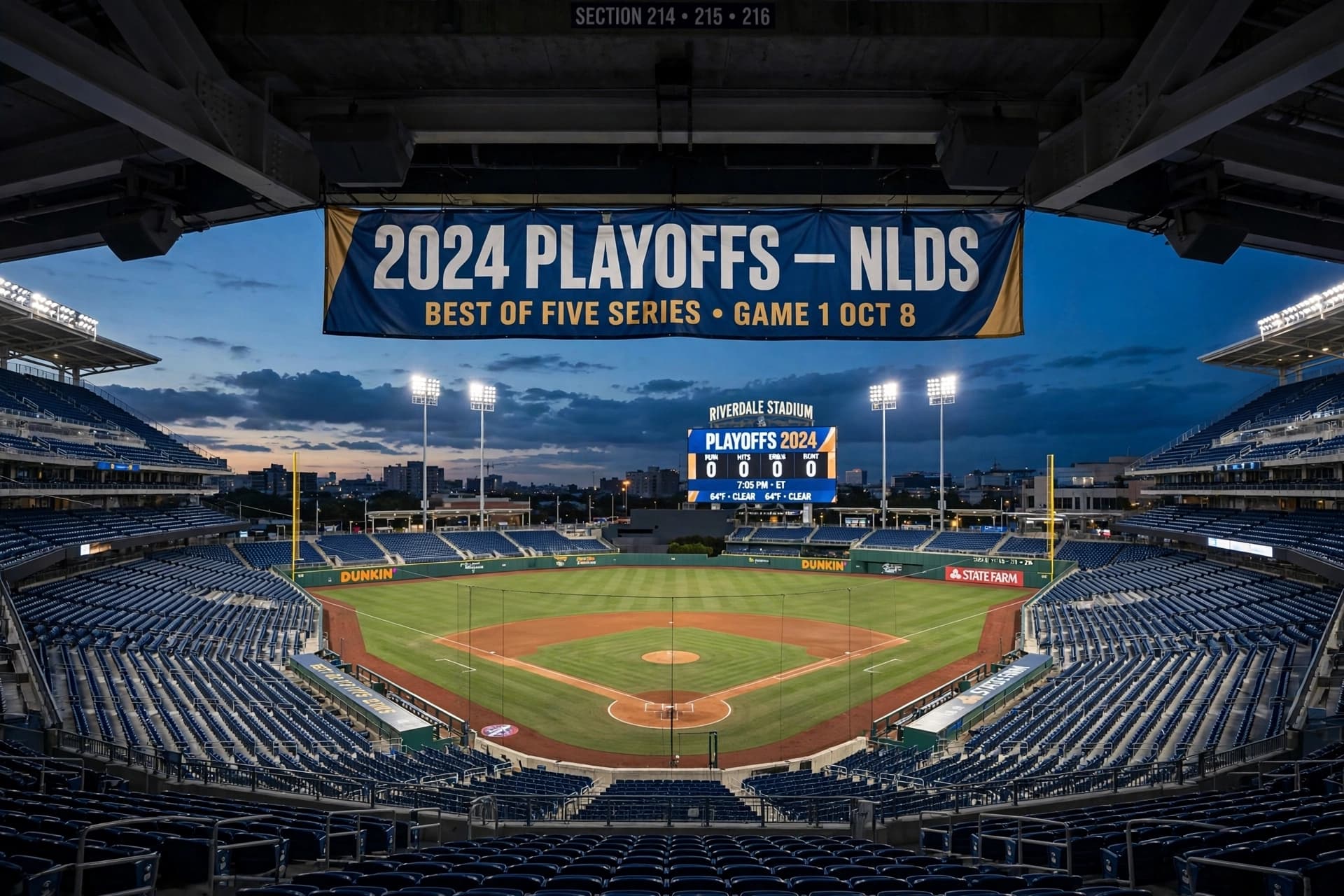
Image Disclaimer: The accompanying image is AI-generated and does not depict a real event.
Sources: MLB.com, ESPN, The Athletic, FanGraphs
Published by Banx Network. This article is part of the Banx decentralized media programme, powered by the BXE token on the XRP Ledger.