

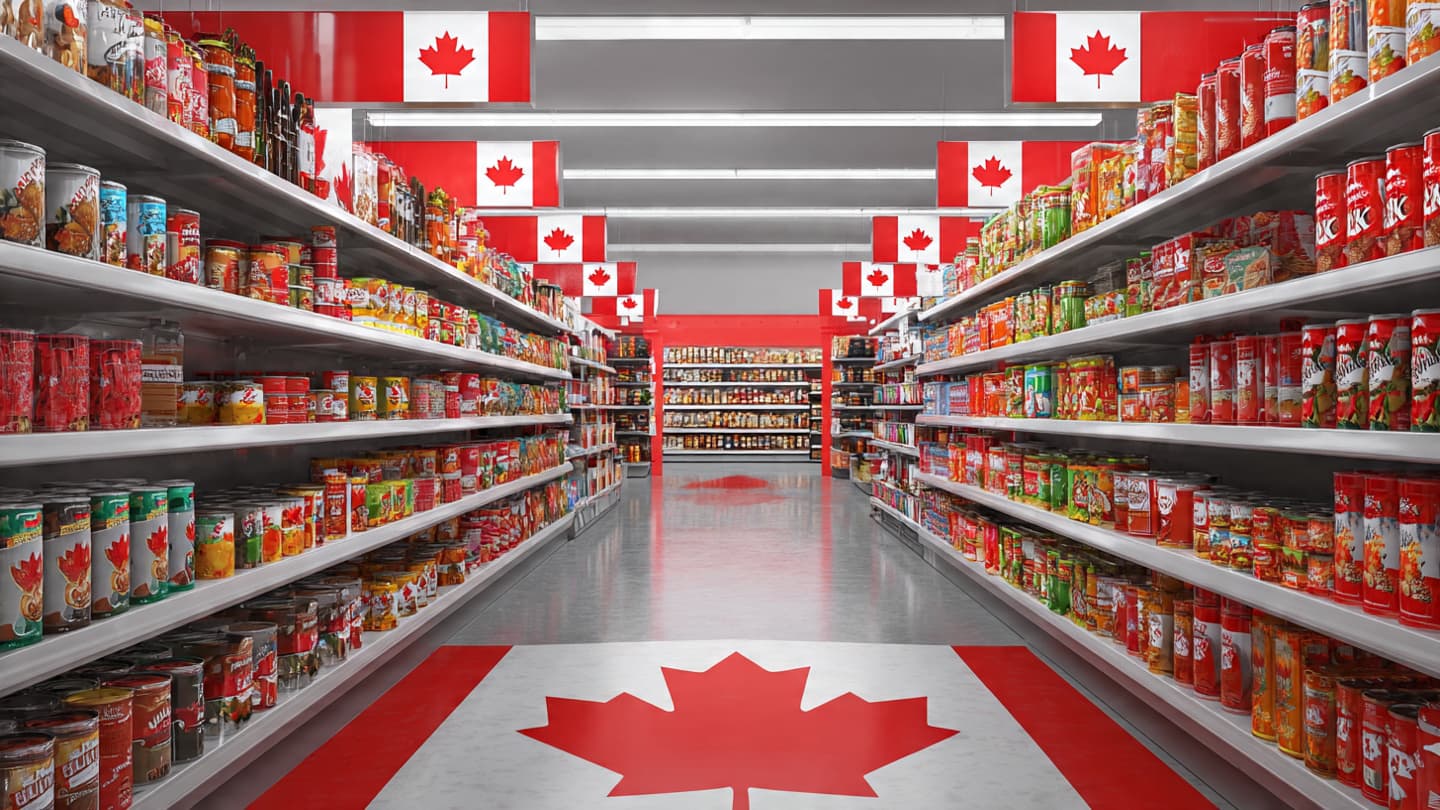
Key Highlights
- Maple washing controversy:Sobeys and Loblaw face criticism over branding practices.
- Consumer demand:Shoppers seek clarity on Canadian-made goods amid rising food prices.
- National identity:The maple leaf symbol's significance in consumer purchasing decisions.
The significance of national symbols often transcends their physical representation. In Canada, the small maple leaf, a familiar emblem, has recently ignited a larger conversation about branding and consumer trust. Two of the country's largest grocery chains, Sobeys and Loblaw, are currently under fire for accusations of 'maple washing.' This term refers to the practice of using Canadian symbols to create a misleading impression about a product's origins.
The controversy escalated when Sobeys decided to remove maple leaf symbols from certain displays and product labels. This move came amid heightened public scrutiny regarding how retailers represent Canadian-made goods, especially as consumers are increasingly focused on domestic sourcing and transparency in food supply chains.
Critics argue that national symbols can significantly influence consumer behavior. For many shoppers, visual cues like the maple leaf or Canadian flags evoke a sense of trust and familiarity, leading them to assume that products are locally sourced. However, the reality is often more complex. Many grocery items are processed in Canada but contain imported ingredients, making it challenging for consumers to discern the true origin of their food.
Consumer advocates are calling for clearer labeling standards to alleviate confusion. They argue that shoppers should not have to decode marketing symbols to understand where their food comes from. Instead, transparency in labeling would foster greater trust than patriotic branding alone.
In response to the backlash, Sobeys has stated that its adjustments to store symbols were aimed at enhancing clarity rather than undermining Canadian identity. Loblaw has also defended its practices, emphasizing compliance with existing labeling regulations and its commitment to supporting domestic producers. Nevertheless, the debate continues to unfold, particularly on social media platforms and consumer forums.
This issue arises during a time of economic sensitivity, with food prices being a significant concern for many households. As consumers navigate their shopping choices, they increasingly consider ethical and economic factors. The conversation surrounding origin labeling is now intertwined with discussions about affordability, local agriculture, and national economic resilience.
For Canadian farmers and producers, this dialogue holds both emotional and commercial weight. The success of domestic agriculture often hinges on consumer confidence, especially when competing against lower-cost international imports. Thus, national symbols evolve from mere branding to integral components of economic storytelling.
As the conversation progresses, regulators and retailers are likely to face ongoing pressure to clarify standards regarding Canadian labeling practices. Many consumers appear to prioritize straightforward information about the products they purchase over symbolic marketing, indicating a shift in consumer expectations.
AI Image Disclaimer: Certain images accompanying this report were created with AI-generated visual tools for editorial illustration.
Published by Banx Network. This article is part of the Banx decentralized media programme, powered by the BXE token on the XRP Ledger.




