There are places in the world that seem to exist quietly, almost unnoticed, until history leans in and places a spotlight upon them. is one such place—an unassuming stretch of land in the Persian Gulf that, like a keystone in an arch, holds far more weight than its size might suggest. It is here, where oil flows outward and influence quietly gathers, that conversations about power, pressure, and possibility begin to converge.
In discussions about how the United States might attempt to seize or disrupt Kharg Island, the focus often drifts not toward dramatic imagery, but toward layers of strategy that unfold gradually. Military analysts tend to describe such scenarios less as sudden acts and more as sequences—carefully calculated steps shaped by geography, capability, and consequence. The island, responsible for a significant portion of Iran’s oil exports, is deeply woven into both national resilience and global energy balance.
Any hypothetical move would likely begin far from the island itself, in the open waters where naval presence signals intention without immediate action. The U.S., with its longstanding maritime capabilities in the region, could theoretically rely on surveillance, blockades, or restricted access routes as initial measures. These actions, subtle in motion yet significant in effect, could place pressure without crossing immediately into direct confrontation.
Yet Kharg Island is not isolated in vulnerability. It is surrounded by layers of defense—physical, strategic, and symbolic. Iran has long recognized the island’s importance, reinforcing it not only with military assets but with the understanding that its protection is inseparable from national sovereignty. Any attempt to seize it would therefore not be a singular event, but a trigger point, potentially drawing responses that extend far beyond its shores.
There is also the broader context to consider. The Persian Gulf itself is less a quiet sea than a tightly wound corridor of global dependence, where energy routes intersect with geopolitical sensitivities. Disruption at Kharg Island could ripple outward, influencing oil markets, shipping lanes, and diplomatic relationships. In this sense, the island becomes more than a target—it becomes a fulcrum, capable of shifting balances far beyond its immediate geography.
Strategists often suggest that in modern conflict, control does not always require physical occupation. Cyber operations, economic sanctions, and coordinated international pressure can, in some cases, achieve similar outcomes without the visible footprint of troops on the ground. In such a framework, “seizing” may take on a more abstract meaning—less about territory, more about influence and restriction.
Still, the uncertainties remain considerable. Military action, especially in such a sensitive region, carries risks that are difficult to contain once set in motion. Alliances could be tested, unintended escalations could emerge, and the line between limited operation and broader conflict could blur with little warning.
As conversations continue in policy circles and analytical spaces, Kharg Island stands as a reminder of how geography and geopolitics often intertwine. What appears to be a small point on a map can, under certain conditions, become central to much larger narratives.
For now, there has been no indication of immediate action regarding Kharg Island. Officials and observers continue to watch developments in U.S.-Iran relations, with attention focused on diplomatic efforts, regional stability, and the evolving dynamics of energy security.
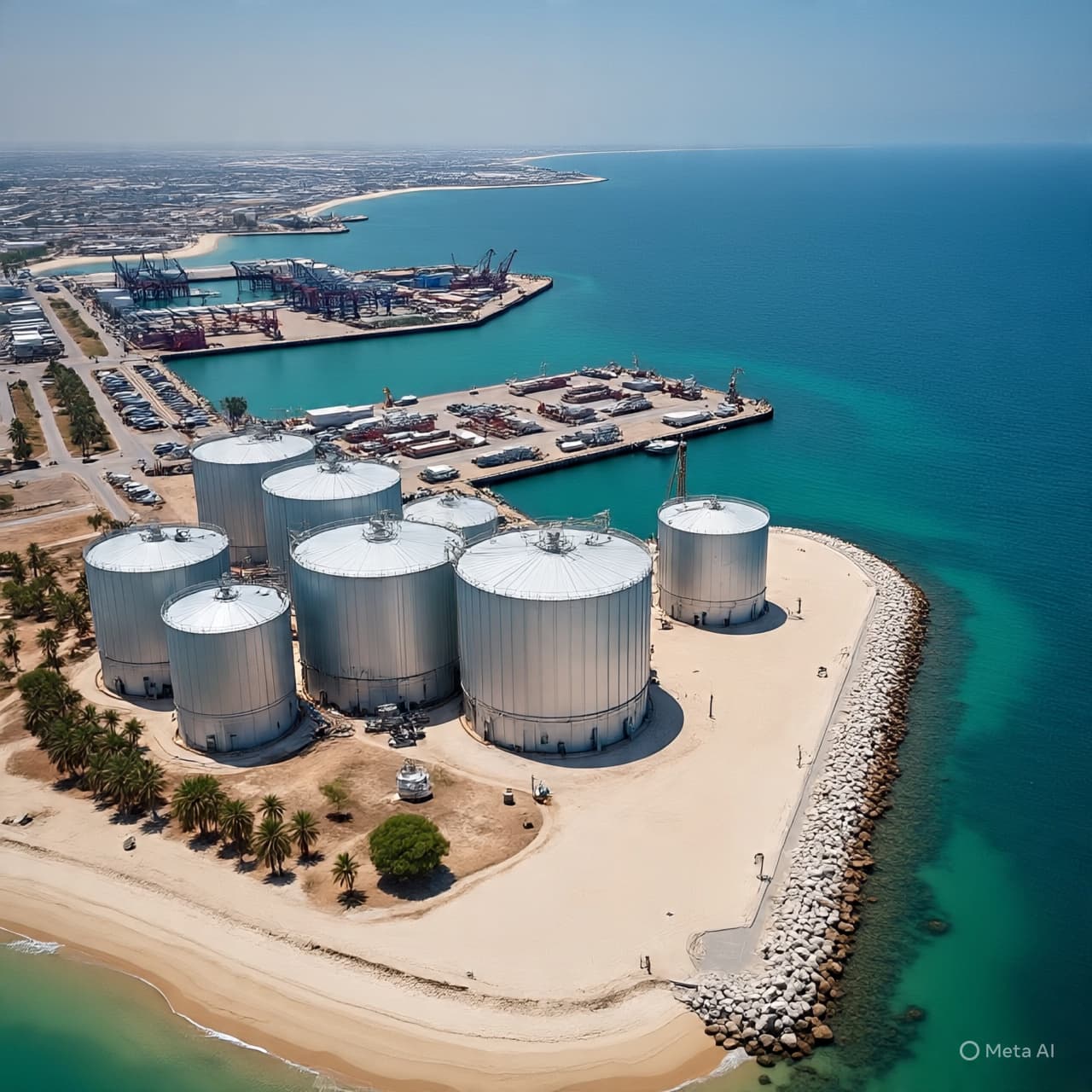
AI Image Disclaimer Illustrations were produced with AI and serve as conceptual depictions.
Source Check
Credible coverage and analysis on this topic exist across major and specialized outlets. Here are 5 sources:
Reuters BBC News The New York Times Financial Times Al Jazeera
Published by Banx Network. This article is part of the Banx decentralized media programme, powered by the BXE token on the XRP Ledger.