High above the turning Earth, where the horizon bends into a thin blue arc, the rhythm of orbit continues with patient regularity. The International Space Station circles the planet every ninety minutes, a steady outpost of laboratories, solar panels, and quiet human presence suspended in the dark.
Attached to its structure are visiting spacecraft—vehicles that arrive carrying equipment, experiments, and provisions from the surface far below. For a time they remain, anchored gently to the station’s docking ports, becoming part of the orbiting complex before eventually returning to the open silence of space.
On March 12, one such spacecraft prepared for its departure.
The cargo vehicle, known as Cygnus XL cargo spacecraft, was built by Northrop Grumman as part of a long-running partnership that keeps the orbital laboratory supplied. Over the course of its mission, the spacecraft delivered scientific equipment, crew supplies, and materials needed for ongoing research aboard the station.
Cygnus spacecraft are designed not only to deliver cargo but also to serve as temporary extensions of the station itself. While attached, astronauts can use the interior space to store equipment or stage experiments awaiting return to Earth or disposal in the atmosphere.
Yet each mission follows a careful sequence. After weeks or months connected to the station, the spacecraft eventually completes its role. When that moment arrives, robotic arms and docking mechanisms begin the quiet choreography that releases it from the orbiting structure.
For the March departure, controllers prepared to use the station’s robotic arm to gently maneuver the Cygnus vehicle away from its berth. Once released, the spacecraft would drift slowly outward, moving into its own independent orbit while remaining under close observation from mission controllers.
The version involved in this mission, Cygnus XL, represents an extended configuration of the spacecraft with increased cargo capacity. Its design allows larger shipments of supplies and scientific payloads to reach the station, supporting the growing scope of research conducted in microgravity.
These experiments range across many fields—biology, materials science, physics, and Earth observation—taking advantage of the unique environment in orbit where gravity’s pull is almost absent.
When its operational phase ends, Cygnus spacecraft perform another important function. Rather than returning to Earth for reuse, they are directed into controlled reentry trajectories, carrying away waste materials and unneeded equipment from the station.
During this final descent, the spacecraft burns up safely in Earth’s atmosphere, a planned conclusion that clears space aboard the station for future missions.
The March 12 departure marks the first time the Cygnus XL configuration has left the station following its service period, offering observers and space enthusiasts an opportunity to watch the slow separation of spacecraft and station—a moment that unfolds gradually against the quiet backdrop of orbit.
According to mission updates, the cargo spacecraft successfully completed its stay at the International Space Station and was scheduled to depart on March 12 under the supervision of flight controllers and station crew.
AI Image Disclaimer
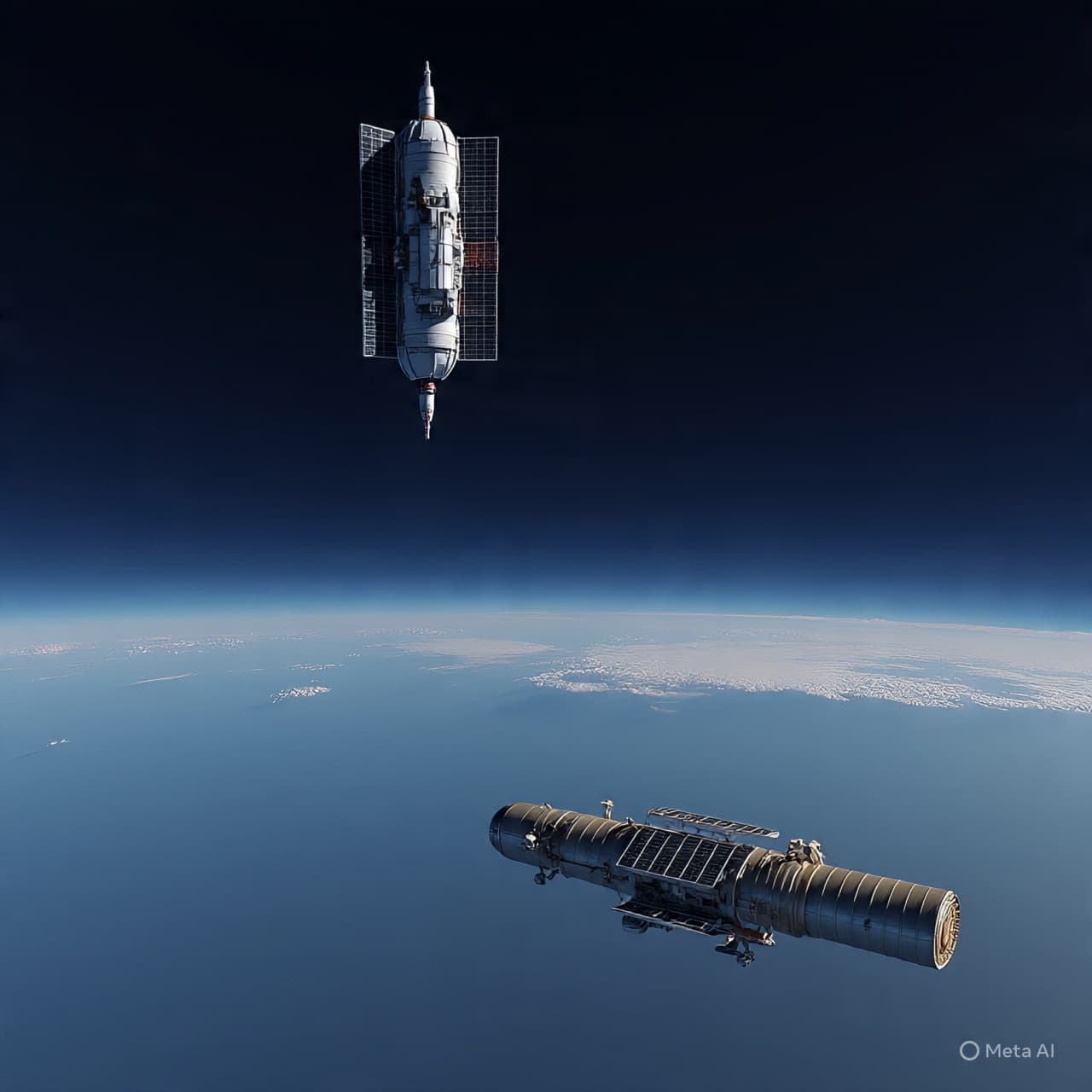
Images accompanying this article are AI-generated visual interpretations created to illustrate spaceflight concepts.
Source Check
Credible coverage and/or primary reporting exist from: Space.com NASA Phys.org SpaceNews Ars Technica
Published by Banx Network. This article is part of the Banx decentralized media programme, powered by the BXE token on the XRP Ledger.