Night in the Gulf often carries a particular stillness. The air settles above the desert, warm even after midnight, while city lights shimmer along the coastlines of Riyadh, Doha, Abu Dhabi, and Manama. In these hours the highways grow quieter, and the towers that define the modern skyline of the Arabian Peninsula seem to float above the darkness like distant lanterns.
Then, sometimes, the calm breaks.
Across several Gulf nations, sirens pierced the night as air defense systems stirred into motion. Residents in parts of Saudi Arabia, Qatar, the United Arab Emirates, and Bahrain reported hearing warning alarms and seeing flashes high above the horizon as defensive systems moved to intercept missiles launched from Iran. In the sky, the confrontation unfolded in seconds—arcs of light crossing the darkness before fading again into silence.
Officials in the region said the projectiles were successfully intercepted before reaching major population centers. Air defense networks activated across multiple countries, reflecting a coordinated response among Gulf states that have steadily strengthened their defensive cooperation over recent years. Though no major damage or casualties were immediately reported, the event carried a powerful reminder of how quickly distant conflict can stretch across borders.
The missiles were reportedly launched as part of Iran’s wider confrontation involving Israel and the United States, a conflict that has drawn the attention of governments across the Middle East. While many of the strikes appear aimed at military or strategic targets in the region, the airspace of neighboring countries has increasingly become a corridor through which threats—and the systems designed to stop them—pass overhead.
For Gulf states, the moment arrives within a long and complicated relationship with Iran. Geography places them only a narrow stretch of water apart across the Persian Gulf, and their histories have been shaped by cycles of rivalry, diplomacy, and cautious coexistence. In recent years, several countries in the region have sought to ease tensions through diplomatic engagement with Tehran, while simultaneously reinforcing security partnerships with Western allies.
The presence of advanced missile defense systems throughout the Gulf reflects this balance. Many of these systems—developed with support from the United States and other partners—are designed to detect incoming threats at great distance, allowing interception before they descend toward cities or critical infrastructure. Their activation during the recent incident illustrates both the scale of regional preparedness and the fragility of the current moment.
Residents across the Gulf shared videos online showing bright streaks crossing the sky, some accompanied by the distant rumble of intercepts. In cities known for their carefully ordered rhythms of commerce and daily life, such images felt unusual—reminders that geopolitical tensions can suddenly become visible above ordinary streets.
Yet even as sirens faded and the skies returned to their familiar stillness, the wider conflict continued to unfold elsewhere. Diplomats across the region and beyond have urged restraint, warning that each exchange risks drawing more countries into a confrontation already stretching across multiple fronts.
By morning, life in the Gulf had largely resumed its steady pace. Commuters returned to highways, markets opened, and the bright desert sun replaced the night sky where the intercepts had briefly flashed.
But for those who looked up during the alarms, the memory remains: a quiet night suddenly interrupted, and a reminder that in a region shaped by proximity and power, even distant battles can cast their light across the sky.
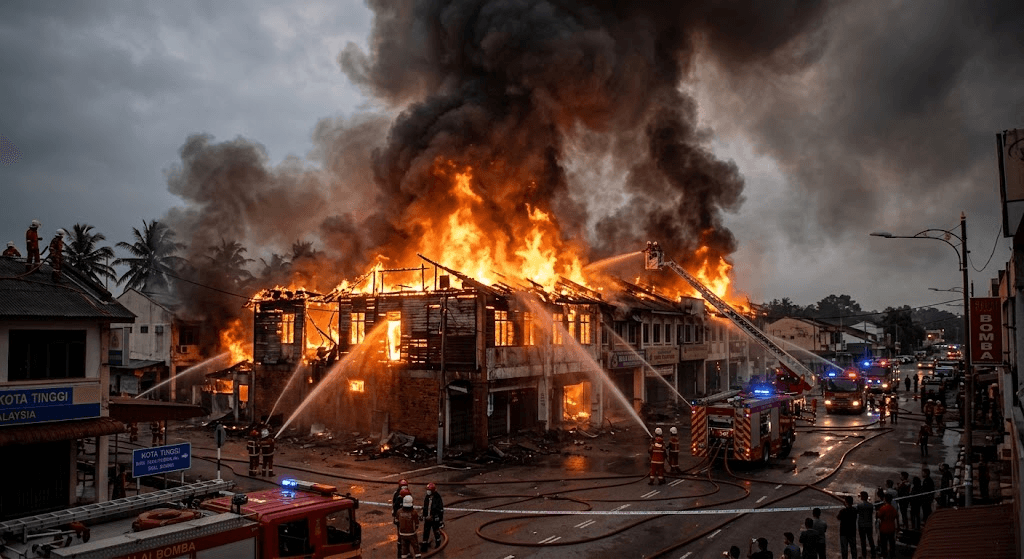
AI Image Disclaimer Illustrations were created using AI tools and are not real photographs.
Sources Reuters Associated Press Al Jazeera BBC News The Guardian
Published by Banx Network. This article is part of the Banx decentralized media programme, powered by the BXE token on the XRP Ledger.