

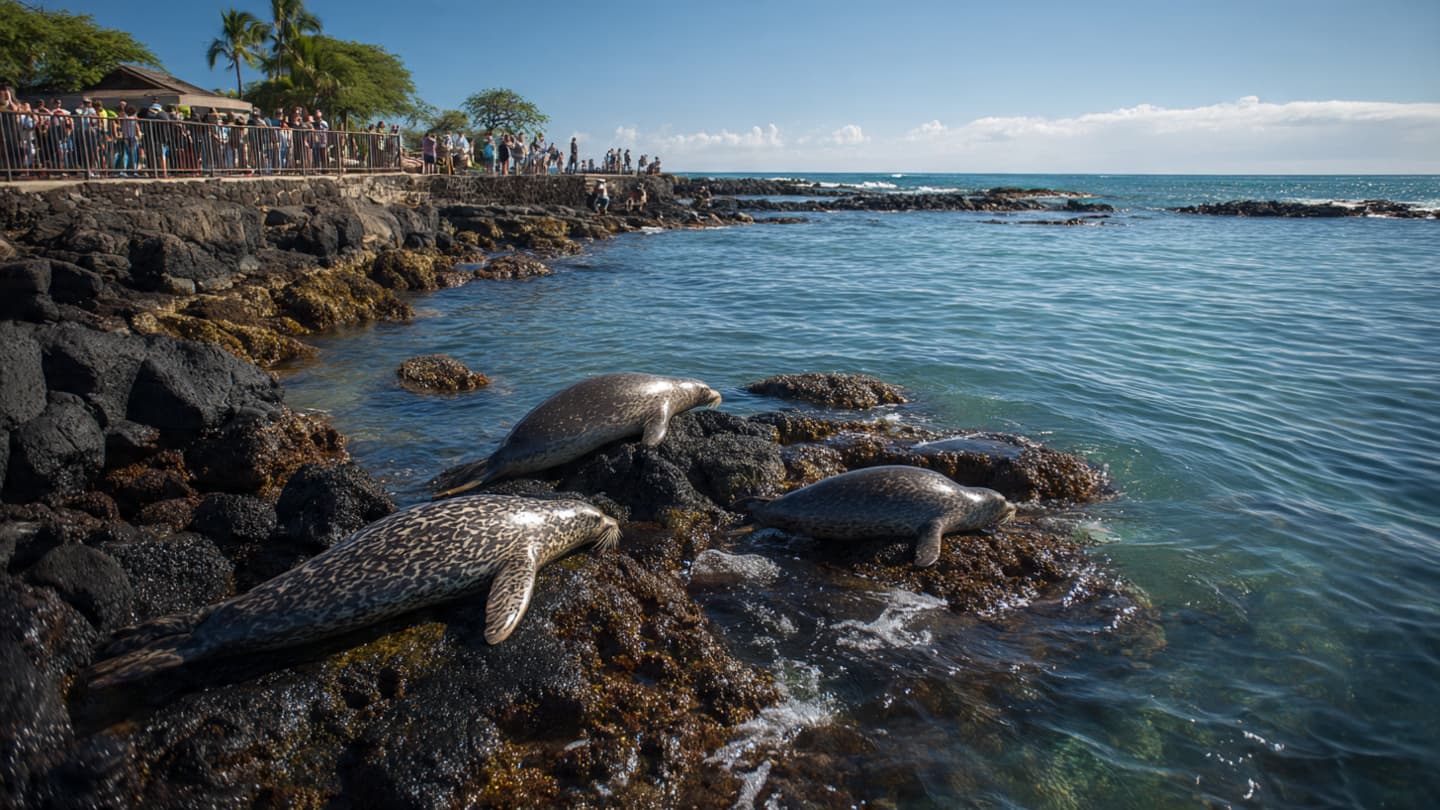
Key Highlights
- Incident:A tourist allegedly threw a rock at a Hawaiian monk seal.
- Legal Defense:The action was claimed to be protective of nearby sea turtles.
- Conservation Laws:Hawaiian monk seals are federally protected, with strict regulations against interference.
In Hawaii, where the boundaries between land and sea life are often blurred, a recent incident has ignited a debate over wildlife protection and human interaction with endangered species. The case revolves around a tourist accused of throwing a rock toward a Hawaiian monk seal, a species classified as one of the most endangered marine mammals globally. This event took place in a coastal area known for its rich biodiversity and strict conservation measures aimed at protecting vulnerable wildlife.
The tourist's legal defense argues that the action was not intended to harm the seal but was instead a misguided attempt to protect nearby sea turtles. According to the attorney, the situation escalated quickly, leading to confusion regarding the behavior of the animals in the vicinity. This defense raises critical questions about intent and the complexities of human-wildlife interactions, particularly in environments where such encounters are common.
Wildlife officials have responded firmly, emphasizing that Hawaiian monk seals are protected under federal law. Any interference with these animals is treated with utmost seriousness, reflecting the ongoing efforts to conserve a species that has seen significant population declines due to various threats, including habitat loss and human activity. Conservation regulations explicitly prohibit approaching, touching, or disturbing these seals, underscoring the importance of maintaining a safe distance to ensure their survival.
Local environmental organizations have pointed out that many visitors to Hawaii often struggle to navigate the nuances of appropriate interactions with wildlife. Despite the presence of educational signage and outreach programs designed to inform the public, enforcement agencies continue to report violations involving protected species. This incident serves as a stark reminder of the challenges faced in balancing tourism with conservation efforts.
As the legal proceedings unfold, the case is expected to delve into the intent behind the tourist's actions, the environmental context of the incident, and whether the actions posed a direct threat to the seal. Investigators have yet to disclose further details about the specific circumstances surrounding the event, but the inquiry is ongoing.
Residents and conservation advocates are hopeful that this case will heighten awareness about Hawaii's fragile ecosystems. They stress that even brief misunderstandings can have significant repercussions when dealing with endangered species. The legal process not only aims to address the specific incident but also seeks to reinforce the importance of wildlife protection laws, which are designed to educate the public and prevent future incidents.
Authorities continue to monitor the situation involving the endangered seal, reiterating that Hawaii's coastal wildlife is safeguarded by stringent conservation regulations. As the case progresses, it highlights the critical need for ongoing education and awareness regarding the delicate balance between human activity and wildlife conservation in Hawaii.
Published by Banx Network. This article is part of the Banx decentralized media programme, powered by the BXE token on the XRP Ledger.




