In the long memory of global health crises, Ebola remains one of those names that seems to echo through time like a warning bell that never fully fades. When reports surface of renewed outbreaks, they tend to carry both urgency and a quiet reminder of how closely human resilience and vulnerability often walk together.
According to the headline information, the World Health Organization has declared an emergency in response to an Ebola strain reported to have no available vaccine, with fatalities reaching around 100 across parts of the Democratic Republic of the Congo and Uganda. While such figures demand careful verification through official updates, they also reflect the continuing challenge of managing hemorrhagic fever outbreaks in regions with limited healthcare infrastructure.
In past outbreaks, Ebola has tested not only medical systems but also public trust, logistics, and cross-border coordination. The geography of Central and East Africa, with its interconnected communities and varying access to healthcare, often complicates containment efforts once transmission begins.
Health responses in such contexts typically rely on rapid identification, isolation protocols, and community engagement. Yet when a strain is described as lacking a vaccine, the emphasis shifts even more heavily toward containment and supportive care, underscoring the importance of early detection systems.
The reported spread across national boundaries adds another layer of complexity. Uganda and the DRC have both experienced Ebola outbreaks before, and their shared epidemiological history often informs joint response strategies, though each outbreak carries its own distinct characteristics.
Global attention from organizations such as WHO typically signals both concern and mobilization of resources. In practice, this can include deployment of medical teams, surveillance support, and coordination with local health ministries to limit further transmission.
At the same time, outbreaks like this often unfold in environments where information flow can be uneven, making verification and real-time assessment essential. This is why official updates and field reports remain critical in understanding the true scale and progression of the situation.
As the situation develops, health authorities and international organizations are expected to continue monitoring closely, with responses shaped by evolving data and on-the-ground conditions.
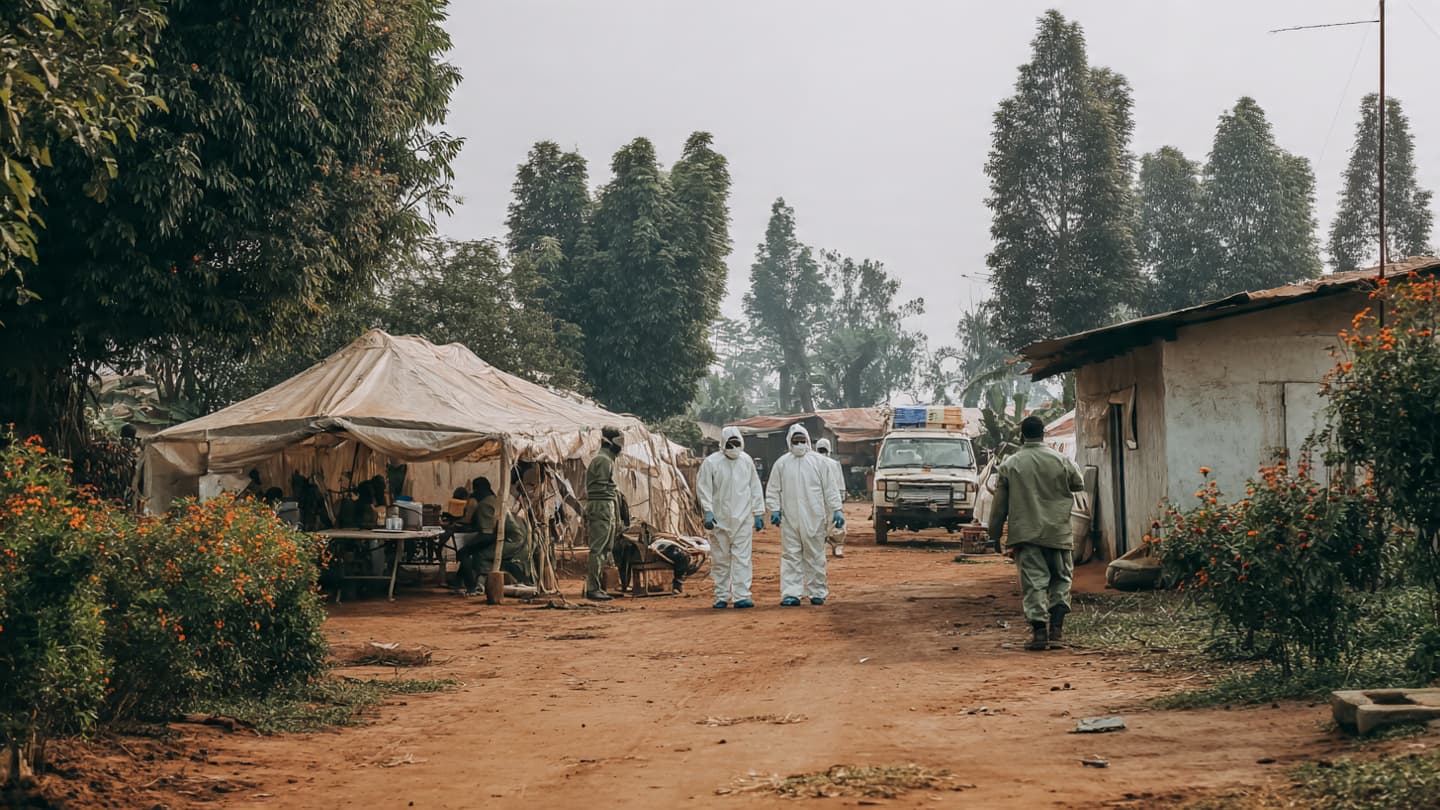
AI Image Disclaimer: Images accompanying this article are AI-generated illustrations created for editorial visualization purposes.
Sources (verification check): World Health Organization (WHO), Reuters, Associated Press (AP News), BBC News, Al Jazeera
Published by Banx Network. This article is part of the Banx decentralized media programme, powered by the BXE token on the XRP Ledger.