
Key Highlights
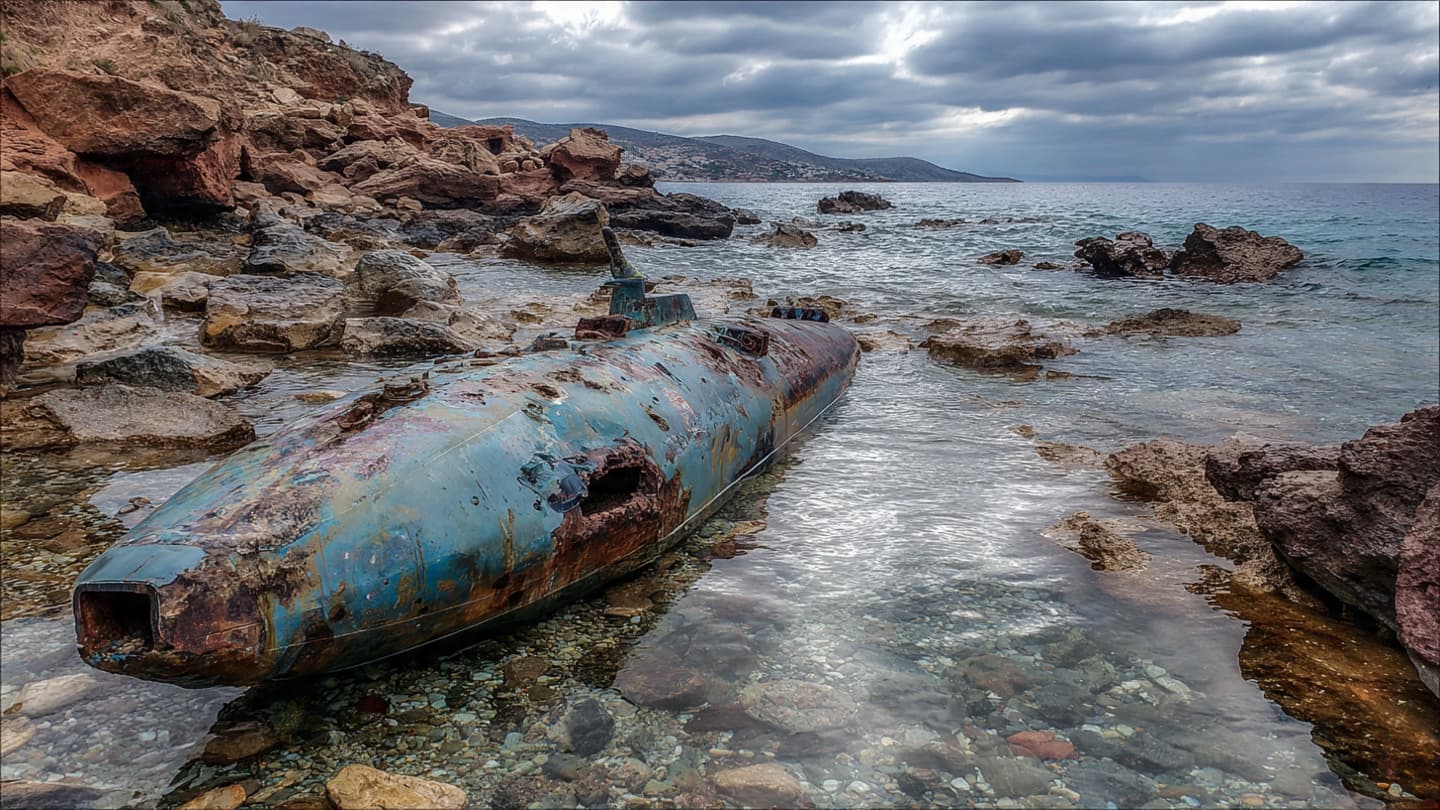
- Discovery:A Ukrainian sea drone was found washed ashore on a Greek island.
- Investigation:Greek authorities are examining the device's origin and potential threats.
- Implications:The incident raises concerns about maritime security in the Mediterranean.
[Discovery of the Drone]
Across the Mediterranean, islands have long stood as quiet witnesses to the movements of trade, migration, conflict, and diplomacy. Recently, Greek authorities confronted a significant moment after discovering an apparent attack sea drone on one of the country’s islands. Officials described this finding as “extremely serious” due to its reported Ukrainian origin and the broader implications surrounding maritime security in the region.
Greek officials stated that the unmanned maritime device was discovered washed ashore and was later identified through preliminary examination as a Ukrainian-designed sea drone. Investigations are ongoing, with military and security experts analyzing how the device traveled into Greek territory and whether it posed any operational threat at the time it was found.
[Context of Sea Drones]
Sea drones have become increasingly visible in modern conflict zones, particularly in the Black Sea region during the ongoing war involving Russia and Ukraine. These remotely operated or semi-autonomous systems are capable of reconnaissance, surveillance, and, in some cases, carrying explosive payloads. Their growing use reflects how modern warfare is steadily shifting toward smaller, highly mobile technologies operating across land, air, and sea.
[Concerns Over Maritime Security]
Greek authorities have not publicly suggested intentional targeting of Greece itself. Instead, officials appear focused on understanding how the drone reached the island and whether maritime drift, operational failure, or other circumstances contributed to its arrival. Nevertheless, the incident raised concerns about the expanding geographic footprint of military technologies linked to regional conflicts.
[Geopolitical Implications]
Analysts note that the Mediterranean occupies a particularly sensitive position within European and international security frameworks. Commercial shipping lanes, NATO activity, tourism economies, and migration routes all intersect across these waters. Even isolated security incidents can attract significant diplomatic attention due to their potential implications for regional stability.
[Future of Unmanned Systems]
The discovery also highlights the increasingly blurred boundaries between active war zones and neighboring regions. Technologies deployed in one theater of conflict can unexpectedly appear far from their original operational areas, carried by currents, mechanical malfunction, or evolving tactical conditions. Maritime experts say such incidents may become more common as unmanned naval systems continue expanding globally.
[Ongoing Investigations]
Meanwhile, Greece has maintained a careful balance in addressing the situation publicly. Officials described the matter in measured terms while emphasizing the seriousness of maritime security concerns. Security agencies continue coordinating with international partners and technical specialists to determine the device’s origin, route, and operational condition when discovered.
For now, authorities say the investigation remains active, with additional technical assessments underway. While the discovery has not led to broader security disruptions, it serves as another reminder that modern conflicts increasingly extend beyond traditional front lines, sometimes arriving quietly on distant shores carried by the sea itself.
Published by Banx Network. This article is part of the Banx decentralized media programme, powered by the BXE token on the XRP Ledger.



