There are objects in the sky that behave the way we expect them to, following the scripts written by physics over decades of observation. And then there are objects that seem to have misplaced the script entirely, offering a performance that leaves astronomers reaching for analogies that do not quite fit. In the outer reaches of the Milky Way, one such object has been putting on a show for roughly two decades, and only now are we beginning to understand how strange the performance truly is.
The object is called VT J1906+0849, located at least 49,000 light-years from Earth, beyond the galaxy's outer Norma-Cygnus spiral arm . It first drew attention in 2017 data from the Very Large Array Sky Survey, where it appeared as the brightest radio transient the survey had found—extraordinarily luminous for its distance . When astronomers looked back through older observations, they found nothing in 1996, then a gradual brightening through the 2000s, peaking around 2014, and fading by 2019 and 2024 .
Then, in late 2025, it brightened again . That alone was unusual. But the truly puzzling behavior lies in its spectrum—the way its radio emission peaks at different frequencies over time. In 2019, the peak was at about 1.9 gigahertz. By 2024, it had shifted down to 0.8 gigahertz. By 2026, it had climbed back up to 2.2 gigahertz . For a typical synchrotron source, a shifting peak usually indicates an expanding cloud of material, with the peak moving predictably toward lower frequencies as the cloud spreads out. But VT J1906+0849 shows little evidence of expansion .
The researchers, led by Jessie Miller of Caltech, believe the emission comes from energetic charged particles moving through magnetic fields—synchrotron radiation, the same process that powers many astronomical radio sources . Yet the combination of a rebrightening, a shifting spectral peak that reverses direction, and an apparent lack of expansion suggests something more complicated than a simple cloud cooling and dispersing. The object is operating on a timescale of decades, changing in ways that no other known galactic radio source has been observed to change.
What makes this discovery particularly significant is that it does not fit neatly into any existing category. It is not a pulsar, not a typical transient, not a supernova remnant. It is something that has remained radio-bright for approximately twenty years while its spectral properties evolve in a manner that seems to defy the usual expectations . The paper describing these findings is still fresh, and the astronomical community is only beginning to grapple with what it might mean.
For now, VT J1906+0849 remains a mystery, though a productive one. It has given astronomers a new puzzle to solve, a new behavior to explain, and a reminder that the universe is under no obligation to conform to the categories we have built for it. The observations will continue, and the models will be revised, and perhaps one day the object will reveal what it has been doing all along.
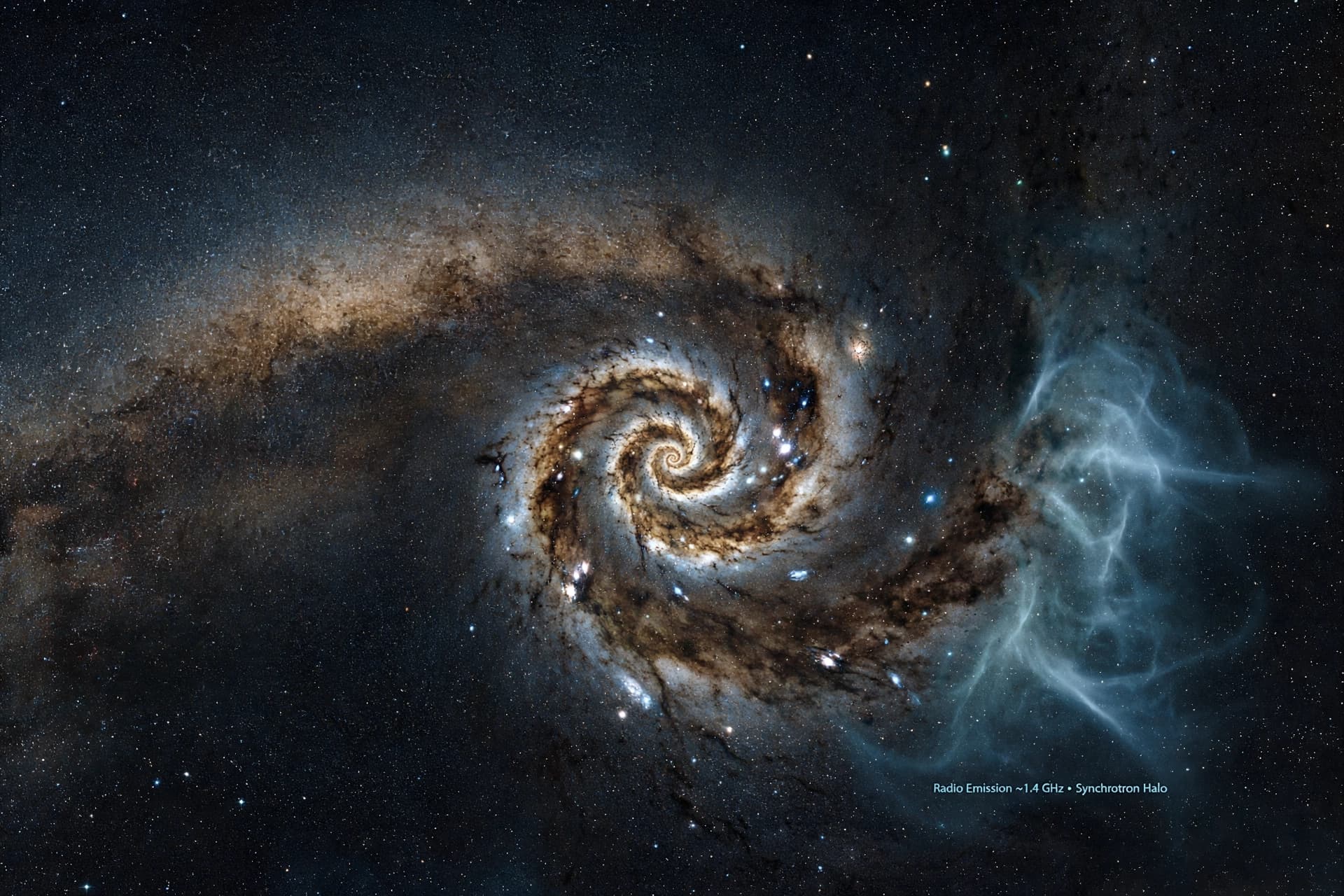
The images in this article are AI-generated for illustrative purposes only.
Sources: ScienceAlert, Caltech
Published by Banx Network. This article is part of the Banx decentralized media programme, powered by the BXE token on the XRP Ledger.