The origin of life on Earth is one of science’s greatest mysteries, traditionally viewed as a singular, miraculous event. However, a radical new study challenges this consensus, suggesting that life may have emerged not once, but twice. This provocative hypothesis posits that two distinct lineages of life arose independently, with one eventually dominating while the other retreated into the shadows of the microbial world. It is a idea that reshapes our understanding of biology’s deepest roots.
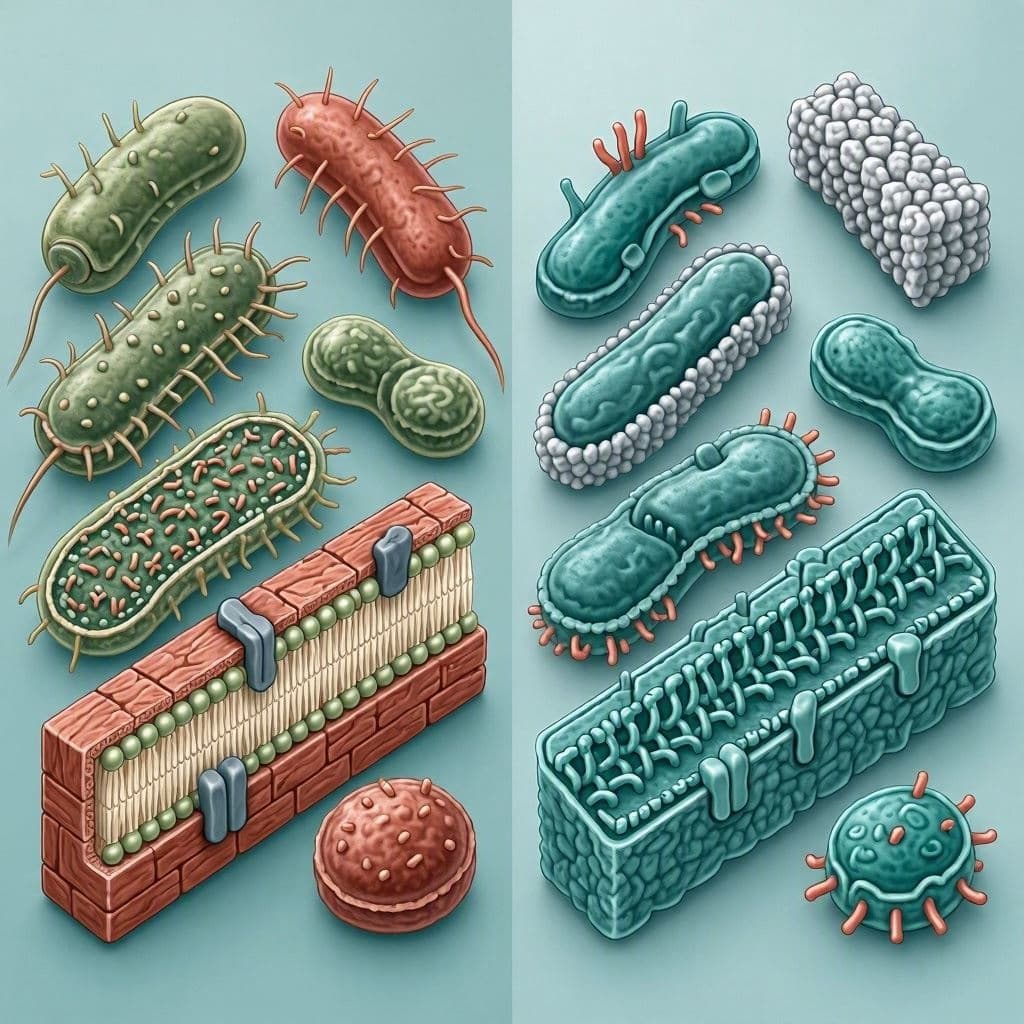
The research focuses on the fundamental differences between two major groups of microorganisms: bacteria and archaea. While both are prokaryotes lacking a nucleus, they differ significantly in their genetic machinery and cell membrane composition. The study argues that these differences are so profound that they likely stem from separate abiogenesis events rather than a single common ancestor. This "dual origin" theory suggests that the last universal common ancestor (LUCA) may not have been the first life form, but rather a product of later convergence or competition.
Proponents of the theory point to the unique lipid structures in archaeal membranes, which are chemically distinct from those in bacteria and eukaryotes. These structural differences are difficult to explain through gradual evolution from a single source. Instead, they suggest that archaea and bacteria evolved different solutions to the problem of cellular containment independently. If true, this means life is not a rare accident but a probable outcome of planetary chemistry.
Critics remain skeptical, noting that horizontal gene transfer and ancient evolutionary loss could account for these differences without invoking a second origin. The fossil record for early microbial life is sparse, making it difficult to prove or disprove the hypothesis definitively. However, the study encourages scientists to look beyond traditional phylogenetic trees and consider more complex models of early evolution.
If life did arise twice, it has profound implications for the search for extraterrestrial life. It suggests that given the right conditions, life may emerge readily and repeatedly. This optimism fuels missions to Mars and Europa, where signs of past or present microbial life could represent a second, independent genesis. The universe may be teeming with life, not because it is lucky, but because it is inevitable.
The debate is far from settled, but it invigorates the field of astrobiology. By questioning the singularity of life’s origin, researchers open new avenues for investigation. Whether through genomic analysis or laboratory simulations of early Earth conditions, the quest to understand our beginnings continues.
The suggestion that life on Earth arose twice is a bold challenge to established wisdom. While evidence remains indirect, the possibility invites us to rethink the rarity of life. In the grand narrative of existence, we may be the survivors of a biological duel that began billions of years ago.
AI Image Disclaimer: The images provided are AI-generated to visually represent the scientific and evolutionary themes of the story.
Sources: Nature Microbiology Smithsonian Magazine Live Science
Published by Banx Network. This article is part of the Banx decentralized media programme, powered by the BXE token on the XRP Ledger.