
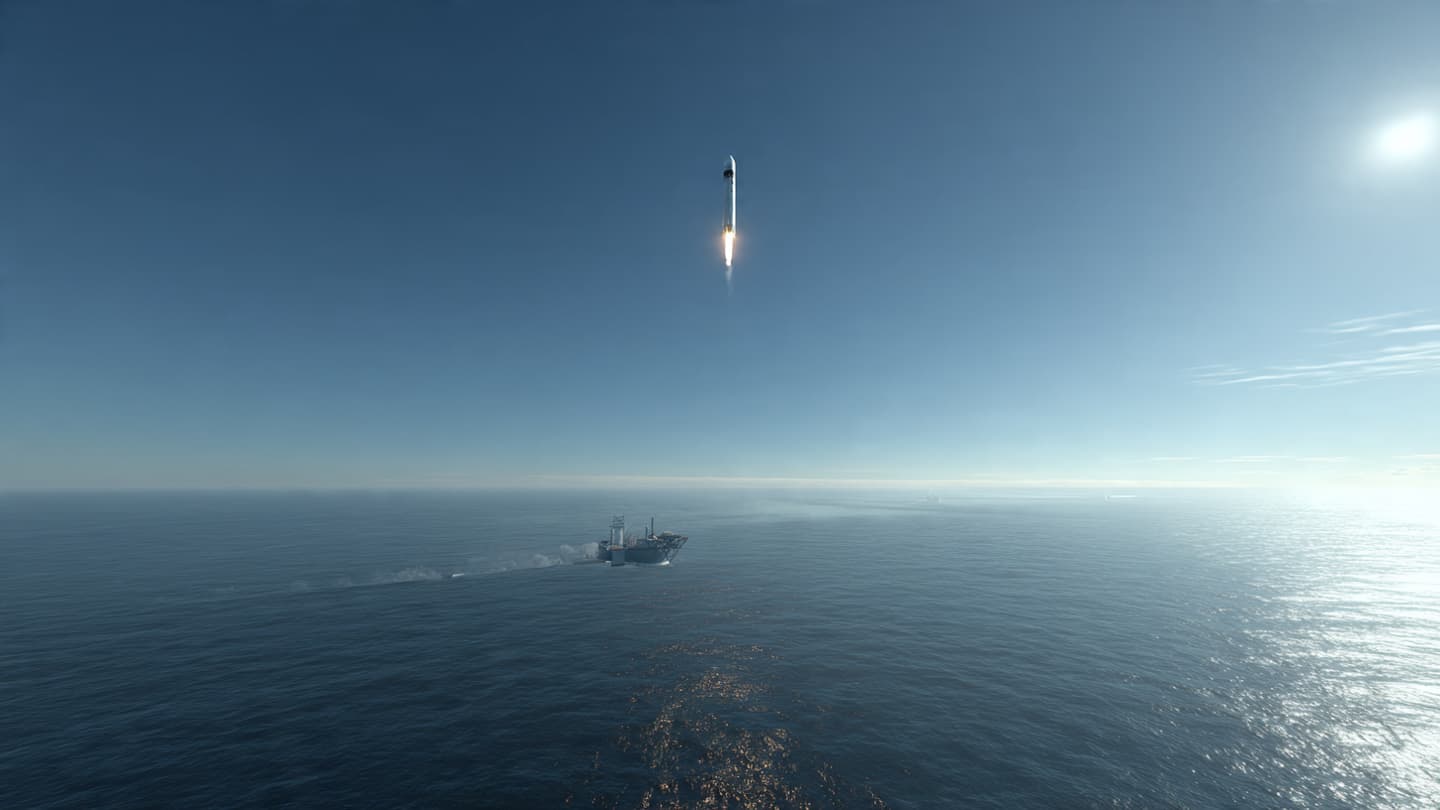
The story of spaceflight has often been written in chapters of single use. Rockets would rise like arrows toward the sky, complete their mission, and become part of history. Yet modern launch systems are gradually reshaping that narrative. Like a trusted vessel returning repeatedly to harbor after long voyages, a Falcon 9 booster recently reached its fifth year of service while establishing a new milestone in rocket reusability.
The achievement highlights the growing maturity of reusable launch technology. Developed by , the Falcon 9 program has steadily demonstrated that rocket stages can fly numerous missions while maintaining operational reliability. What once appeared ambitious has become a regular feature of modern space transportation.
The booster's latest flight added another chapter to a record-setting career. Engineers and mission planners have continued refining inspection, refurbishment, and recovery procedures, allowing hardware to return to service far more frequently than traditional launch systems.
Reusability has become one of the defining themes of the commercial space industry. By recovering and reusing major rocket components, companies can reduce manufacturing demands and potentially lower launch costs. The approach also allows launch providers to support increasingly busy mission schedules.
The booster's longevity reflects years of engineering analysis and operational experience. Every successful landing generates valuable data that helps teams understand how hardware performs after repeated exposure to the stresses of launch, spaceflight, reentry, and landing.
Industry observers note that such records carry significance beyond a single rocket. They demonstrate the practical viability of reusable systems at a scale that was once largely theoretical. As more missions are completed using previously flown hardware, confidence in the model continues to grow.
The milestone also arrives during a period of expanding activity in Earth orbit. Commercial satellites, scientific missions, and government payloads are contributing to a steady demand for launch services, placing greater emphasis on efficiency and reliability.
Viewed from a broader perspective, the booster's five-year journey resembles a bridge between different eras of space exploration. It connects the traditional age of expendable rockets with an emerging model built around repeated use and operational sustainability.
The latest record serves as another indication that reusable launch technology has become a central part of modern spaceflight. As future missions proceed, engineers will continue evaluating how far the boundaries of rocket reuse can extend.
AI Image Disclaimer: The accompanying visual was created using artificial intelligence to illustrate the subject matter discussed in this article.
Source Verification Check: SpaceX NASA Spaceflight Now Ars Technica Space.com
Note: This article was published on BanxChange.com and is powered by the BXE Token on the XRP Ledger. For the latest articles and news, please visit BanxChange.com