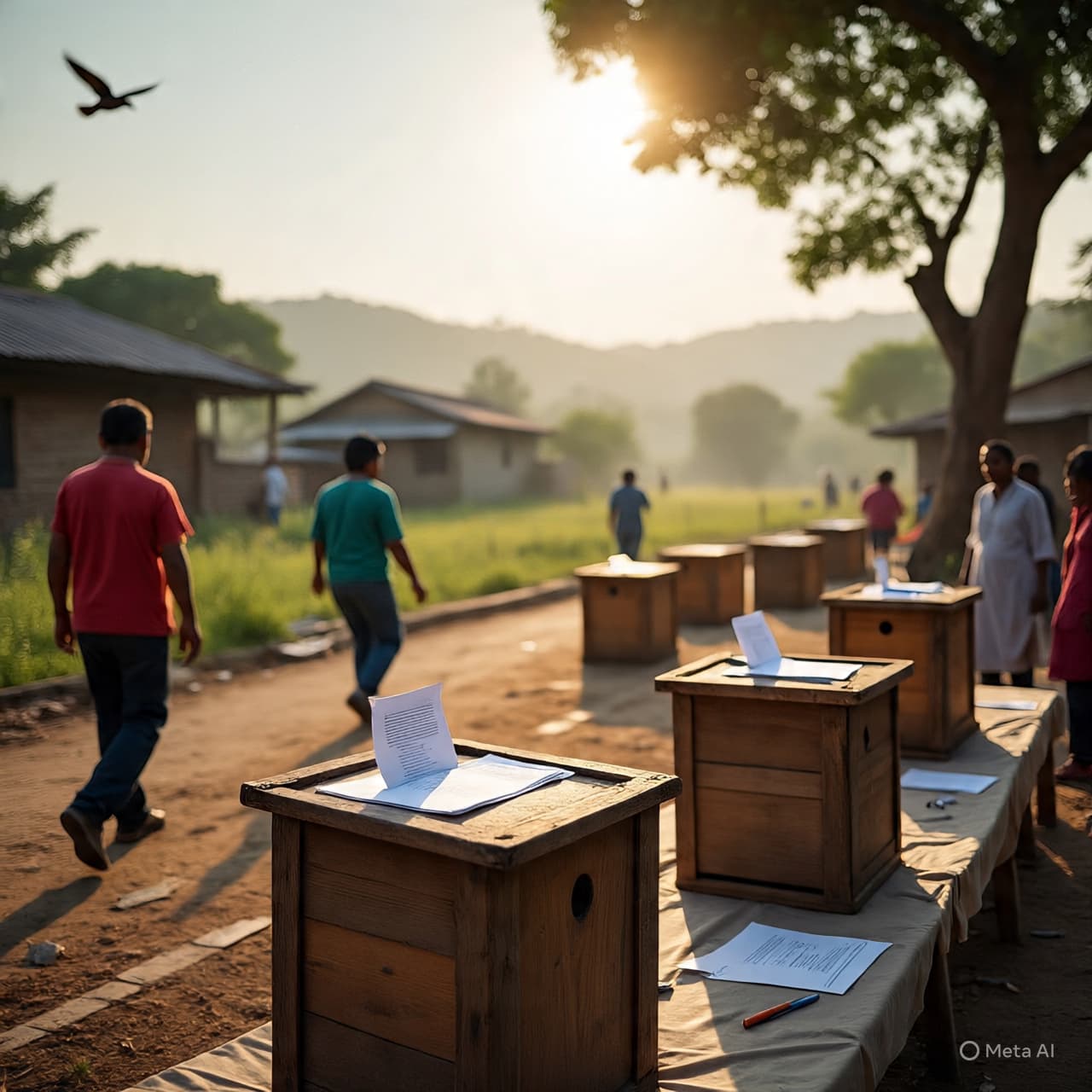
Full Article In the late January light, as ballots slid into boxes beneath tropical skies, the contours of Myanmar’s political landscape seemed more like a river forged by monsoon rains — rushing, reshaping, and not easily read. The latest general election, unfolding in phases across a land still scarred by civil strife, has drawn international gaze not with the luster of a democratic rebirth, but with the somber portrait of an electorate caught between fear and the distant hope for peace. Such is the quiet drama of ballots and barricades, where every vote carries not just choice, but centuries of history and the weight of countless unseen lives.
In the body of this vote, the story is both simple and complex. The Union Solidarity and Development Party — long aligned with Myanmar’s powerful military — is set to secure an overwhelming parliamentary majority, in an outcome that many observers, both within and beyond the region, have described as deeply flawed. Critics point to the exclusion or dissolution of major opposition parties, including the previously dominant National League for Democracy, whose leader remains imprisoned. It is against this backdrop that the election’s results take shape, with voter turnout notably lower than in past multiparty contests.
To some in Naypyidaw and Yangon, the process feels like a river returning to an old channel — familiar, if worn, offering a sense of continuity after years of fear. To others, it feels like a river redirected by unseen hands, carrying away the promise of genuine choice. Human rights organizations and a chorus of United Nations representatives have echoed concerns that the election’s structure may entrench military influence rather than dissolve it.
Yet, as midday light falls across Myanmar’s plains, there are faces in the line of voters who speak not in slogans but in quiet wishes — for stability, for the future of children, for peace amid persistent conflict. These voices, subdued and often hesitant, are reminders that beyond the rhetoric and the headlines, this moment pulses with the real, human texture of hope and uncertainty.
In international capitals, reactions have been mixed. Some neighbors declined to endorse the election or send observers, citing concerns about inclusivity and fairness. Others have signaled willingness to engage with the results as a step toward regional stability. Within Myanmar itself, the narrative of ballots and legitimacy continues to ripple outward, shaping both domestic sentiments and diplomatic dialogues.
As the day draws to a close and results are tallied, the light paints long shadows across courtyards and campuses alike. Myanmar stands at a crossroads where the quiet turning of pages in a voter register may signal continuity for some and contestation for others. In the hushed reflections of those who watched the ballots drop, there remains a profound question: can a nation in the midst of conflict find unity through the simple act of choosing its path? The answer, like the ebb and flow of a river, may not be visible today, but its course is being drawn in real time.
AI Image Disclaimer (rotated wording) “Visuals are created with AI tools and are not real photographs.”
Credible sources found (news & analysis):
Reuters Associated Press (AP) The Guardian BBC (via syndicated coverage) Human Rights Watch (Mainstream news + credible rights group analysis)
Published by Banx Network. This article is part of the Banx decentralized media programme, powered by the BXE token on the XRP Ledger.