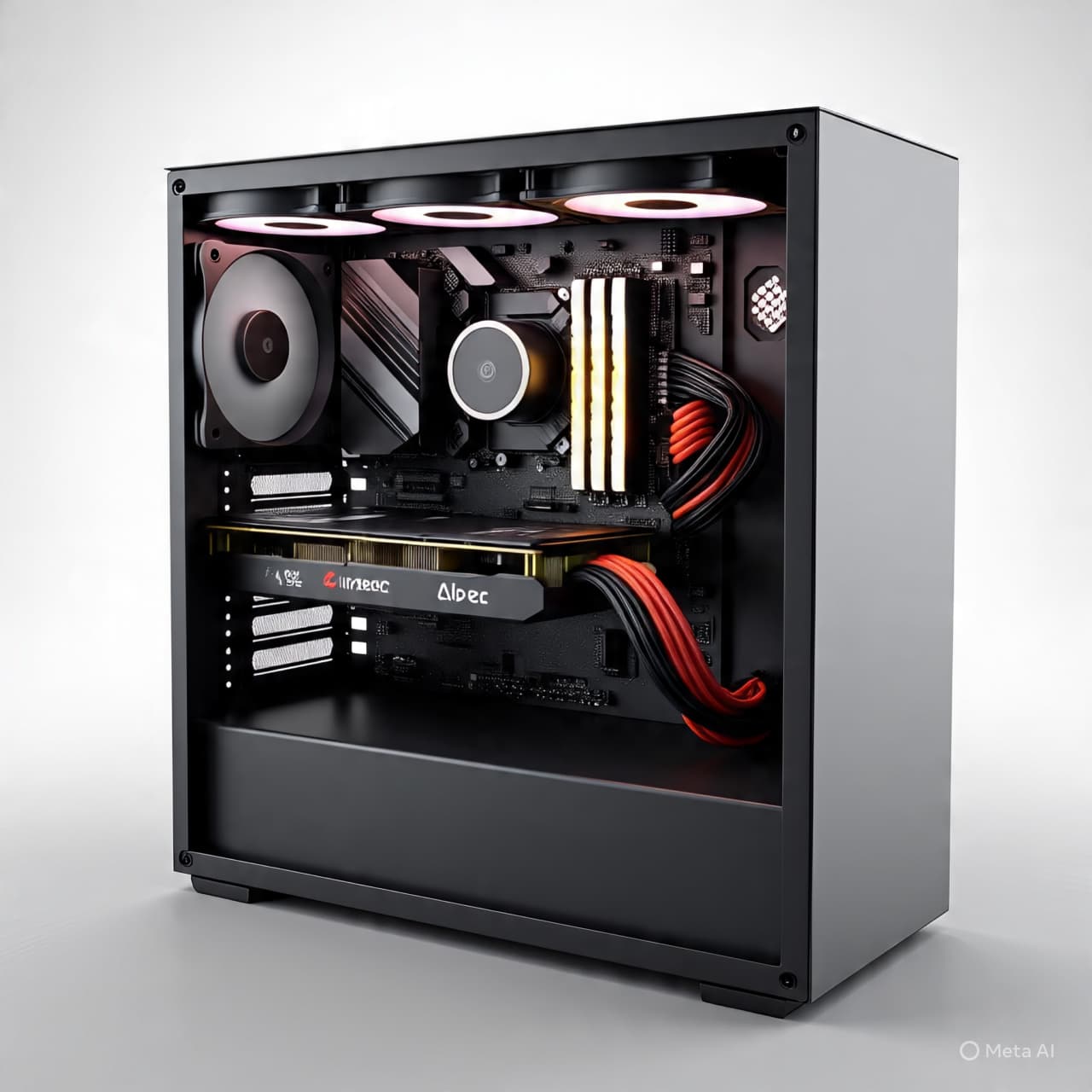
There was a time when the personal computer felt like a living room engine — humming quietly beneath desks, powering homework, spreadsheets, late-night chats, and pixelated adventures. Over the decades, its “brain” shifted and specialized, divided among companies that defined eras through silicon. Now, as computing enters another transition shaped by artificial intelligence and tighter integration, one familiar name appears ready to reclaim a more central role.
, long synonymous with high-performance graphics, is signaling ambitions that extend beyond the GPU. Industry reporting suggests the company aims to become a primary architect of consumer PC platforms once again — not merely as a graphics supplier, but as a core processor innovator.
At the heart of this vision is NVIDIA’s expanding work on system-on-chip designs and CPU development. For years, the PC ecosystem has largely revolved around partnerships: one company providing the central processor, another delivering discrete graphics. That modular structure shaped the architecture of desktops and laptops alike. Yet the rise of AI workloads and power-efficient computing has begun to favor more integrated approaches.
NVIDIA’s trajectory reflects this shift. Its GPUs already serve as the computational backbone for AI training and inference across industries. Translating that strength into consumer PCs suggests a future where graphics, general processing, and AI acceleration converge more seamlessly. Instead of separate components communicating across a motherboard, a unified silicon design could streamline performance and efficiency.
The company’s reported plans involve developing CPUs that complement its graphics technologies, potentially creating tightly coupled platforms optimized for gaming, content creation, and AI-driven tasks. Observers note that such integration could allow NVIDIA to control more of the computing stack — from driver optimization to silicon architecture — enhancing performance tuning and feature development.
For consumers, the implications could be tangible. Gaming laptops and desktops might benefit from improved power management and reduced latency between CPU and GPU operations. Creative professionals could see smoother workflows in rendering, simulation, and machine learning applications. Everyday users, increasingly interacting with AI-powered features embedded in operating systems, may experience faster, more responsive systems.
Yet ambition carries competition. The consumer PC market is deeply established, with longstanding processor leaders defining standards and expectations. NVIDIA’s potential return to the “brain” of mainstream PCs would require not only technical excellence but also ecosystem trust — partnerships with OEMs, software developers, and operating system providers.
Analysts suggest that AI’s centrality to modern computing may provide NVIDIA with a strategic opening. As AI moves from cloud servers to edge devices, chips designed with native AI acceleration become increasingly valuable. A platform built around that philosophy could differentiate itself in a crowded market.
There is also symbolism in this shift. NVIDIA began decades ago as a graphics pioneer, gradually expanding into high-performance computing and AI dominance. Reasserting influence over consumer PC processing would mark a kind of full-circle moment — a return not simply to graphics, but to the core of personal computing itself.
Still, execution will determine impact. Performance benchmarks, energy efficiency, pricing, and developer support will shape whether NVIDIA’s ambitions translate into widespread adoption. The PC industry has seen bold visions before; some redefined the market, others faded quietly.
For now, NVIDIA’s direction signals intent rather than completion. The company appears poised to extend its reach from the visual heart of gaming to the cognitive center of consumer machines. Whether it succeeds will depend on how convincingly it can unite performance, efficiency, and ecosystem support in a single silicon narrative.
In the evolving story of personal computing, the question is not merely who supplies the fastest chip. It is who defines the architecture of the next era. NVIDIA seems ready to try.
AI Image Disclaimer Images in this article are AI-generated illustrations, meant for concept only.
Sources (Media Names Only) Reuters Bloomberg The Verge AnandTech Tom’s Hardware
Published by Banx Network. This article is part of the Banx decentralized media programme, powered by the BXE token on the XRP Ledger.