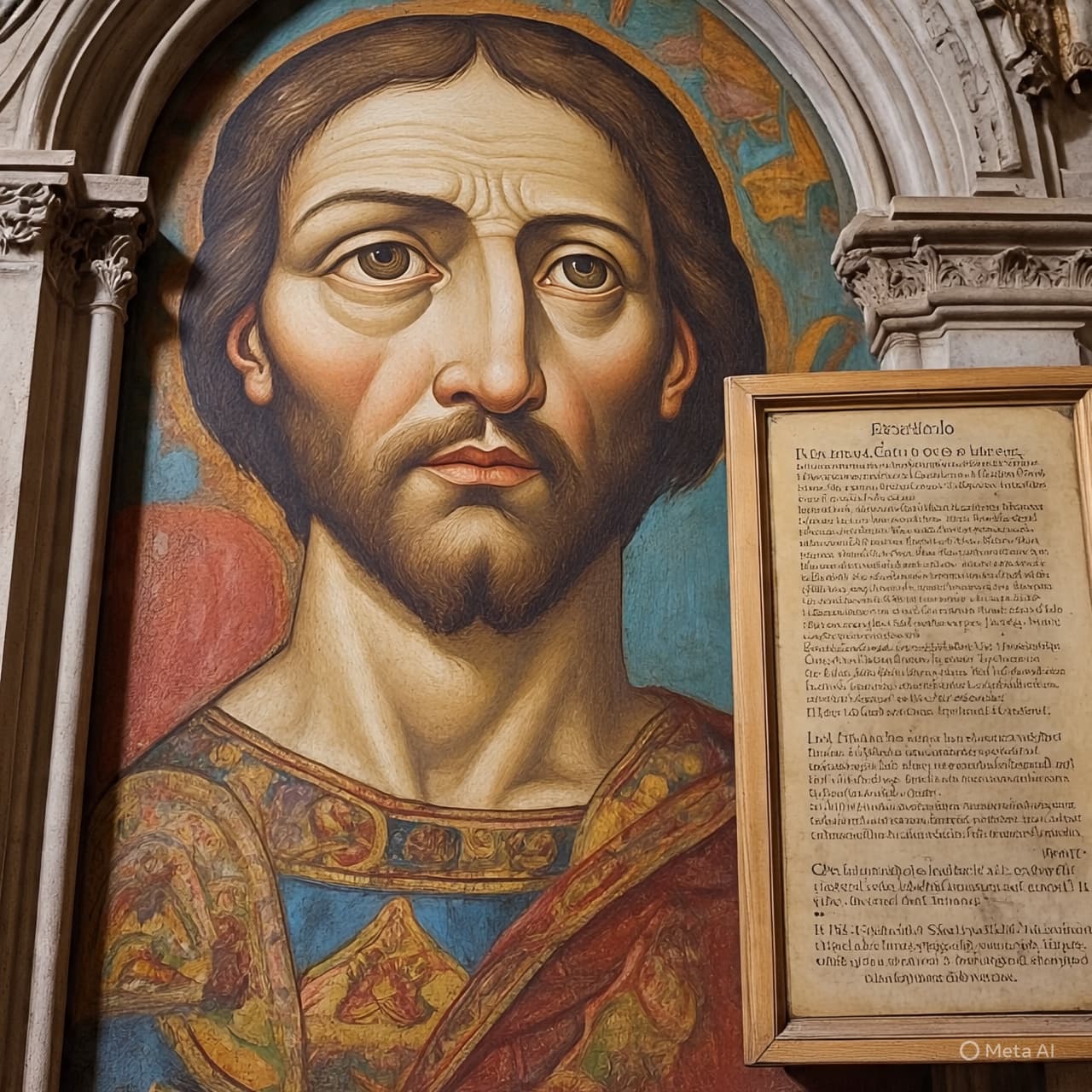
In a story that spanned more than a decade and captured the world’s imagination, the Spanish town of Borja has bid farewell to one of its most unexpectedly famous residents. Cecilia Giménez, the 94-year-old amateur artist best known for her well-intentioned but widely mocked restoration of a church fresco, has died at a nursing home in her hometown, local officials confirmed. Her life and that singular act left an imprint on art history — and on the small community she called home.
In 2012, Giménez rose from relative obscurity when she took it upon herself to restore the Ecce Homo fresco — a modest early 20th-century painting of Jesus by Elías García Martínez housed in the Santuario de Misericordia church — that had begun to deteriorate. What was meant as a careful touch-up instead transformed the figure’s face into an unusual, almost cartoon-like image that quickly spread across the internet as a viral phenomenon. Dubbed the “Monkey Christ,” the rendition became one of the era’s most memorable memes and sparked endless jokes and parodies worldwide.
Despite the initial ridicule, Giménez’s handiwork had an unexpected cultural and economic impact. The once quiet town of Borja saw a dramatic increase in tourism, with thousands of visitors arriving to see the famed fresco in person. Local officials and art lovers alike began to recognize the accidental transformation as a curious piece of cultural history — one that not only revived interest in the original work but also sparked broader conversations about heritage, preservation, and the evolving role of digital culture in art.
Tributes following her death emphasized both her passion for art and her enduring kindness as a neighbor and community figure. Borja’s mayor, Eduardo Arilla, remembered her as a “beloved” resident whose injection of spirit and creativity into her community drew affection from around the world. For many, Giménez embodied a blend of good intentions, resilience, and the unexpected ways in which art can connect people across continents.
Over the years, she came to embrace her fame, hosting exhibitions of her own paintings and speaking fondly of her lifelong love of art. The Ecce Homo fresco, now secured behind protective glass, continues to attract visitors — not as a tragedy of restoration but as a unique testament to the unpredictable life of art in the digital age.
As tributes pour in from her hometown and around the world, Cecilia Giménez’s legacy remains one of heartfelt intention and surprising global resonance — a reminder that sometimes it is the imperfect brushstroke that captures the imagination of the ages.
AI Image Disclaimer Visuals are created with AI tools and are not real photographs.
Sources Reuters The Guardian CBS News Euro Weekly News BBC News
Published by Banx Network. This article is part of the Banx decentralized media programme, powered by the BXE token on the XRP Ledger.