There is a particular tension that settles over a province when the question of its own future becomes a matter of public vote—a tension that divides neighbors, families, and communities into camps that see each other across a widening distance. In Alberta, that tension has been building for months, and it is now on full display. With a referendum scheduled for October 19, the debate over whether Alberta should remain in Canada or begin the legal process toward separation has moved from the fringes of political discourse into the center of daily life, exposing divisions that many had hoped were dormant or healed .
The vote itself is not a binding separation referendum. The question asks whether Alberta should remain in Canada or commence the legal process to hold a binding referendum on separation . But the distinction has done little to calm the debate. For supporters of separation, the vote is a chance to send a message to Ottawa—a message about pipelines, about resource development, about a sense of alienation from federal policies they believe have ignored the province's interests . For opponents, it is a dangerous gamble, a vote that could set in motion a process whose consequences cannot be predicted and whose costs cannot be calculated .
In Calgary, city council voted 14-1 in support of a statement affirming the city's place "as a vital part of Alberta and Canada" . Mayor Jeromy Farkas argued that Calgary has too much to lose to remain silent. "A vote to separate is a vote to become the 51st state here in Alberta," he said. "I will not accept this future for Calgarians" . The lone dissenting councillor, Mike Jamieson, said his opposition was not about the merits of separation but about the role of city government. "My job is to support all Calgarians, whatever their views are," he said. "I cannot support the city making an official position that risks dividing our communities any further" .
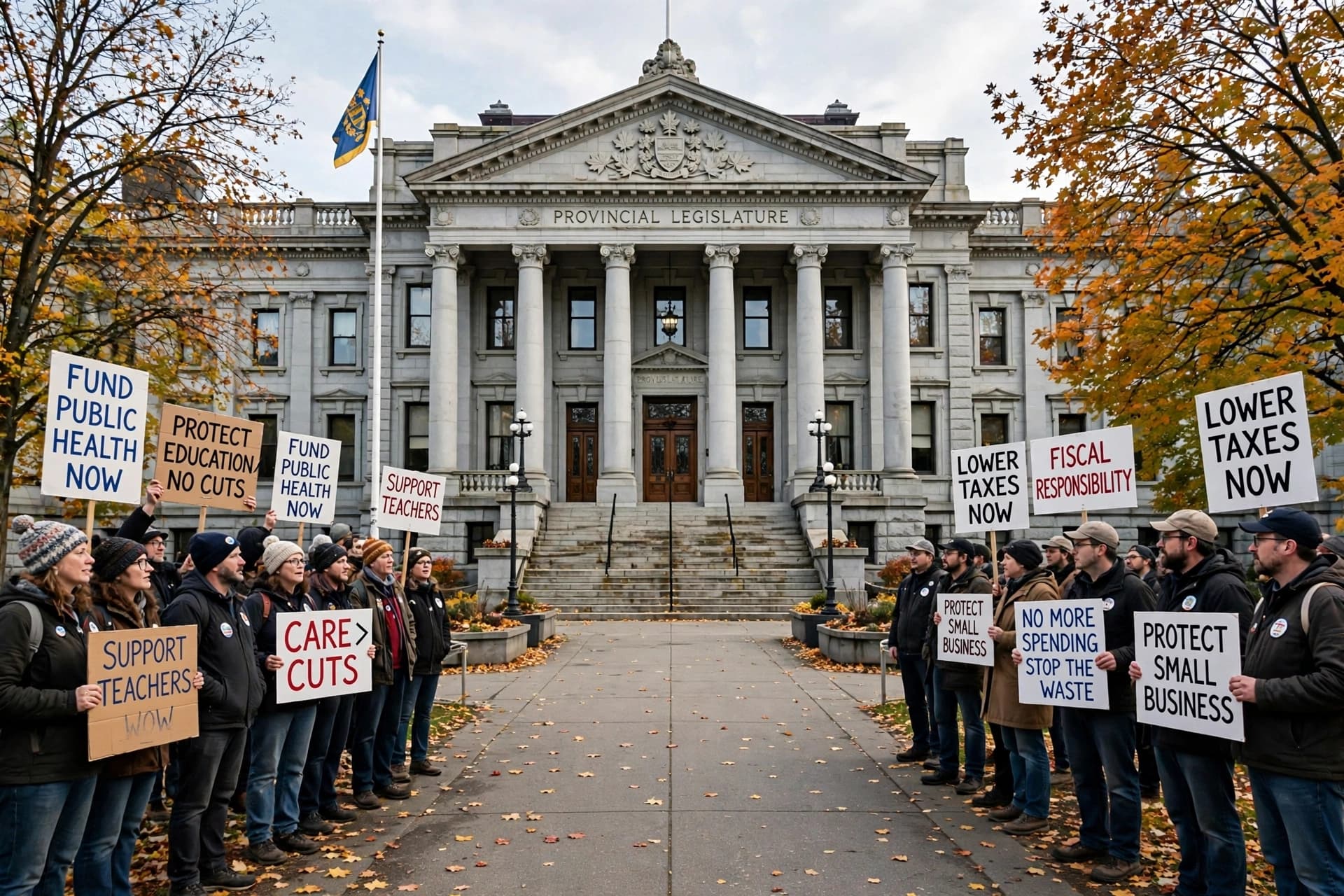
The divisions are not confined to city hall. In Edmonton, hundreds gathered at the legislature for a pro-separation rally, where supporters spoke of frustration with federal overreach and a sense that Alberta's resources are being held back . In Calgary, a smaller but equally committed group rallied for staying in Canada, with NDP leader Naheed Nenshi warning that pro-Canadian voters should not take the referendum for granted. "They see it as the trick it is from Danielle Smith and they don't want to participate," he said. "But it's really important that if you love Canada, you have to come out and vote" .
The economic stakes are at the center of the debate. A report from the University of Calgary School of Public Policy estimated the cost of establishing a new country could range from $50 billion to $170 billion over five years . Premier Danielle Smith has said she will campaign for Alberta to remain in Canada, while also acknowledging what she calls the "legitimate grievances" of Albertans . Prime Minister Mark Carney has called the separation push "a dangerous bluff," comparing it to Brexit and warning that voters may not fully understand what they are voting for .
The referendum is still weeks away, and the campaigns on both sides are intensifying. For now, the divisions remain—visible in council chambers and on city streets, in family conversations and on social media feeds. The question of what Alberta will decide, and what that decision will mean, remains open. The vote will be held on October 19. The counting will follow. And the province will then have to live with whatever answer it gives.
AI Image Disclaimer: The images accompanying this article were generated by artificial intelligence and are for illustrative purposes only.
Sources: CBC News, Edmonton Journal, CTV News, Calgary Herald
Published by Banx Network. This article is part of the Banx decentralized media programme, powered by the BXE token on the XRP Ledger.