
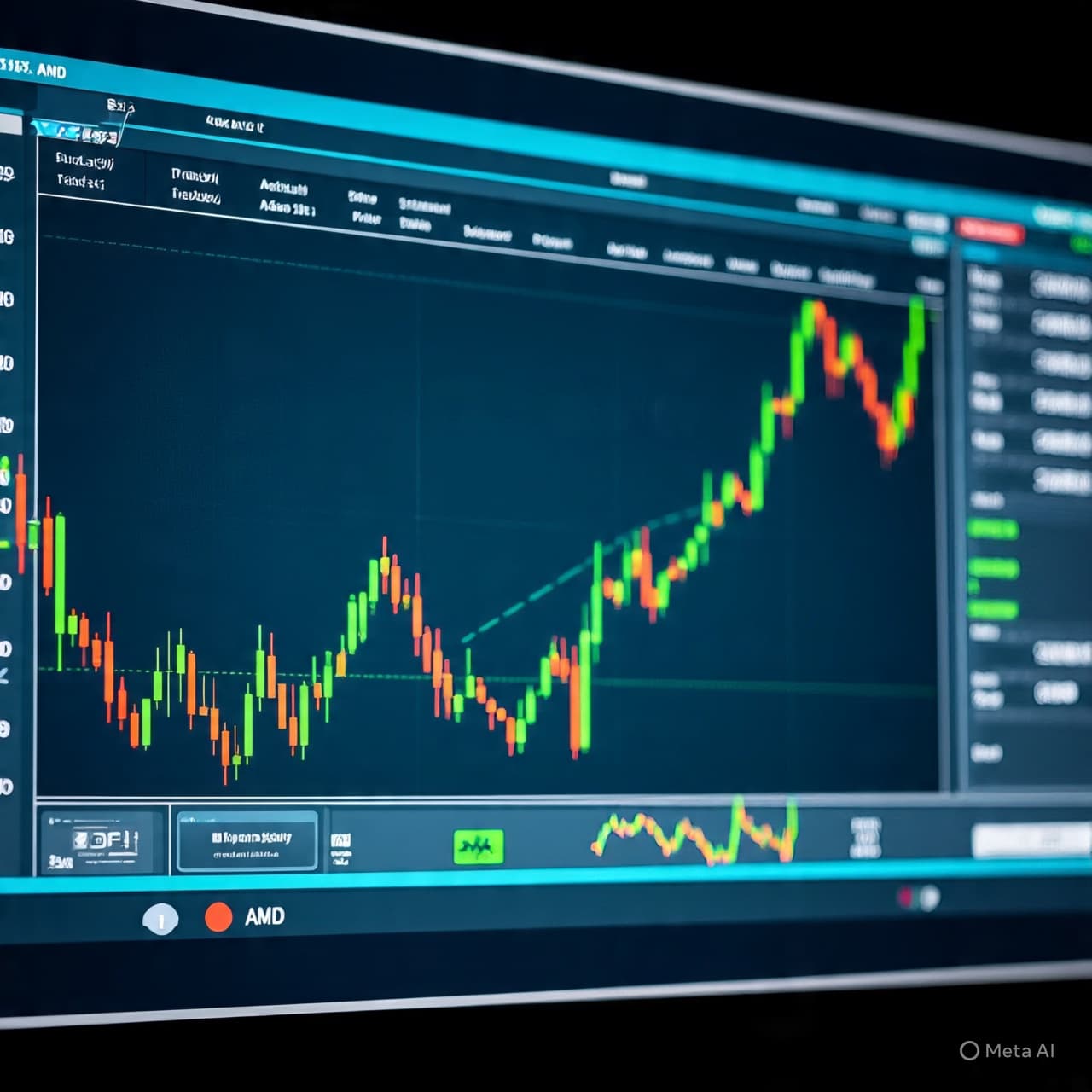
There are days when a stock chart rises like a sudden gust of wind, lifting sentiment with it. Investors glance at their screens, and the green candles seem to suggest momentum not just in price, but in promise. This week, shares of Advanced Micro Devices surged after news of a significant artificial intelligence chip deal with Meta Platforms, rekindling enthusiasm around the company’s expanding role in the AI race.
The agreement positions AMD more firmly within the rapidly intensifying competition to supply chips that power large-scale AI models and data centers. Meta, continuing its aggressive investment in AI infrastructure, is seeking alternatives and complements to existing suppliers as it builds out capacity for generative AI tools and advanced computing systems. For AMD, the deal represents both validation and opportunity — a sign that its high-performance accelerators are gaining meaningful traction among the largest technology players.
Investors responded swiftly. AMD shares climbed sharply following the announcement, reflecting optimism that the partnership could translate into sustained revenue growth and stronger positioning against dominant rivals in the AI chip market. The rally underscored how closely semiconductor valuations are tied to developments in artificial intelligence spending, where even incremental contract wins can shift sentiment.
Yet beneath the celebratory tone lies a more nuanced detail: the warrants attached to the agreement. As part of the deal structure, Meta received warrants that allow it to purchase AMD shares at predetermined prices. While such arrangements are not uncommon in large strategic partnerships, they introduce potential dilution for existing shareholders if exercised.
Warrants can serve as incentives, aligning long-term interests between supplier and customer. In this case, they may reflect Meta’s commitment to scaling AI infrastructure alongside AMD’s technology roadmap. At the same time, they temper some of the immediate excitement. The prospect of additional shares entering circulation in the future can weigh on valuation models, particularly in a sector already trading at elevated multiples.
Market analysts have described the development as broadly positive, though not without complexity. The deal strengthens AMD’s credibility in AI accelerators — an arena long dominated by a small number of players — but it also reminds investors that growth partnerships often come with structured financial trade-offs.
For AMD, the moment feels emblematic of the broader AI cycle: rapid expansion intertwined with careful capital strategy. As hyperscalers pour billions into next-generation computing, chipmakers find themselves balancing innovation, manufacturing scale, and shareholder considerations in equal measure.
By the close of trading, AMD’s gains reflected clear investor approval of the Meta partnership, even as discussions about dilution and long-term impact continued across analyst desks. The agreement adds momentum to AMD’s AI ambitions, while the warrants remain a factor investors will monitor as the partnership unfolds.
AI Image Disclaimer Graphics are AI-generated and intended for representation, not reality.
Sources
Reuters Bloomberg CNBC MarketWatch The Wall Street Journal
Published by Banx Network. This article is part of the Banx decentralized media programme, powered by the BXE token on the XRP Ledger.



